
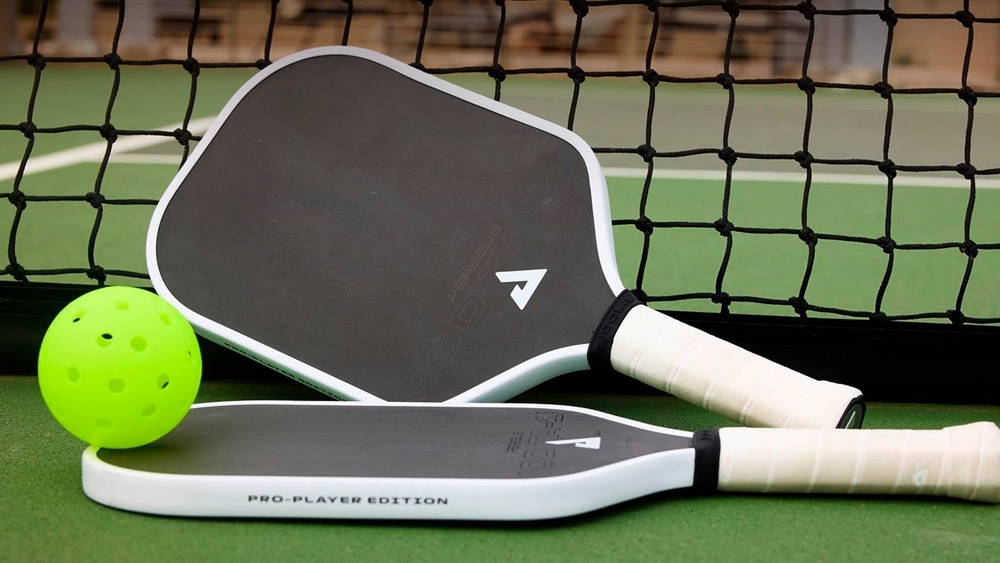
Pickleball is a fast-growing sport that mixes elements from tennis, badminton, and ping-pong. As it becomes more popular, players want to use the best gear to get an edge. But not all equipment is allowed. In recent years, the question “Which pickleball paddles are banned?
” has become important for both new and experienced players. Some paddles are banned because they give unfair advantages, break safety rules, or don’t meet official standards. Knowing which paddles are banned helps you avoid costly mistakes, play fair, and keep your matches official.
This guide will take you through everything you need to know about banned pickleball paddles. You’ll learn about the main reasons paddles get banned, which brands and models are affected, what standards paddles must meet, and how to make sure your paddle is legal before you step on the court.
If you’re serious about pickleball, this knowledge is essential.
Why Are Some Pickleball Paddles Banned?
Paddles get banned to protect fairness, safety, and the spirit of the game. The main authority for paddle approval in the United States is USA Pickleball (USAP). Their standards are also used by the Professional Pickleball Association (PPA) and many local leagues.
Here are the most common reasons a pickleball paddle can be banned:
- Surface Material: Paddles with surfaces that are too rough, sticky, or made from illegal materials (like sandpaper or certain composite layers) can create excessive spin or unpredictable shots.
- Paddle Size: There are maximum limits on paddle length and width. Oversized paddles give players an unfair advantage in reach and power.
- Altered or Modified Paddles: If a paddle is changed after manufacturing, it can be disqualified—this includes sanding, painting, adding tape, or changing the core.
- Reflective Surfaces: Highly reflective paddles can distract opponents.
- Sound: Paddles that are too loud may be banned in noise-sensitive areas or communities.
- Brand or Model Violations: Some paddles are banned because the manufacturer did not submit them for approval, or they failed the official tests.
A key point many beginners miss: just because a paddle is sold online or in stores does not mean it is legal for tournament play.
How Are Pickleball Paddles Tested And Approved?
Before a paddle can be used in official play, it must go through a strict testing process. This is done by USA Pickleball. Here’s what happens:
- Submission: Manufacturers send their paddles to USA Pickleball for testing.
- Physical Inspection: Officials check the paddle’s length, width, thickness, and weight.
- Surface Testing: They measure surface roughness using a device called a “Starrett Surface Roughness Tester.”
- Material Check: The paddle is checked for illegal materials, reflective surfaces, or alterations.
- Sound Test: Some paddles are tested for noise level, especially if they’ll be used in communities with sound restrictions.
- Durability: Paddles are checked for quality and durability.
If a paddle passes all these tests, it goes on the USA Pickleball Approved Paddle List. If it fails, it’s banned for sanctioned tournaments.
For up-to-date info, the official USA Pickleball website always provides the current list.
Notorious Banned Pickleball Paddles And Brands
Some paddles have become famous for being banned, either because they broke rules in new ways or were popular before the ban. Here are some notable examples:
1. Crbn 1 And Crbn 2 (original Models)
In May 2022, the CRBN 1 and CRBN 2 paddles were banned by USA Pickleball. These paddles were highly popular, especially among advanced players, because of their carbon fiber surfaces which allowed for more spin and control. After reports that the surface roughness exceeded legal limits, the models were tested and banned.
- Why banned? Surface roughness over the limit (more than 30 micrometers).
- What happened next? CRBN released updated, legal versions with smoother surfaces.
2. Gearbox Gx5 And Gx6 (certain Models)
Gearbox is respected for quality, but some older GX5 and GX6 paddles were banned for not meeting updated specifications. In some cases, they were too loud or had surface issues.
- Why banned? Noise and surface material concerns.
3. Engage Pursuit Mx (first Generation)
The first version of the Engage Pursuit MX paddle was banned soon after release. The issue was with the gritty surface that created too much spin.
- Why banned? Surface roughness.
- Tip: Always double-check model numbers, as newer versions may be legal.
4. Onix Graphite Z5 (certain Modified Versions)
While the Onix Graphite Z5 is a favorite among many players, some modified or counterfeit versions were found with illegal surface textures and banned in tournaments.
- Why banned? Unauthorized modifications or counterfeits.
5. Paddletek Bantam Ex-l (early Batches)
Some early versions of the Bantam EX-L had an unapproved core or exceeded noise limits. Most current models are legal, but it’s smart to check the serial number or batch.
- Why banned? Unapproved core material.
6. Selkirk Amped (altered Models)
Selkirk’s Amped series is usually approved, but if players alter the paddle with paint, sandpaper, or tape for more grip or spin, it becomes illegal.
- Why banned? Player modifications.
7. Custom Or Homemade Paddles
Any paddle that is homemade, custom-built, or not submitted for approval is banned from official play. Some creative paddles are fun for casual games, but not for tournaments.
- Why banned? Not on the approved list.
Comparison Of Legal Vs. Banned Paddle Features
Here’s a side-by-side look at features often found in legal and banned paddles.
| Feature | Legal Paddles | Banned Paddles |
|---|---|---|
| Surface Roughness | ≤ 30 micrometers | > 30 micrometers |
| Size | Length + width ≤ 24 in (60.96 cm) | Exceeds size limits |
| Material | Approved composites, graphite, carbon fiber | Sandpaper, glass, unauthorized composites |
| Reflectivity | Non-reflective | Highly reflective surfaces |
| Noise | Within community standards | Excessive noise levels |
| Modification | Factory condition | Altered after purchase |
Many players are surprised to learn that even small changes—like adding extra grip tape or using paint—can turn a legal paddle into a banned one.

Credit: pickleballunion.com
Key Paddle Standards Set By Usa Pickleball
For a paddle to be approved, it must meet several technical rules. Here are the most important ones, explained in simple terms:
Paddle Size
- Length plus width must not be more than 24 inches (60.96 cm)
- Maximum paddle length is 17 inches (43.18 cm)
- There is no weight limit, but extremely heavy paddles are rare.
Surface Roughness
- The paddle’s surface can’t be rougher than 30 micrometers (measured by a special device).
- No sandpaper or textured paint is allowed.
Reflectivity
- Surfaces must be non-reflective to avoid blinding other players.
Material And Core
- Only approved materials: Polymer, Nomex, Aluminum, Composite, Carbon Fiber, Graphite
- No foam cores, glass, or homemade combinations.
Markings And Colors
- Markings must not distract opponents.
- No bright, mirror-like, or neon colors that cause distraction.
Sound
- Some communities require “quiet” paddles for neighborhood courts.
- Loud paddles can be banned in these areas.
Factory Condition
- Paddles must remain in the condition they left the factory.
- No sanding, painting, or weight modifications.
Many beginners do not realize that even a legal paddle can become illegal after just a small, well-meaning alteration.
Updated List Of Banned Paddles (2024)
Rules and lists change every year. As of 2024, here’s an updated list of paddles that are either banned for all tournament play or have specific versions that are illegal:
- CRBN 1 (Original)
- CRBN 2 (Original)
- Engage Pursuit MX (Gen 1)
- Gearbox GX5 (Certain Batches)
- Gearbox GX6 (Certain Batches)
- Onix Graphite Z5 (Altered/Counterfeit)
- Paddletek Bantam EX-L (Early Batch)
- Selkirk Amped (Altered)
- All Custom or Homemade Paddles
- Paddles with Sandpaper Surfaces
- Paddles Over 17 Inches in Length
- Paddles with Highly Reflective Surfaces
- Paddles with Unapproved Core Material
- Extremely Noisy Paddles (Certain Gearbox, Gamma, and custom paddles)
- Paddles Not Submitted for Approval
- Counterfeit Versions of Approved Models
- Any Paddle Modified After Purchase
- Paddles with Distracting Markings
- Paddles Painted with Textured Paint
- Vintage/Obsolete Paddles Not on Current Approved List
Remember, just because a paddle is old doesn’t mean it’s legal. USA Pickleball removes paddles from the approved list regularly.
What Happens If You Use A Banned Paddle In A Tournament?
If you use a banned paddle in a sanctioned tournament:
- Disqualification: You may be disqualified from the match or event.
- Forfeiture: Your win may be forfeited even if you played well.
- Reputation Damage: Repeated violations can hurt your reputation in the pickleball community.
- Financial Loss: You could lose entry fees and travel expenses.
Some tournaments do paddle checks before play. Others only check if someone complains. It’s your responsibility to know if your paddle is legal.
How To Check If Your Paddle Is Approved
To avoid mistakes, always check your paddle’s approval status before entering a tournament. Here are practical steps:
- Visit the Official List: Go to the USA Pickleball website and find the approved paddle list.
- Search by Brand and Model: Type in your paddle’s brand and model number.
- Check Serial Numbers: Some models have specific batches that are illegal.
- Ask Tournament Officials: If you’re unsure, bring your paddle to the event check-in for inspection.
- Look for Approval Markings: Many approved paddles have a “USAP Approved” sticker or marking.
Here’s a quick comparison of what to look for:
| Step | What to Do | Why It Matters |
|---|---|---|
| 1 | Check the official USAP list | Confirms if paddle is tournament-legal |
| 2 | Inspect for modifications | Ensures paddle hasn’t been altered |
| 3 | Look for approval stickers | Quickly identifies approved paddles |
| 4 | Consult event officials | Reduces risk of disqualification |
| 5 | Check for sound restrictions | Important for community courts |
A common mistake: trusting only the packaging or marketing. Sometimes, sellers display the “USAP Approved” logo even if the specific paddle is not on the current list.
Common Mistakes That Make A Paddle Illegal
Most banned paddles aren’t made illegal by the factory—they become illegal after players make mistakes. Avoid these errors:
- Adding extra grip tape that wraps onto the paddle face
- Painting or sanding the surface to increase spin
- Adding lead tape to the edge in a way that alters balance or exceeds size limits
- Removing the outer edge guard
- Buying cheap counterfeits online that copy popular brands
- Using a paddle after heavy wear if the surface becomes rough
- Believing “if it sells in stores, it must be legal”
Many players, especially beginners, don’t realize that even small, well-meaning changes can break the rules.
Real-world Examples Of Players Caught With Banned Paddles
Stories help make the risks real. Here are two examples:
- Case 1: At the 2022 US Open Pickleball Championships, a player was disqualified when officials found her paddle was an older CRBN 1 model. She didn’t know the ban had taken effect just a week before. She lost her chance at a medal.
- Case 2: In a regional tournament, a player tried to use a homemade paddle made from plywood and fiberglass. It was banned immediately, and the player was not allowed to compete.
These stories show why it’s important to stay updated, even if you’re just a recreational player aiming for your first tournament.
Are Banned Paddles Ever Re-approved?
Sometimes, manufacturers fix the problems and submit a new version. For example:
- CRBN released updated versions of their paddles after the ban.
- Engage changed the surface material and got newer Pursuit paddles re-approved.
However, just because a new version is legal doesn’t mean the old one is. Always check the model and batch.
Are Banned Paddles Ever Used In Casual Play?
Yes, many banned paddles are still used in casual games or at home. But using them in public club play can cause arguments, especially if one player feels there’s an unfair advantage. If you’re playing in a league or organized club, stick to approved paddles.

Credit: www.justpaddles.com
The Future Of Pickleball Paddle Regulations
As pickleball grows, paddle technology advances fast. Expect more rules and more testing as new materials appear. Some experts predict AI-driven testing and even microchip tags to track paddle approval in the future. For now, staying informed is your best defense.
Frequently Asked Questions
What Makes A Pickleball Paddle Illegal?
A paddle is illegal if it breaks official size, surface, material, or sound rules set by USA Pickleball. Common reasons include surface too rough, being oversized, or using unapproved materials.
Can I Use A Banned Paddle For Practice Or In Casual Games?
You can use banned paddles for casual play with friends if everyone agrees. But you can’t use them in sanctioned tournaments or official league matches.
How Often Does The Approved Paddle List Change?
The approved paddle list is updated several times a year. New paddles are added, and some are removed. Check the list before each tournament to stay current.
What Should I Do If My Paddle Is Banned?
If your paddle is banned, buy a new, approved one. Using a banned paddle in tournaments risks disqualification and forfeiting matches.
Where Can I Find The Official List Of Banned Paddles?
You can find the official list on the USA Pickleball website. Always check this source, as online store info can be outdated or incorrect.
Staying updated with paddle rules keeps the sport fair and fun. If you’re unsure, ask a tournament official or check the latest information online. It’s the best way to enjoy pickleball without worry—and keep your game on the right side of the rules.
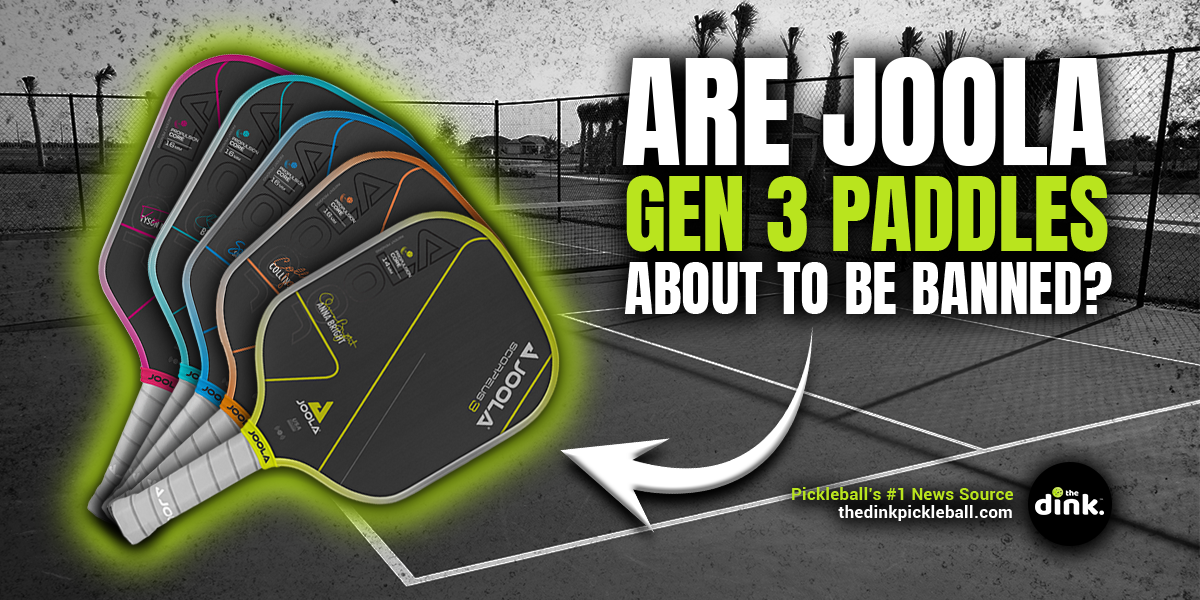
Credit: www.thedinkpickleball.com