
Touch Tennis Vs Pickleball: The Ultimate Comparison Guide
If you are searching for a fun, fast-paced sport that is easy to learn and play, you might have come across Touch Tennis and Pickleball. Both games are growing quickly across the world, especially in communities, schools, and local clubs. But what exactly makes them different? And which one should you try if you are new to racket sports? This guide will give you a clear, complete view of both sports, helping you decide which is the right fit.
You may have seen videos of people playing these games on social media. The courts look smaller than traditional tennis, the rackets are shorter, and the balls seem softer or lighter. It’s easy to think they are almost the same.
However, there are unique rules, skills, and experiences in each. Whether you want to play for fun, fitness, or competition, understanding these differences is key.
Let’s dive deeper into Touch Tennis and Pickleball. We will look at their history, equipment, rules, court sizes, playing styles, and why people love them. You will also find tables comparing facts and features, real-world examples, and practical advice for beginners.
What Is Touch Tennis?
Touch Tennis began in the UK in 2002, invented by Sukhwant Basra. The idea was simple: create a version of tennis that anyone could play, anywhere, without needing a big court or expensive gear. The sport uses foam balls, short rackets, and a small court, making it easy on the body and accessible to kids, adults, and seniors.
The goal in Touch Tennis is to keep the ball in play as long as possible, focusing on skill and touch rather than just power. It’s a social game, often played in a relaxed atmosphere, but it can also be very competitive at higher levels.
The sport has its own tournaments and ranking systems, especially in the UK, Europe, and some parts of Asia.
Many people call it “mini tennis” or “foam tennis,” but official Touch Tennis has its own rules and community. You can play singles or doubles, and it’s ideal for families or anyone looking for a quick, enjoyable match.
What Is Pickleball?
Pickleball was invented in the United States in 1965 by Joel Pritchard, Bill Bell, and Barney McCallum. They wanted a game the whole family could play together, using simple paddles, a plastic ball, and a small court. Over the years, it grew from a backyard pastime to a huge sport, with national leagues, pro players, and millions of fans.
Pickleball combines elements of tennis, badminton, and ping-pong. The ball is hit back and forth over a low net, using hard paddles. The court is small, but the action can get fast and strategic. It’s famous for being easy to learn—even people who have never played racket sports can pick up the basics in minutes.
In the US, Pickleball is now one of the fastest-growing sports. It is popular with seniors because it is low-impact, but also draws younger players looking for a new challenge.
Core Differences: Touch Tennis Vs Pickleball
At first glance, Touch Tennis and Pickleball might look similar. Both are played on small courts with light equipment. But the rules, gear, and playing styles are very different.
Here’s a quick side-by-side comparison to help you see the main differences:
| Feature | Touch Tennis | Pickleball |
|---|---|---|
| Origin | UK, 2002 | USA, 1965 |
| Racket/Paddle | Foam ball tennis racket (21-inch max) | Solid paddle (wood/composite, ~15-16 in.) |
| Ball | Foam ball (diameter ~8 cm) | Plastic ball with holes (wiffle ball, ~7 cm) |
| Court Size | 12 x 5 m (singles) | 13.4 x 6.1 m |
| Net Height | 80 cm (center) | 86.4 cm (center) |
| Scoring | Tennis-style (15, 30, 40, game) | First to 11 points, win by 2 |
| Play Style | Focus on touch and rallies | Mix of power, placement, and strategy |
While both sports are easy to start, Touch Tennis puts more emphasis on soft control and long rallies. Pickleball offers a mix of power and placement, with faster action near the net.
Equipment: What You Need To Play
Choosing the right equipment can make or break your first experience. Let’s look at what you need for each sport.
Touch Tennis Gear
You don’t need to spend much to get started. The essentials are:
- Racket: A short tennis racket, maximum 21 inches. Most players use rackets made for kids, but the official Touch Tennis racket is slightly different—lighter, with a softer grip.
- Ball: Special foam balls, about the size of a tennis ball but much lighter. They are soft, bounce less, and move slower, making rallies longer and easier.
- Shoes: Any comfortable sports shoes work, as the court is small and surfaces are gentle on feet.
One thing new players often miss: the racket size really matters. A regular tennis racket is too long and heavy for Touch Tennis. Using the right size helps you control the ball much better.
Pickleball Gear
Pickleball has its own unique gear:
- Paddle: Not a stringed racket but a solid paddle, usually made of wood, graphite, or composite materials. Standard size is about 16 inches long and 8 inches wide.
- Ball: A plastic ball with holes (like a wiffle ball). There are indoor and outdoor versions—the outdoor ones are a bit heavier and have smaller holes.
- Shoes: Court shoes with good grip are best, especially for quick moves.
A detail many beginners overlook: indoor and outdoor balls are not the same. Using the wrong ball can change the speed and feel of the game, so always check before you start.
Court Size And Layout
Both sports use smaller courts compared to regular tennis, but the layouts are not exactly the same.
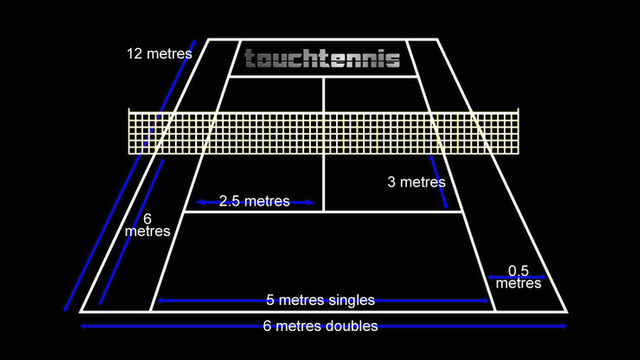
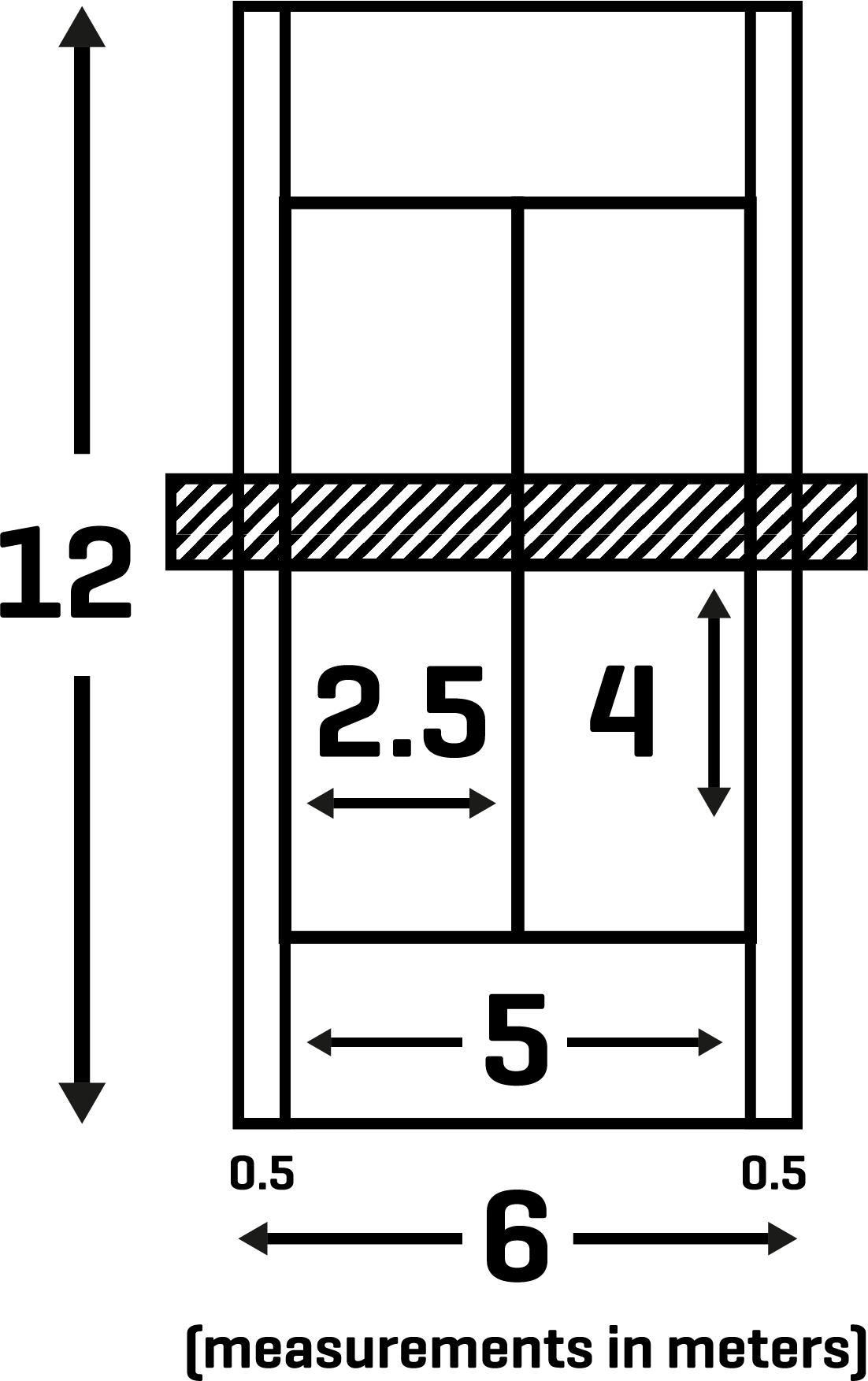
Touch Tennis Court
- Singles: 12 meters long x 5 meters wide
- Doubles: 12 meters long x 6 meters wide
- Net Height: 80 cm at the center
The court can fit inside a standard badminton court, or even on a flat driveway or playground. Lines are marked for singles and doubles, and the service boxes are smaller than in tennis.
Pickleball Court
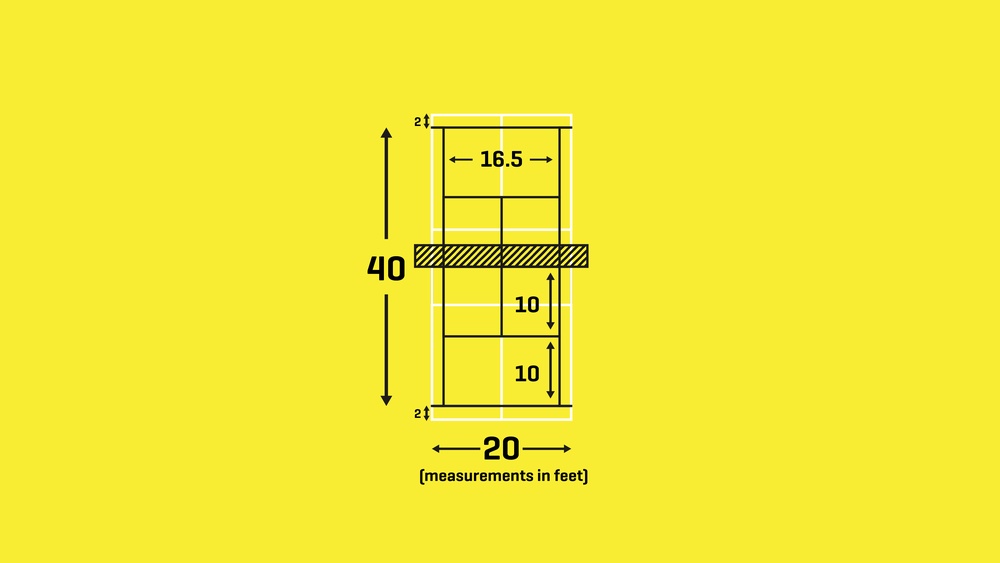
- Both Singles and Doubles: 13.4 meters long x 6.1 meters wide
- Net Height: 86.4 cm at the center
Pickleball courts have a special area called the “kitchen” (non-volley zone) near the net. You cannot volley (hit the ball in the air) if you are inside this zone. This rule creates unique tactics and makes the game more strategic.
Here’s a simple comparison of the court dimensions:
| Touch Tennis | Pickleball | |
|---|---|---|
| Length | 12 m | 13.4 m |
| Width (Singles) | 5 m | 6.1 m |
| Width (Doubles) | 6 m | 6.1 m |
| Net Height (Center) | 80 cm | 86.4 cm |
Rules And Scoring Systems
The rules are what shape each sport’s unique feel and strategy.
Touch Tennis Rules
- Serve: Like tennis, two serves are allowed. The ball must land in the service box. If it touches the net and goes in, it’s a let.
- Scoring: Follows traditional tennis points (15, 30, 40, game), with best-of-three or best-of-five sets.
- Lets: If the serve clips the net but lands in, it is replayed.
- Rallies: The foam ball slows play down, so points last longer. Most shots are played with topspin or slice.
- Winning: Win four points to win a game, six games to win a set.
One thing many new players forget: the smaller court means quick recovery is key. Standing too far back makes it hard to reach drop shots.
Pickleball Rules
- Serve: Underhand serve only. The server must hit the ball below the waist. The serve must land in the diagonal service box.
- Scoring: Only the serving team can score points. Games are played to 11 points, but you must win by 2.
- Double Bounce Rule: The ball must bounce once on each side before players can hit volleys.
- Kitchen Rule: No volleys allowed in the non-volley zone (the kitchen) near the net.
- Winning: Usually best of three games.
Many beginners miss the double bounce rule—if you try to volley too early, you lose the point. This makes the start of each rally slower and more strategic.
Playing Experience: How Each Game Feels
The main reason people stick with a sport is how it feels to play. Both Touch Tennis and Pickleball are fun, but the in-game experience is quite different.
Touch Tennis Feel
- Long rallies are common. The foam ball moves slowly, so there is more time to react.
- Soft touch and control are rewarded. You need good placement, not just power.
- Less running. The small court means you rarely need to sprint, making it great for all ages.
- Social atmosphere. Because rallies are longer, there’s lots of laughter and chatter, especially among friends and families.
A common insight: players who get frustrated with traditional tennis (too hard, too fast) often find Touch Tennis lets them enjoy the game again.
Pickleball Feel
- Fast exchanges at the net are frequent. Volleys can be sharp and quick.
- Strategy changes with each point. The kitchen rule means you have to pick your shots carefully.
- More lateral movement. You need to be quick with your feet, especially in doubles.
- Competitive but welcoming. Many clubs have open play, where everyone mixes in.
A detail beginners often miss: Pickleball rewards anticipation. Knowing where your opponent is aiming is more important than having a strong arm.
Health Benefits And Fitness
Both sports are easy on the body, but they offer different types of exercise.
Touch Tennis Health Benefits
- Gentle on joints: The foam ball and soft surface reduce impact.
- Good for coordination: You must react quickly and adjust your grip and touch.
- Heart health: Fast rallies keep your heart rate up, but not to extremes.
- All ages: Kids, seniors, and adults can play together.
Pickleball Health Benefits
- Low-impact cardio: The court is small, but you move a lot.
- Improves balance and agility: Quick footwork and net play help your reflexes.
- Burns calories: One hour of pickleball can burn about 350-450 calories, depending on intensity.
- Social and mental health: The community aspect is strong.
One insight many new players miss: Pickleball can be more intense than it looks. Fast rallies and quick points can leave you out of breath if you play hard.
Popularity, Community, And Growth
Touch Tennis and Pickleball are both growing, but at different speeds and in different places.
Touch Tennis Popularity
- UK and Europe: Most popular, with clubs and tournaments.
- Asia: Slowly growing, especially in schools.
- Rest of world: Still a niche sport.
Touch Tennis has an active online community, with regular tournaments and a ranking system. It’s often used as a way to introduce children to tennis, but many adults play competitively.
Pickleball Popularity
- United States: Explosive growth. Over 4.8 million players as of 2022.
- Canada and Australia: Fast growth in schools and clubs.
- Europe: Gaining popularity, especially among older adults.
Pickleball has its own pro tour, national championships, and is starting to be recognized by sports organizations. Many tennis facilities now offer both tennis and pickleball courts.
Here’s a table showing estimated player numbers:
| Sport | Estimated Global Players | Main Regions |
|---|---|---|
| Touch Tennis | ~100,000 | UK, Europe, Asia |
| Pickleball | ~5 million+ | USA, Canada, Australia |
Cost To Start And Accessibility
Both games are cheaper to start than regular tennis or squash, but costs can still vary.
Touch Tennis Costs
- Racket: $25–$50 (junior tennis racket)
- Balls: $10 for a pack of 3 foam balls
- Court: Can be set up on any flat surface
Touch Tennis is very accessible—you don’t need to join a club or book a special court. Many schools use it for physical education because of the low cost.
Pickleball Costs
- Paddle: $35–$150 (wood is cheaper, graphite is lighter but costs more)
- Balls: $10–$20 for a dozen
- Court: Many community centers now offer free or low-cost courts
Pickleball paddles last a long time, but competitive players may upgrade more often. Some clubs charge a small fee to play, but community access is growing.
A tip for new players: Try before you buy. Many clubs lend equipment for your first visit, so you can see which sport you enjoy more before spending money.
Credit: steemit.com
Which Is Easier To Learn?
Both sports are welcoming to beginners, but each has its own learning curve.
Touch Tennis For Beginners
- Simple rules
- Slower ball speed
- Forgiving for mistakes
Touch Tennis is perfect for those who want to focus on control and placement without worrying about fast serves or strong smashes.
Pickleball For Beginners
- Quick to start
- Easy scoring
- Challenging net play
Pickleball can be picked up in minutes, but mastering net play and strategy can take time.
Non-obvious insight: Pickleball’s kitchen rule surprises many new players. Staying out of the non-volley zone is key to winning points.
Competitive Play And Tournaments
If you love competition, both sports offer chances to test your skills.
Touch Tennis Competitions
- Local and national tournaments
- Online rankings
- Friendly atmosphere, even at higher levels
Many events are organized by the Touch Tennis association, and you can move up the rankings quickly with good results.
Pickleball Competitions
- Regional, national, and international tournaments
- Pro tour events
- Teams and singles events
Pickleball has a more developed pro scene, with prize money and sponsorships for top players.
An insight many miss: Touch Tennis is less about power and more about mind games. Out-thinking your opponent is often more important than hitting hard.
Credit: www.touchtennis.com
Which Sport Is Right For You?
Choosing between Touch Tennis and Pickleball depends on your goals, fitness, and what you find fun.
- If you want long rallies and a focus on touch and control, try Touch Tennis.
- If you like fast action, teamwork, and quick points, Pickleball is your game.
- Both sports are great for socializing and meeting new people.
If possible, play both before you decide. Many clubs and community centers offer “taster” sessions for beginners. You might end up enjoying both!
Where To Learn More
To see Touch Tennis in action and find local clubs, visit the official site at Touch Tennis.
For more on Pickleball, check out the USA Pickleball Association or local recreation centers.
You can also find many video tutorials and match highlights online to get a feel for each sport.

Credit: tt.tennis-warehouse.com
Frequently Asked Questions
What Is The Main Difference Between Touch Tennis And Pickleball?
The main difference is the equipment and play style. Touch Tennis uses foam balls and short rackets on a small court, focusing on touch and control. Pickleball uses hard paddles and a plastic ball, with more emphasis on fast volleys and net strategy.
Is Touch Tennis Easier Than Pickleball?
For most beginners, Touch Tennis is a bit easier to pick up because the foam ball moves slower and the court is forgiving. However, both sports are beginner-friendly and do not require a high level of fitness.
Can I Use A Tennis Racket For Both Sports?
No, you cannot. Touch Tennis requires a short racket (max 21 inches), while Pickleball uses a solid paddle with no strings. Regular tennis rackets are not allowed in either sport.
Are Touch Tennis And Pickleball Good For Seniors?
Yes, both are excellent for seniors. The smaller courts and softer balls (in Touch Tennis) or slower pace (in Pickleball) make them low-impact and easy on the joints, while still offering good exercise.
Where Can I Find Rules And Tournaments For These Sports?
For Touch Tennis, visit the official site or local clubs. For Pickleball, the USA Pickleball Association and local recreation centers provide rules, coaching, and tournament info. You can also find a full rulebook at the official Pickleball Wikipedia page.
Both Touch Tennis and Pickleball offer a great way to stay active, meet people, and enjoy the thrill of racket sports—no matter your age or skill level. If you are looking to try something new, give both a chance and see which one brings you the most fun on the court!