
Pickleball is one of the fastest-growing sports in the world, with players of all ages enjoying the fast pace and social nature of the game. But for many beginners (and even some experienced players), the difference between indoor and outdoor pickleball balls can be confusing. If you’ve ever wondered why the ball sounds different, feels different, or even bounces differently depending on where you play, you’re not alone. Choosing the right ball for your playing environment is more than just a small detail—it affects how you play, how you improve, and even how much fun you have on the court.
This article will explain everything you need to know about indoor versus outdoor pickleball balls. You’ll learn the differences in design, materials, and performance. You’ll also see how these differences change the game, and how to choose the right ball for your next match.
By the end, you’ll be able to confidently pick the right ball, avoid common mistakes, and even sound like a pro when talking about pickleball equipment.
Understanding Pickleball Balls: The Basics
Pickleball balls may look simple, but there’s a lot going on behind the scenes. Both indoor and outdoor balls are made from plastic, but their design and features are carefully chosen to match the playing environment.
A standard pickleball is 2. 87 to 2. 97 inches (73-75. 5 mm) in diameter and weighs 0. 78 to 0. 935 ounces (22-26. 5 grams). Each ball has holes (sometimes called “perforations”) on its surface, but the size, number, and arrangement of these holes are different for indoor and outdoor play.
Even small changes in the ball’s design can make a big difference in how it moves, bounces, and feels.
Key Differences Between Indoor And Outdoor Pickleball Balls
It’s easy to think that a ball is just a ball. But there are many important differences between indoor and outdoor pickleball balls. Here’s what sets them apart:
Material And Durability
Outdoor balls are made from harder plastic because they must survive rough surfaces (like concrete or asphalt) and strong sunlight. This makes them more durable but also less flexible. Indoor balls, in contrast, use softer plastic because they are used on smooth gym floors, and don’t need to withstand harsh weather.
Over time, outdoor balls can crack, especially in cold weather, while indoor balls may become soft or lose their bounce after a lot of play. If you use the wrong ball for the wrong environment, it won’t last as long.
Number And Size Of Holes
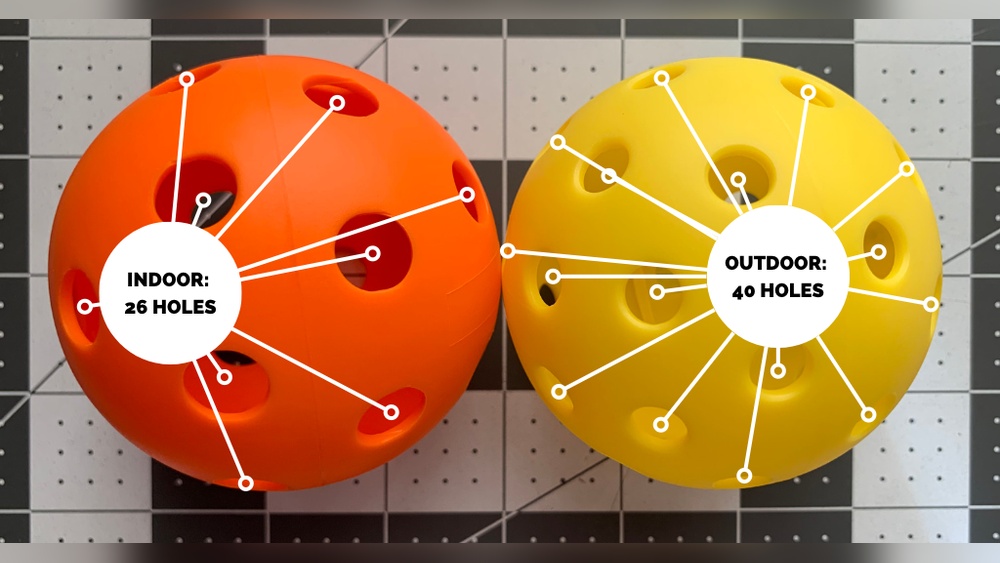
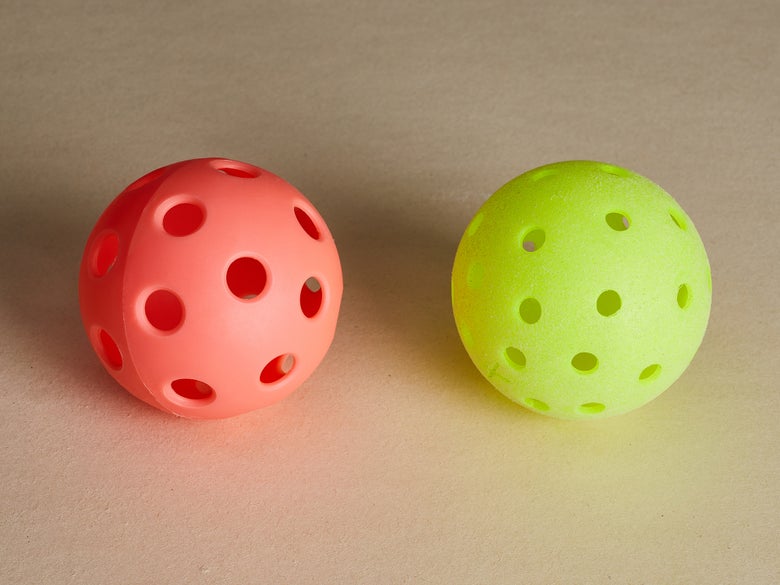
One of the most obvious differences is the holes. Indoor balls usually have 26 larger holes, while outdoor balls have 40 smaller holes. The reason? Wind. Outdoor balls need smaller holes to reduce how much the wind affects them. Indoor balls don’t have to worry about wind, so larger holes are used to make the ball slower and easier to control.
Weight And Hardness
Outdoor balls are heavier and harder. This means they travel faster and bounce higher. Indoor balls are a bit lighter and feel softer, making them easier to control but less powerful.
Color And Visibility
Both ball types come in bright colors like yellow, orange, and neon green. Outdoor balls are often more vibrant to make them easier to see in sunlight. Indoor balls might be slightly lighter in color, as gym lighting is less intense than outdoor sunlight.
Sound
If you’ve played both inside and outside, you’ll notice that outdoor balls make a louder, sharper “pop” sound when hit. Indoor balls are quieter and less harsh on the ears, which some players prefer.
Why The Differences Matter
You might wonder why so many small details matter. The answer is simple: the right ball can help your game, while the wrong ball can make you frustrated. Here’s how the differences affect your play:
- Control: Indoor balls are easier to control because they’re softer and slower. This is good for rallies and beginners learning technique.
- Speed: Outdoor balls are faster and bounce higher, which makes rallies quicker and more challenging.
- Wind Resistance: Outdoor balls are designed to handle wind, so they don’t move unpredictably in breezy conditions.
- Consistency: Using the right ball for the right environment means your shots behave the way you expect.
In-depth Look: Indoor Pickleball Balls
Indoor pickleball balls are made for gym floors and smooth surfaces. Let’s break down their special features:
Design
- Material: Softer plastic.
- Holes: 26 larger holes.
- Weight: Lighter than outdoor balls.
- Bounce: Lower bounce, which helps keep rallies going.
Playability
Indoor balls are forgiving. They don’t move as fast, so you have more time to react and set up your shots. Because the surface is smooth and there’s no wind, the ball’s path is predictable. The larger holes also make the ball less likely to “skid” or slide across the floor.
Common Indoor Ball Brands
- Onix Fuse Indoor
- Jugs Indoor
- Gamma Photon Indoor
Each brand has a slightly different feel, but all good indoor balls share the same basic features.
Best Situations For Indoor Balls
- School gymnasiums
- Community centers
- Sports clubs with wooden or synthetic floors
If you use an outdoor ball indoors, it will feel too fast and hard to control. Stick with indoor balls for indoor play.
In-depth Look: Outdoor Pickleball Balls
Outdoor balls face tough conditions: wind, rough courts, dirt, and sunlight. Their design helps them survive and perform well.
Design
- Material: Hard, thick plastic.
- Holes: 40 smaller holes.
- Weight: Heavier than indoor balls.
- Bounce: Higher and faster.
Playability
Outdoor balls move quickly and bounce higher, making outdoor pickleball a more aggressive, fast-paced game. The smaller holes help the ball resist wind, so you don’t see strange, unpredictable moves during a rally.
Common Outdoor Ball Brands
- Dura Fast 40
- Franklin X-40
- Onix Pure 2 Outdoor
Some brands are even approved for official tournaments, which have strict rules about ball size, weight, and bounce.
Best Situations For Outdoor Balls
- Asphalt or concrete courts
- Open-air clubs and parks
- Any situation with wind
If you use an indoor ball outdoors, you’ll quickly see problems: the ball won’t last, and wind will make your shots go wild.
Performance Comparison: Indoor Vs Outdoor Balls
To make it easier to see the differences, here’s a comparison:
| Feature | Indoor Ball | Outdoor Ball |
|---|---|---|
| Number of Holes | 26 (large) | 40 (small) |
| Material | Softer plastic | Harder plastic |
| Weight | Lighter | Heavier |
| Bounce | Lower | Higher |
| Speed | Slower | Faster |
| Durability | Less durable | More durable |
| Sound | Quieter | Louder |
Credit: www.pickleballwarehouse.com
How The Ball Changes The Game
The type of ball doesn’t just change how it feels. It can actually change strategy and skill development.
- Indoor play is focused on precision, control, and longer rallies. You can practice soft shots, dinks, and placement because the ball moves slower.
- Outdoor play rewards powerful shots, quick reactions, and adaptation to wind. Players need to be ready for fast exchanges and unpredictable bounces.
Switching between indoor and outdoor balls can even affect your muscle memory. Some players find they need to adjust their grip, swing, or even footwork when changing environments.
Common Mistakes When Choosing Pickleball Balls
Even experienced players make mistakes when it comes to choosing pickleball balls. Here are the most common ones:
- Using the wrong ball for the surface – An outdoor ball indoors feels too fast. An indoor ball outdoors gets blown around and wears out quickly.
- Not checking ball condition – Cracked or soft balls ruin games. Always check for cracks, warping, or soft spots before playing.
- Buying balls based only on price – Cheap balls may not be approved for play and can behave unpredictably.
- Ignoring color and visibility – Pick a color that stands out on your court and is easy to see for all players.
- Not knowing tournament rules – Official tournaments require specific brands and models of balls. Always check before showing up.

Credit: mypickleballgear.com
How To Choose The Right Ball For Your Game
Choosing the right pickleball ball isn’t hard, but a few simple tips can help you avoid frustration and improve your game.
Step 1: Know Your Playing Surface
- Indoors: Use indoor balls. Look for brands like Onix Fuse or Jugs.
- Outdoors: Use outdoor balls. Dura Fast 40 and Franklin X-40 are popular choices.
Step 2: Consider The Weather
- Windy conditions: Always use outdoor balls with small holes.
- Extreme heat or cold: Both can affect ball performance. In cold weather, outdoor balls can crack more easily; in hot weather, they can get soft.
Step 3: Think About Visibility
Choose a color that pops against the court and is easy for everyone to see. Yellow and neon green are usually the best.
Step 4: Check Tournament Rules
If you’re playing in a tournament, only certain balls are allowed. Check the event’s official list before you buy.
Step 5: Test Different Brands
Balls from different brands can feel slightly different, even if they meet the same standards. Try a few to see which one you like best.
Durability And Lifespan: What To Expect
No pickleball ball lasts forever. Both indoor and outdoor balls eventually wear out, but their lifespan depends on several factors:
- Indoor balls: Usually last longer because they aren’t exposed to rough surfaces or weather. Still, frequent play can make them soft or cause them to lose their bounce.
- Outdoor balls: Tend to wear out faster due to sunlight, rough courts, and temperature changes. Cracks and splits are common signs it’s time for a new ball.
If you play often, expect to replace outdoor balls every 10-20 hours of play, while indoor balls might last 20-30 hours or more.
The Impact Of Weather And Environment
Weather can have a surprising impact on pickleball balls:
- Cold weather: Outdoor balls become brittle and can crack. Some players store balls in a warm place before play to avoid this.
- Hot weather: Balls may become softer and lose their bounce. If you notice a ball feels “dead,” it’s probably time for a replacement.
- Humidity: Can affect ball grip and bounce, especially indoors.
For the best experience, keep a few spare balls handy and swap them out if you notice changes in performance.
Price Differences: Indoor Vs Outdoor Balls
Most pickleball balls are affordable, but there are price differences between indoor and outdoor options.
| Ball Type | Average Price (per ball) | Typical Pack Sizes |
|---|---|---|
| Indoor Ball | $2.50–$3.50 | 6, 12, 36 |
| Outdoor Ball | $2.50–$4.00 | 6, 12, 36 |
Outdoor balls cost slightly more because they use harder plastic. However, the difference is small. Buying in bulk can save money, especially if you play often.
Testing Different Balls: How To Find Your Favorite
Every player has their own preferences. Some like a softer feel, others want a ball that plays fast. The best way to find your favorite is to test a few brands. Many local sports shops or pickleball clubs offer demo balls you can try.
Ask other players about their favorites, and notice how different balls react to your style of play. For example, if you like to play lots of “dinks” and soft shots, you might prefer a softer indoor ball even for outdoor play on calm days.
Tournament Standards And Ball Approval
The USA Pickleball Association (USAPA) and International Federation of Pickleball (IFP) set strict rules for tournament balls. These rules cover:
- Diameter: 2.87 to 2.97 inches
- Weight: 0.78 to 0.935 ounces
- Bounce: 30 to 34 inches when dropped from 78 inches
- Number of holes: 26 (indoor) or 40 (outdoor)
- Color: Must be uniform, usually bright
Only balls approved by these groups can be used in official competitions. Check the official list at the USAPA website or your event organizer’s guide.
Innovations In Pickleball Ball Design
In recent years, manufacturers have tried new materials and designs to make balls last longer and play better. For example:
- Seamless construction: Some brands use a seamless design for greater durability.
- UV-resistant plastic: Helps prevent outdoor balls from breaking down in sunlight.
- Precision-drilled holes: Gives a more consistent flight.
Not every “innovation” works for every player, so test different options and see what fits your game.
How To Care For Your Pickleball Balls
Want your balls to last longer? A little care goes a long way.
- Store indoors: Keep balls out of direct sunlight and extreme temperatures.
- Avoid stepping on them: This can cause cracks or flat spots.
- Clean regularly: Wipe off dirt and dust, especially after playing outdoors.
If you notice a ball isn’t bouncing or flying right, replace it. Bad balls can ruin games and even cause injuries.

Credit: www.bigdillpickleballcompany.com
Real-world Example: Switching From Indoor To Outdoor Balls
Imagine you’ve played pickleball all winter in a gym using indoor balls. Now it’s spring, and you move outside. The first thing you’ll notice is the ball feels heavier and faster. Your dinks might fly too far, and wind can push the ball in unexpected directions.
Many players need a few sessions to adjust. You might need to hit softer, move your feet more quickly, and focus on keeping your shots low. This change can be frustrating at first, but it’s also a great way to improve your overall skills.
Which Ball Is Right For You?
There’s no single “best” ball for everyone. Think about where you play most, your style, and even the weather in your area.
- If you mostly play indoors, choose a high-quality indoor ball.
- If you play outdoors, invest in a durable outdoor ball.
- If you play both, keep a supply of each type and switch as needed.
Don’t let the wrong ball hold you back. The right ball makes the game more enjoyable and helps you play your best.
Frequently Asked Questions
What Happens If I Use An Indoor Pickleball Ball Outdoors?
Indoor balls are not designed for wind or rough surfaces. If you use them outdoors, they may fly unpredictably, get blown by the wind, and wear out quickly.
Can I Use Outdoor Balls Inside A Gym?
You can, but outdoor balls are heavier and faster. This makes indoor games harder to control and can reduce the quality of rallies.
How Do I Know If A Pickleball Ball Is Approved For Tournaments?
Check the USAPA or IFP approved ball list, or look for the official stamp on the packaging. Tournament-approved balls must meet strict size, weight, and bounce standards.
Why Do Outdoor Balls Break More Often In Cold Weather?
The hard plastic used in outdoor balls becomes brittle in cold temperatures, which increases the risk of cracking. Store your balls indoors in winter for better durability.
Is There A “universal” Ball For Both Indoor And Outdoor Play?
No, not really. Some balls are marketed as “all-court,” but they usually don’t perform as well as specialized indoor or outdoor balls in their proper environments.
Pickleball is a game of skill, strategy, and—believe it or not—a bit of science. Choosing between indoor and outdoor balls isn’t just about following rules; it’s about matching the right tool to the right task. Whether you’re playing in a gym or under the open sky, the right ball helps you get the most out of every match. For more information on ball standards, visit the USA Pickleball Association.
Now that you know the difference, you’re ready to step onto any court with confidence. Happy playing!