
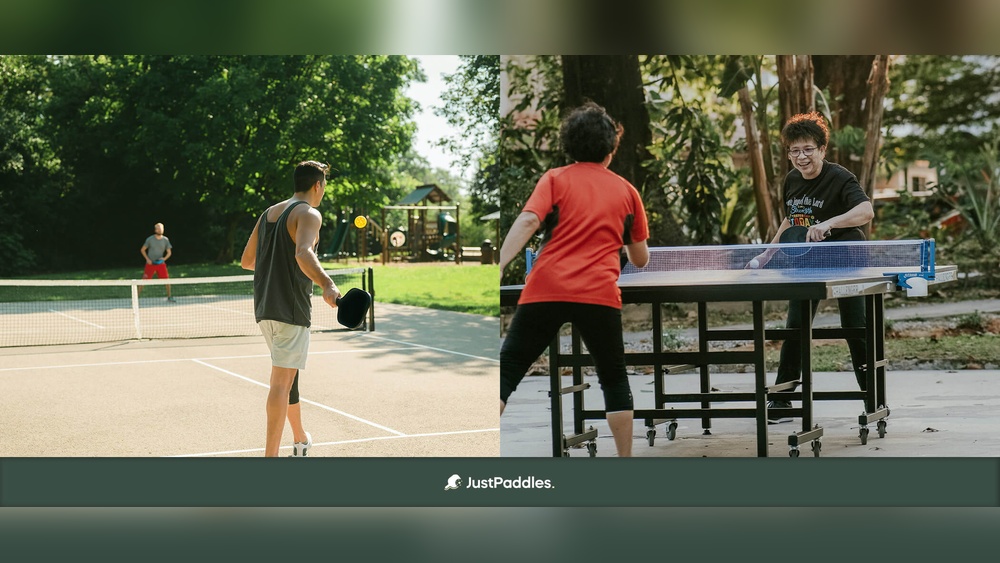
Pickleball Vs Ping Pong: An In-depth Comparison
Pickleball and ping pong might seem similar at first glance—both involve paddles, a ball, and a court. But if you look closer, you’ll see that these two sports offer completely different experiences. Some people enjoy the fast rallies of ping pong, while others love the combination of tennis and badminton in pickleball. Whether you are curious about trying a new hobby or want to know which game suits your lifestyle, understanding the true differences between pickleball and ping pong can help you decide.
Many people confuse the two or think they are just backyard games. The truth is, both have strong communities, professional tournaments, and health benefits. But how do you choose between them? Let’s explore everything you need to know—rules, equipment, playing style, physical benefits, and more.
Origins And History
The story of ping pong goes back over a century. It started in England in the 1880s as an after-dinner amusement for the upper class. Using books as paddles and a rounded cork as a ball, early players enjoyed a simple indoor activity. By 1901, the name “ping pong” was trademarked, and the game quickly spread across Europe and Asia. Today, the International Table Tennis Federation (ITTF) oversees professional play, and table tennis is an Olympic sport.
Pickleball is much younger. It was invented in 1965 on Bainbridge Island, Washington, by three dads—Joel Pritchard, Bill Bell, and Barney McCallum—who wanted to entertain their families. They mixed elements of tennis, badminton, and ping pong, and created a new game with its own rules. Pickleball has exploded in popularity, especially in the United States, and is now played in over 60 countries.
A non-obvious insight: While ping pong grew from a parlor game into a major global sport, pickleball started as a family pastime and became an international craze in less than 60 years. This origin affects not just the game’s rules but also the culture and community around each sport.
Equipment And Gear
Paddles And Rackets
Both games use paddles, but the design is very different.
- Ping pong paddles are small, solid wood, covered with rubber for grip and spin. They’re lightweight (usually 150-250 grams), allowing fast wrist movement.
- Pickleball paddles are larger, made from composite materials like carbon fiber or polymer. They weigh 200-300 grams, and the bigger surface helps with control over a larger ball.
Balls
- Ping pong balls are small (40 mm diameter), lightweight (2.7 grams), and made of celluloid or similar plastic. They bounce quickly and can spin a lot.
- Pickleball balls are larger (about 74 mm diameter), with holes like a wiffle ball, and weigh about 24-26 grams. Outdoor balls are a bit heavier and have smaller holes than indoor balls.
Court And Table
Here’s a side-by-side comparison to help visualize the difference:
| Aspect | Pickleball | Ping Pong |
|---|---|---|
| Playing Surface | Outdoor/Indoor Court | Table (Indoors) |
| Size | 20 ft x 44 ft (6.1m x 13.4m) | 9 ft x 5 ft (2.7m x 1.5m) |
| Net Height | 34 inches at center | 6 inches (15.25 cm) |
A key difference: Pickleball is usually played on a dedicated court or a repurposed tennis/badminton court. Ping pong is always on a table.
Clothing And Footwear
- In pickleball, players wear athletic shoes with good grip, similar to tennis shoes. Comfortable, moisture-wicking clothes are best, especially outdoors.
- Ping pong players usually wear indoor court shoes with flat soles, shorts, and a T-shirt or a sports jersey.

Credit: www.youtube.com
Rules And Gameplay
Serving
In ping pong, the serve must bounce once on each side before play continues. A player serves two points in a row, then the serve switches. The ball must be tossed at least 16 cm up before being hit.
Pickleball has a different serving style. The serve is always underhand, made diagonally, and must land in the opponent’s service box. The server continues until they lose a point. In doubles, both partners get to serve before the serve goes to the other team.
Scoring
- Ping pong matches are played to 11 points, with a two-point margin needed to win. Players switch serves every 2 points.
- Pickleball is usually played to 11 points, win by 2, but only the serving side can score.
Playing Style
- Ping pong is known for speed and spin. Players stand close to the table, and rallies can be lightning-fast, often over in a few seconds.
- Pickleball has a slower pace, with longer rallies. Players often volley at the net and use strategic soft shots called “dinks.”
A non-obvious insight: In pickleball, there’s a “kitchen” or non-volley zone near the net. Players cannot smash the ball while standing inside this zone, which changes strategy compared to ping pong.
Singles Vs Doubles
Both sports can be played as singles or doubles. However, pickleball is more often played as doubles, especially among older adults or in recreational leagues. Ping pong has equal popularity in both formats at the amateur level, but professional singles matches receive more attention.
Physical Demands And Health Benefits
Cardio And Movement
Pickleball requires more running and quick direction changes. A typical game involves 2,000–3,000 steps per hour, making it a good workout for the legs and heart. Players often squat, lunge, and sprint short distances.
Ping pong is less demanding on the legs but very intense for hand-eye coordination and reflexes. Players burn about 270 calories per hour and get a moderate cardio workout, especially in fast rallies.
Muscles Used
- Pickleball: Legs, core, shoulders, and arms. Lower body strength is important for moving quickly and staying balanced.
- Ping pong: Wrists, forearms, shoulders, and core. The sport builds fast-twitch muscle fibers and sharpens reflexes.
Injury Risk
Both sports are low-impact compared to tennis or soccer. But pickleball players face a higher risk of ankle sprains and overuse injuries, especially if they’re not used to lateral movement.
Ping pong injuries are usually minor—wrist pain, elbow soreness, or the occasional bump from diving for a shot. Serious injuries are rare.
Skill Development And Learning Curve
Beginner Friendliness
Pickleball is famous for being easy to learn. The rules are simple, and you can start rallying in your first session. The larger paddle and slower ball help beginners build confidence quickly.
Ping pong has a steeper learning curve. Mastering spin, ball placement, and paddle angles takes time. Beginners can rally, but serious play requires practice.
Advanced Play
In pickleball, advanced players use spins, dinks, and strategy to control the game. The best players have quick reflexes and excellent court positioning.
In ping pong, the game’s skill ceiling is very high. Top players can generate incredible spin (more than 9,000 rpm), and rallies reach speeds over 70 miles per hour.
A detail many miss: In ping pong, the type and thickness of paddle rubber can greatly affect play style. In pickleball, paddle core material and surface texture also matter, but beginners often overlook this.
Social And Community Aspects
Pickleball is known for its welcoming community. Many local parks have open play, where people rotate partners and cheer each other on. The sport attracts players of all ages, but especially those over 50, thanks to its friendly, low-impact nature.
Ping pong clubs are common in cities and schools. The sport has a strong following in Asia, Europe, and the Americas. It’s popular as a casual game in basements and rec rooms, but serious clubs offer coaching and tournaments.
A practical insight: Pickleball players often stay after games to socialize or organize group outings. Ping pong players may have less off-table interaction, but the sport is great for building focus and friendly competition.
Cost And Accessibility
Equipment Costs
- Pickleball paddle: $30–$150
- Pickleball balls: $10 for a pack of 6
- Court shoes and gear: $50–$120
- Ping pong paddle: $10–$100 (recreational); $50–$200 (professional)
- Balls: $10 for a pack of 12
- Table: $150–$2,000 (home use)
Facility Access
Pickleball courts are often outdoors and free to use in parks. Some gyms charge a small fee. Indoor courts are growing, but may require a membership.
Ping pong tables are easy to set up at home, in schools, or at clubs. You only need a small space—any basement or garage will do. Clubs may charge a fee, but home play is very affordable.
Weather And Space
Pickleball is best outdoors when weather is good, but indoor courts are becoming common. Ping pong is not affected by weather, which makes it ideal for year-round play.
Competitive Scene
Local And National Competitions
Pickleball tournaments are held in almost every state in the US, with players grouped by age and skill level. The USA Pickleball Association (USAPA) manages rankings and official rules.
Ping pong has a longer history of organized competition. Every country has a national governing body, and the ITTF runs the World Championships and Pro Tour.
International Events
- Pickleball is not yet an Olympic sport, but the International Federation of Pickleball is working toward it.
- Ping pong has been in the Olympics since 1988. China dominates, with over 60% of all medals.
Prize Money And Sponsorship
Ping pong professionals can earn six-figure incomes through tournaments and endorsements. Pickleball pros earn less, but prize money is rising as the sport grows.
A key difference: Ping pong has more TV coverage and established leagues in Asia and Europe. Pickleball is catching up, but most exposure is still local or online.
Playing Experience: What Does It Feel Like?
Pace And Intensity
Ping pong is fast. Rallies can last only a second or two, with balls zipping across the table. Your reflexes and focus are tested constantly.
Pickleball feels more relaxed at first, with longer rallies and more time to react. As skill levels rise, the pace quickens, but the game remains less frantic than ping pong.
Sound And Atmosphere
The ping of the celluloid ball in ping pong is sharp and quick, echoing in indoor halls. Pickleball’s plastic ball makes a hollow “pop,” and outdoor courts can get lively with laughter and cheers.
Player Interaction
Pickleball often involves more conversation and friendly banter during games. Ping pong is more focused during play, but there’s plenty of joking and chatting before and after matches.
Age And Physical Requirements
For Children
Both sports are great for kids. Ping pong helps with hand-eye coordination and focus, while pickleball teaches teamwork and basic athletic skills.
For Adults And Seniors
Pickleball is especially popular among seniors because it is gentle on the joints, easy to learn, and social. Many clubs organize age-based tournaments.
Ping pong is also good for seniors, as it’s low-impact and improves mental agility. However, bending low for shots can be a challenge for some older adults.
A non-obvious insight: Pickleball’s underhand serve and “kitchen” rule reduce stress on the body, making it safer for people with knee or back issues.

Credit: pickleballunion.com
Mental Benefits And Cognitive Skills
Ping pong is known for improving quick thinking, reaction time, and decision-making. The fast pace forces your brain to process information rapidly.
Pickleball also builds strategy, anticipation, and focus. The game’s slower pace allows for deeper tactical thinking, such as setting up points and reading your opponent.
Recent studies show both sports help prevent cognitive decline in older adults, keeping the brain sharp and improving mood.
Cultural Impact And Media Presence
Ping pong is deeply embedded in Asian culture, especially in China, Japan, and Korea. In Europe, it’s a popular school sport, and in the US, it’s seen in many homes and community centers.
Pickleball is a rising star in North America, with coverage in newspapers, TV, and YouTube. Celebrities like Bill Gates and Andre Agassi have promoted the sport, bringing more attention to its growth.
The sport’s rapid rise has led to the building of dedicated pickleball courts in parks and rec centers across the US and Canada. Meanwhile, ping pong tables are a common sight in workplaces, youth clubs, and even bars.
Which Sport Is Right For You?
Choosing between pickleball and ping pong depends on your goals, lifestyle, and preferences. Here’s a quick summary to help you decide:
| Preference | Pickleball | Ping Pong |
|---|---|---|
| Outdoor Activity | Yes | No |
| Indoor Play | Limited | Excellent |
| Easy to Learn | Very | Moderate |
| Space Needed | Large court | Small room |
| Best for Socializing | Yes | Good |
| Best for Reflexes | Good | Excellent |
| All Ages | Yes | Yes |
If you want a social, outdoor game that’s easy to learn, pickleball is a great choice. If you prefer a fast-paced indoor sport that sharpens your mind, ping pong may be the better fit.
Common Mistakes Beginners Make
- Ignoring proper footwear: Many new pickleball players wear running shoes, which can cause ankle injuries. Always choose court shoes.
- Gripping the paddle too tightly: In both sports, a relaxed grip improves control and reduces fatigue.
- Standing too close/far: Ping pong players sometimes crowd the table, while pickleball beginners stay glued to the baseline. Learn ideal positioning early.
- Neglecting spin: In ping pong, understanding spin is crucial. Beginners often hit flat shots and lose points.
- Forgetting the “kitchen” rule: New pickleball players often step into the non-volley zone and lose easy points.

Credit: www.youtube.com
Tips To Improve Quickly
- Watch online tutorials and match videos to understand advanced strategies.
- Practice with players better than you to learn faster.
- Warm up before playing to avoid injuries, especially in pickleball.
- In ping pong, focus on developing your serve—it’s the only time you control the point.
- Join a local club or league to meet new people and get regular practice.
Where To Learn More
For official rules, equipment guides, and tournament schedules, visit the USA Pickleball Association or the International Table Tennis Federation. These organizations provide resources for all skill levels and ages. For a deep dive into the science and history of these sports, check out this Wikipedia article on table tennis.
Frequently Asked Questions
What Is The Main Difference Between Pickleball And Ping Pong?
The main difference is the playing area and pace. Pickleball is played on a court (outdoors or indoors) with a larger paddle and ball, while ping pong is played on a table indoors with smaller equipment. Pickleball involves more running, while ping pong is faster and requires sharper reflexes.
Can You Play Pickleball And Ping Pong With The Same Paddle?
No, each sport has its own paddle design. Pickleball paddles are larger and made for striking a plastic ball with holes. Ping pong paddles are smaller, covered in rubber, and built for spinning a lightweight celluloid ball.
Which Sport Is Better For Seniors?
Both are excellent, but pickleball is especially popular among seniors due to its low impact on joints, easy-to-learn rules, and social atmosphere. Ping pong is also good for mental sharpness and coordination.
Is Ping Pong More Difficult Than Pickleball?
Ping pong has a steeper learning curve for advanced skills like spin and speed. Pickleball is easier for beginners, but advanced play requires strategy and quick movement.
Can You Play Pickleball Indoors?
Yes, pickleball can be played indoors on adapted courts or in gyms. However, finding available indoor courts may be harder than setting up a ping pong table at home.
Whether you choose the lively rallies of pickleball or the quick-fire duels of ping pong, both offer fun, fitness, and friendship. The best way to decide is to try each sport and see which one brings you the most joy.