
Have you ever wondered how many pickleball courts can fit on a tennis court? If you’re thinking about setting up pickleball courts or just curious about space and layout, this question is more interesting than it seems.
Knowing the exact number can help you make the most of your space and plan better for games and gatherings. Keep reading, because by the end of this article, you’ll have clear answers and practical tips that could change the way you use your court space.
Tennis Court Dimensions
The size of a tennis court is key to understanding how many pickleball courts fit inside it. Tennis courts have set dimensions that make them ideal for two players or doubles matches. Knowing the exact length and width helps in planning space for other sports like pickleball.
The lines and zones on a tennis court also affect how you can arrange smaller courts within it. Each marking has a purpose for tennis play, but these lines can sometimes be used as guides for pickleball courts. Let’s explore the details of tennis court dimensions.
Standard Length And Width
A standard tennis court measures 78 feet long and 36 feet wide for doubles matches. For singles matches, the width is reduced to 27 feet. The total area allows enough space for players to move freely around the court.
This large size means multiple smaller courts, like pickleball courts, can fit inside. The tennis court’s rectangular shape is perfect for dividing into sections for other sports.
Court Markings And Zones
Tennis courts have several important lines and zones. The baseline runs across the width at each end. The service lines divide the court into service boxes. The net stretches across the center.
These markings create areas used during the game, but they also serve as reference points when fitting pickleball courts inside a tennis court. Understanding these zones helps in placing pickleball courts correctly without overlapping important tennis lines.
Credit: www.sportmaster.net
Pickleball Court Size
Pickleball courts have a smaller size than tennis courts. This makes it possible to fit several pickleball courts inside one tennis court. Understanding the court size helps to plan space well. It also explains how many courts can fit together.
The pickleball court is designed for fast, fun play. It has clear boundaries and important zones. Knowing these details helps players and organizers use the space smartly.
Official Court Measurements
A standard pickleball court measures 20 feet wide and 44 feet long. This size includes the playing area and sidelines. The total court size is much smaller than a tennis court. Tennis courts are 36 feet wide and 78 feet long. This size difference allows multiple pickleball courts on one tennis court.
The official pickleball court has a net height of 36 inches at the sidelines. It drops to 34 inches in the middle. These measurements follow the rules set by pickleball associations worldwide. The compact size makes the sport easier to set up in many places.
Key Areas On The Court
The pickleball court has several important areas. The non-volley zone, or “kitchen,” is 7 feet from the net on each side. Players cannot hit the ball in the air from this zone. This rule keeps the game safe and fair.
Beyond the kitchen are the baseline and sidelines. The baseline marks the back boundary of the court. Sidelines mark the sides. These lines define the playing area clearly. Understanding these zones helps players follow the rules and enjoy the game.
Fitting Pickleball Courts On A Tennis Court
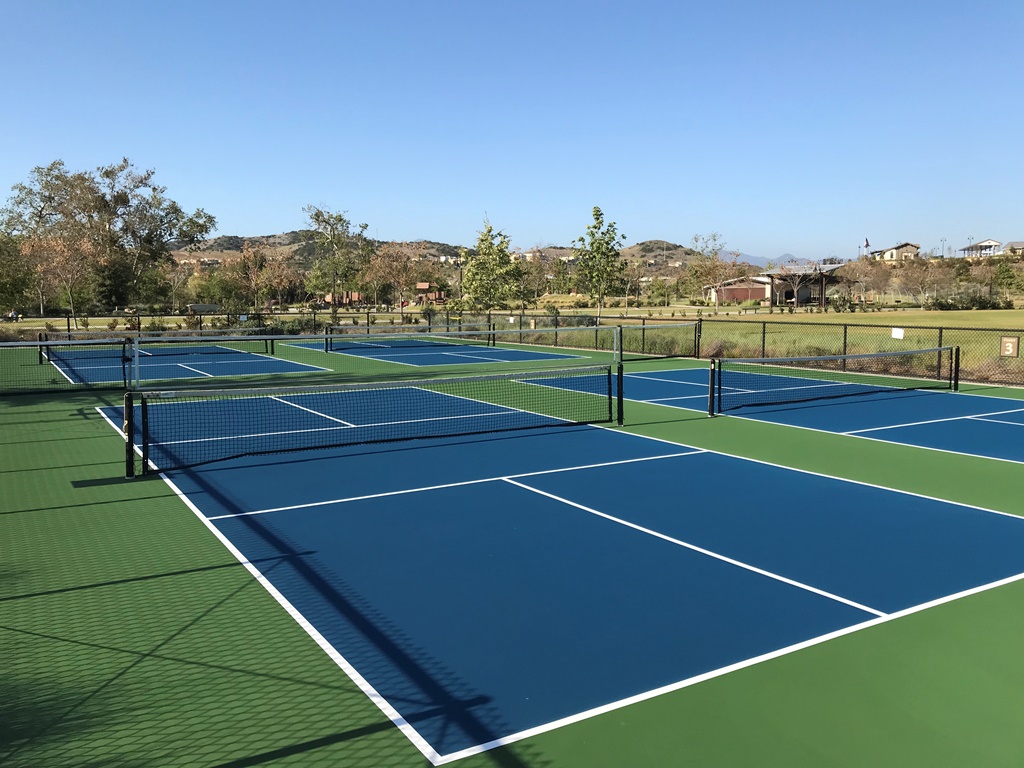
Pickleball courts can fit inside a tennis court space. This helps use the area better. Many places turn one tennis court into multiple pickleball courts. It saves money and space. Understanding how many pickleball courts fit depends on size and layout.
Maximum Number Of Courts
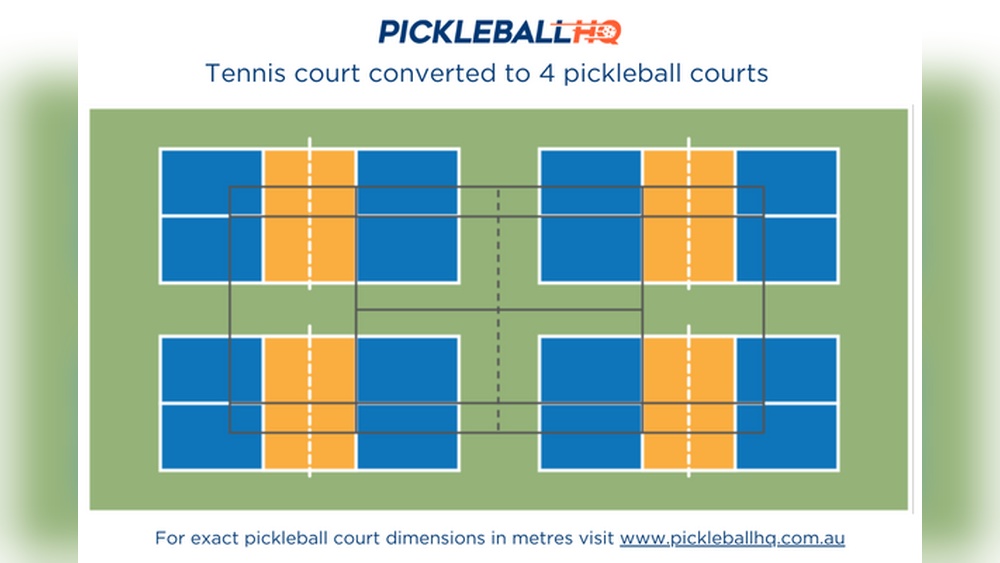
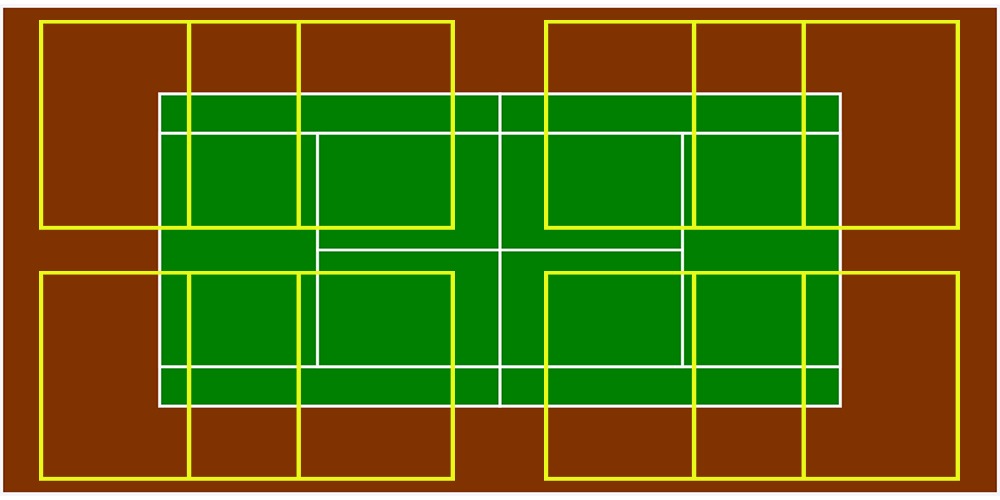
A standard tennis court is 78 feet long and 36 feet wide. A pickleball court measures 44 feet long and 20 feet wide. You can fit up to four pickleball courts on one tennis court. This is the highest number possible without overlap. Four courts allow more players at the same time.
Court Orientation Options
Pickleball courts can be placed either side-by-side or end-to-end. Side-by-side layout places two courts next to each other across the tennis court’s width. End-to-end layout arranges courts along the tennis court’s length. The best orientation depends on space and player flow. Different layouts help fit the maximum courts safely.
Credit: northstateresurfacing.com
Space Considerations
Space plays a big role when fitting pickleball courts on a tennis court. It is not just about placing the courts side by side. Proper space helps players move freely and stay safe. Understanding how much space is needed keeps the game fun and injury-free.
Required Buffer Zones
Buffer zones are empty spaces around the courts. These zones stop players from running into walls or fences. They also give room for players to swing paddles without hitting others. A good buffer zone is at least 5 feet wide around each pickleball court. This space helps avoid accidents and keeps the game smooth.
Player Movement And Safety
Players need room to move quickly during the game. Tight spaces can cause trips and falls. Safe player movement means having enough space behind and beside the court. This space lets players chase the ball without risk. Clear areas improve comfort and reduce injuries.
Installation Tips
Installing pickleball courts on a tennis court needs careful planning. Proper steps make sure the courts are safe and enjoyable. Following good installation tips helps use the space well and keeps the surface durable. Focus on surface preparation and line painting for the best results.
Surface Preparation
Start by cleaning the tennis court surface thoroughly. Remove dirt, debris, and any loose materials. Check for cracks or damage and repair them before painting. A smooth surface helps the paint stick better and lasts longer. Make sure the court is dry before starting the next steps. Proper surface prep prevents peeling and uneven lines later.
Line Painting Techniques
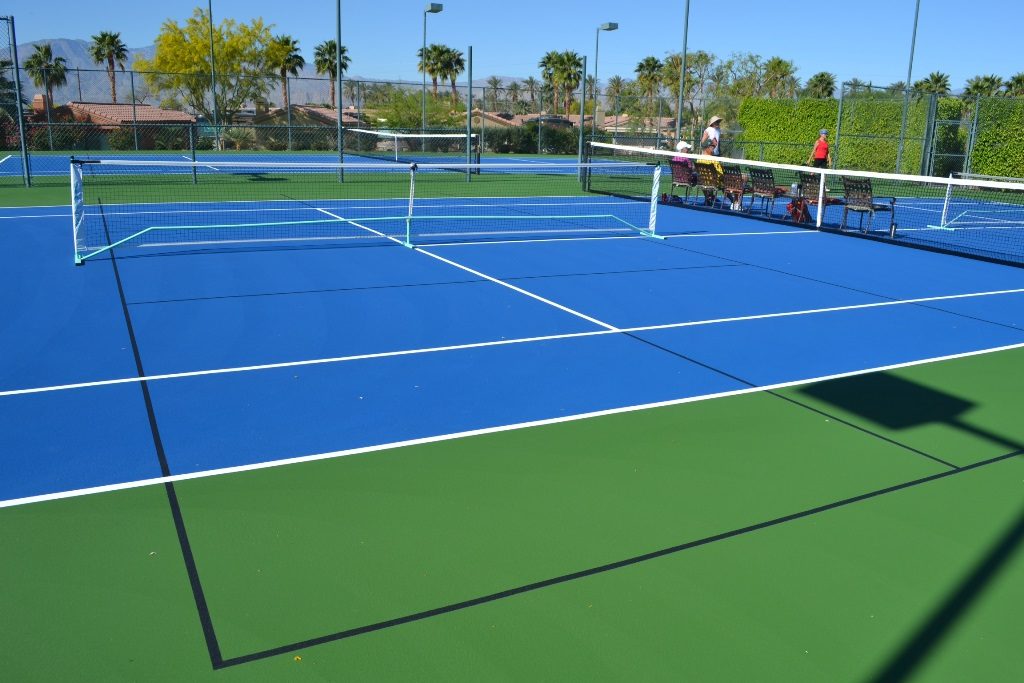
Use high-quality, outdoor court paint for clear, lasting lines. Measure and mark the court carefully before painting. Use a stencil or tape for straight, even lines. Paint thin layers to avoid drips and smudges. Allow each layer to dry completely before applying the next. Clear, bright lines improve gameplay and court appearance.
Credit: www.sportmaster.net
Benefits Of Multiple Pickleball Courts
Having multiple pickleball courts on a tennis court offers many benefits. It makes the space more useful and fun for players. More courts mean more chances to play and practice. It also helps build a stronger pickleball community. These benefits improve the overall experience for everyone involved.
Increased Player Capacity
Multiple pickleball courts allow more players to play at the same time. This reduces waiting time and lets players enjoy the game more. Groups can play together without crowding. It makes the facility more efficient and welcoming. More players can join events, matches, or casual games easily.
Community Engagement
Many courts encourage people to meet and socialize. Players from different skill levels come together. It creates a friendly and supportive environment. Local clubs and groups can organize tournaments and lessons. This strengthens community ties and promotes healthy living. A lively pickleball space attracts visitors and grows interest in the sport.
Common Challenges
Converting a tennis court into multiple pickleball courts comes with its own set of challenges. These issues affect how well the space is used and how smoothly games can be scheduled. Understanding these challenges helps in planning better layouts and schedules.
Space Limitations
Tennis courts are large but may not fit many pickleball courts comfortably. Each pickleball court needs enough room for players to move safely. Lines and nets must be placed carefully to avoid confusion. Overlapping lines can make it hard to follow the game. Also, space around the courts is needed for players to rest and watch. Without enough space, the play experience can suffer.
Scheduling Conflicts
Sharing a tennis court for pickleball means time must be split. Tennis players and pickleball players may want to play at the same time. This causes conflicts in booking the courts. Proper scheduling is needed to keep both groups happy. Without clear schedules, players may face long waits. Managing court time fairly is key for smooth use.
Examples From Real Facilities
Many sports centers have changed tennis courts into pickleball courts. This change helps use space better. It also meets the growing demand for pickleball. Here are some real examples from facilities that made this switch.
Successful Court Conversions
A community park in Oregon fit four pickleball courts on one tennis court. They used clear lines and different colors for each pickleball court. Players found it easy to play without confusion. The park saw more visitors and more fun games.
Another facility in Florida converted two tennis courts into eight pickleball courts. They added nets and posts that can be moved. This gave flexibility for tennis or pickleball games. The place became popular for both sports, making many players happy.
Lessons Learned
Some places found it tricky to fit pickleball courts perfectly. Space for players to move around is very important. Narrow sidelines can cause safety issues. Good lighting is needed for smaller courts to keep players safe.
Clear court markings help players avoid mix-ups during matches. Using different paint colors for tennis and pickleball lines works well. Also, portable nets make the court useful for many sports. Planning the layout before starting saves time and money later.
Frequently Asked Questions
How Many Pickleball Courts Fit On One Tennis Court?
A standard tennis court can fit two pickleball courts side by side. Pickleball courts are smaller, measuring 20 by 44 feet. Tennis courts measure 78 by 36 feet, allowing efficient use of space for two pickleball courts.
What Are The Size Differences Between Tennis And Pickleball Courts?
Tennis courts are much larger, typically 78 by 36 feet. Pickleball courts are 20 by 44 feet. This size difference allows multiple pickleball courts to fit within one tennis court area.
Can Tennis Courts Be Easily Converted Into Pickleball Courts?
Yes, tennis courts can be converted into pickleball courts with minimal adjustments. Temporary lines and portable nets make the conversion quick and affordable. This flexibility promotes shared use and maximizes court availability.
Why Convert Tennis Courts To Pickleball Courts?
Pickleball is growing rapidly and requires more courts. Converting tennis courts helps meet demand without new construction. It’s cost-effective and encourages community participation in both sports.
Conclusion
A tennis court can fit several pickleball courts side by side. This makes it easy to share space between players. Pickleball courts are smaller, so you get more play areas. Knowing this helps communities plan sports facilities better. It also saves money and space in parks.
Now, players can enjoy both games without needing separate courts. Sharing courts brings more fun for everyone involved.