
Are you curious about which racket sport might be the perfect fit for you? Whether you’re looking to try something new or want to understand the differences before picking up a paddle, knowing the key features of Padel, Paddle Tennis, and Pickleball can make all the difference.
Each game has its own unique style, pace, and strategy that could match your energy and preferences. Keep reading, and you’ll discover what sets these sports apart—and which one could become your next favorite way to stay active and have fun.
Game Origins
Padel, Paddle Tennis, and Pickleball are popular racquet sports worldwide. Each has a unique history and origin story. Understanding their beginnings helps us appreciate their differences and similarities.
These sports evolved in different places and times but share a common love for fast-paced, fun play. Let’s explore where each game started and how they grew over time.
History Of Padel
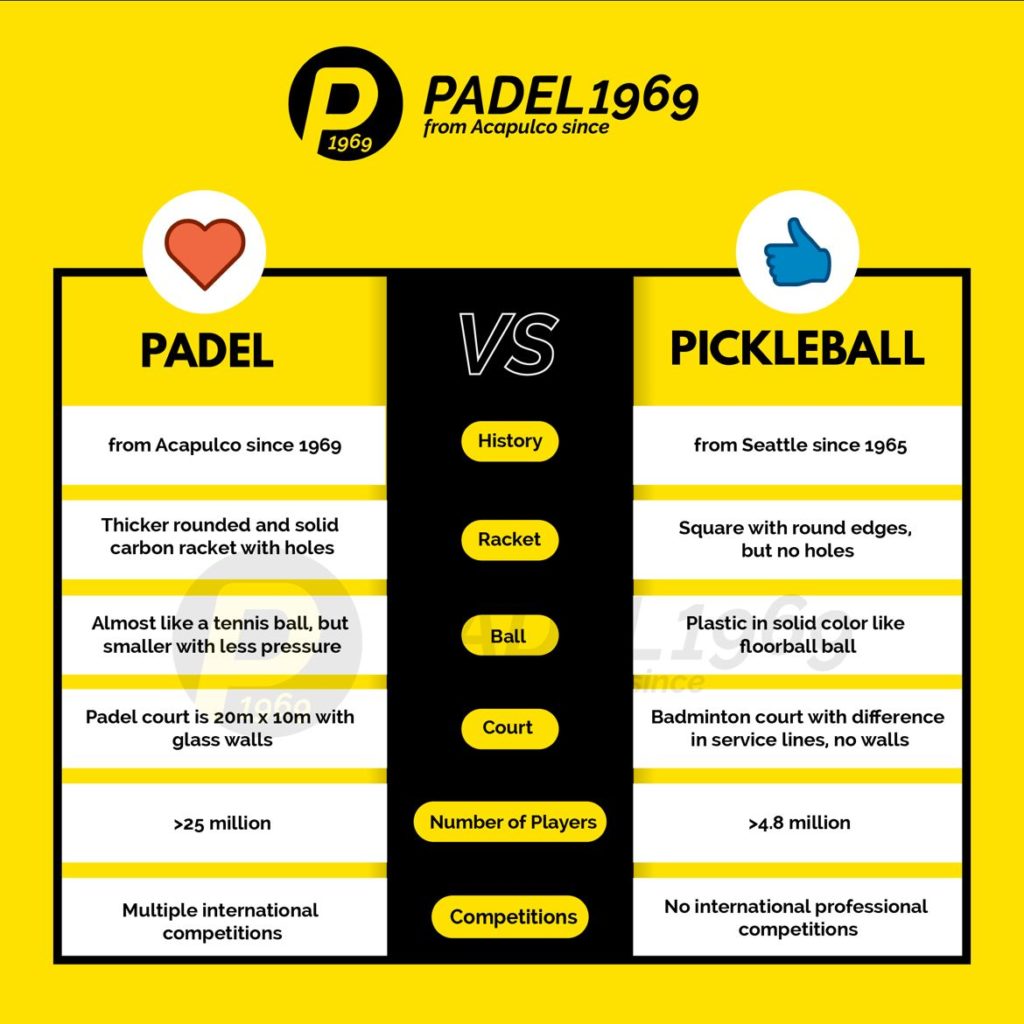
Padel started in Mexico in 1969. Enrique Corcuera created the first court at his home. He added walls around the court, which players could use to bounce the ball. This new style made the game exciting and fast.
From Mexico, Padel spread to Spain and Argentina. Today, it is very popular in Europe and Latin America. The sport uses solid paddles and a lower net than tennis.
Roots Of Paddle Tennis
Paddle Tennis began in the United States in 1898. It was created as a simpler version of tennis for smaller courts. The game uses solid paddles and a lower net too. It was popular in New York and grew in urban areas.
The sport is fast and easy to learn. Paddle tennis courts are smaller than tennis courts. It is often played in parks and schools.
Pickleball Beginnings
Pickleball started in 1965 in Washington State, USA. Joel Pritchard and his friends made the first game with a wiffle ball and wooden paddles. They played on a badminton court with a lower net.
The game quickly gained fans for its simple rules and fun play. Pickleball uses a plastic ball with holes and solid paddles. Today, it is one of the fastest-growing sports in the US.
Court Layouts
Understanding court layouts helps grasp how Padel, Paddle Tennis, and Pickleball differ. Each sport has unique court features that affect play style and strategy. Knowing these differences guides players and fans alike.
Padel Court Features
Padel courts are enclosed with glass walls and metal mesh. The court measures 20 meters long and 10 meters wide. Walls are part of the game, allowing the ball to bounce off. Net height is 88 cm at the center. The surface is usually artificial turf or concrete with a smooth finish.
Paddle Tennis Court Size
Paddle tennis courts are smaller than traditional tennis courts. They measure 20 meters long and 10 meters wide. The court is open, without walls around it. Net height is about 84 cm at the center. The surface is often asphalt or concrete with a textured finish.
Pickleball Court Design
Pickleball courts share similar dimensions with badminton courts. They measure 13.4 meters long and 6.1 meters wide. The net is lower, standing at 86 cm in the center. The court is open and marked with clear boundary lines. Surfaces vary but often include smooth concrete or wooden floors.
Equipment Essentials
Each sport—Padel, Paddle Tennis, and Pickleball—has its own gear needs. Knowing the equipment essentials helps you play better. The right tools make the game easier and more fun.
Let’s break down the key gear you need for each sport. This guide covers paddles and balls, net setup, and footwear.
Paddles And Balls
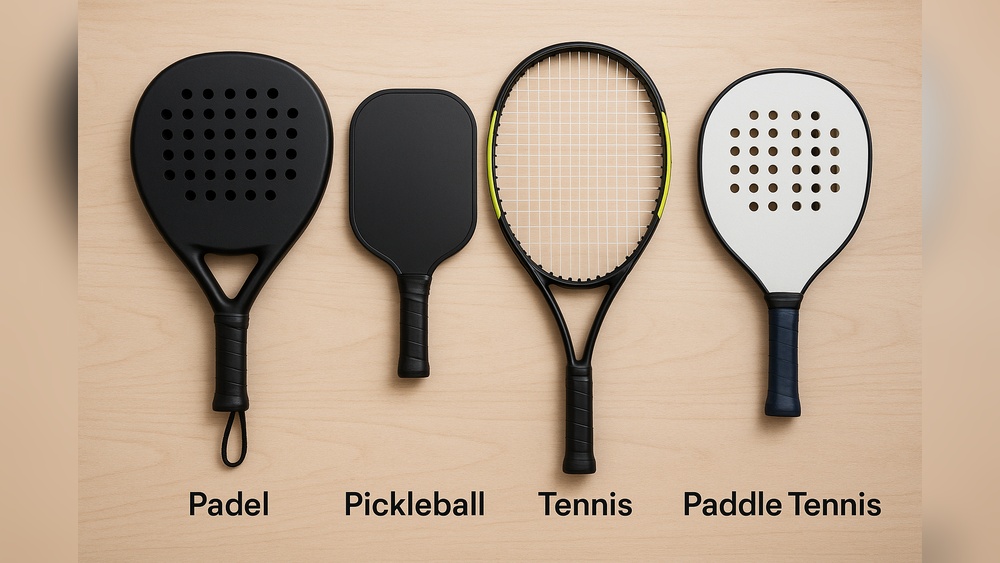
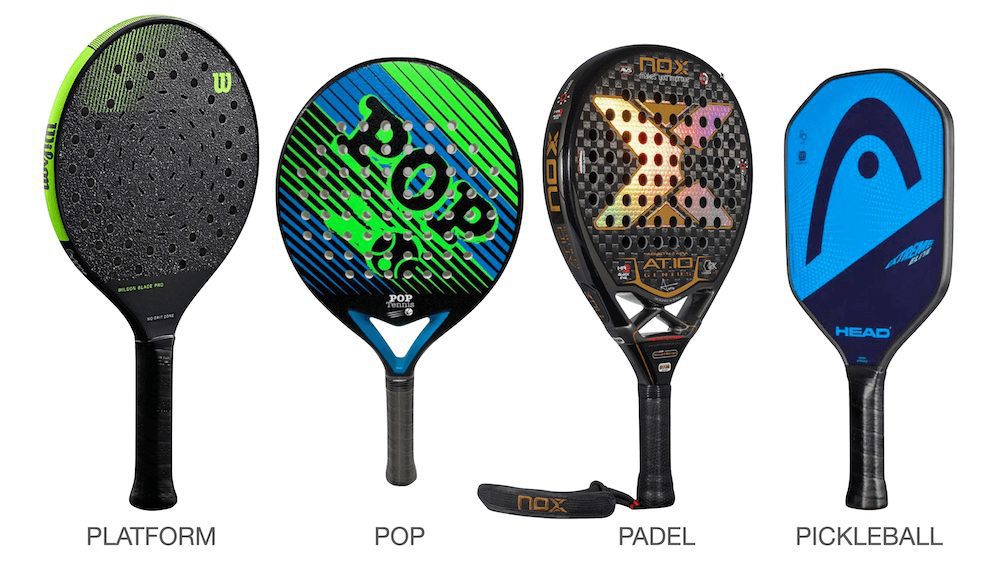
Padel paddles are solid with holes and made from composite materials. They are heavier than pickleball paddles but lighter than paddle tennis ones. Padel balls look like tennis balls but have less pressure for slower bounce.
Paddle tennis uses paddles similar to padel but usually made of wood or composite with no holes. Its balls are smaller and softer than tennis balls, designed to bounce less.
Pickleball paddles are lightweight and made from wood, composite, or graphite. They are smaller than padel paddles. The balls are plastic with holes, similar to wiffle balls, allowing slower play and longer rallies.
Net Specifications
Padel nets are 10 meters wide and 0.88 meters high at the center. The net has a tape on top and must be tight.
Paddle tennis nets are also 10 meters wide but slightly higher, about 0.91 meters at the center. The net tension is important for proper play.
Pickleball nets are 6.1 meters wide, shorter than the others. The height is 0.86 meters at the center, with posts set outside the court lines.
Footwear And Accessories
Padel requires shoes with good grip for quick lateral moves. Look for shoes made for court sports with cushioning and support.
Paddle tennis players use similar court shoes. Grip and comfort help with fast movements on hard surfaces.
Pickleball players need shoes designed for indoor or outdoor courts. Non-marking soles are common to protect surfaces. Comfortable shoes reduce injury risk.
Accessories like wristbands, hats, and sunglasses help with sweat and sun. Gloves are rare but some players use them for better paddle control.
Credit: padel1969.com
Rules And Scoring
Understanding the rules and scoring is key to enjoying Padel, Paddle Tennis, and Pickleball. Each sport has unique gameplay and point systems that shape the experience. Clear rules make the games fair and fun for all players.
Padel Gameplay Basics
Padel is played in doubles on a court surrounded by glass walls. The ball can bounce off these walls during play. Each team serves underhand from behind the baseline. Points follow the traditional tennis scoring: 15, 30, 40, and game. A match usually consists of best-of-three sets. Players switch sides after every odd game.
Paddle Tennis Rules
Paddle tennis uses a smaller court and a depressurized ball. Serves are underhand and must land in the diagonal service box. The ball stays in play even after hitting the court walls. Games are played to 21 points in some formats, but often follow standard tennis scoring. Matches can be singles or doubles.
Pickleball Scoring System
Pickleball uses a unique scoring style. Only the serving team can score points. Games are played to 11 points, and a team must win by 2 points. Each side serves until they lose a rally. Players serve underhand from behind the baseline. The ball must bounce once on each side before volleys begin.
Playing Techniques
Playing techniques define how players perform in Padel, Paddle Tennis, and Pickleball. Each sport has unique moves and tactics that suit its court size and rules. Understanding these techniques helps players improve and enjoy the game more. Let’s explore the main stroke styles and strategies of each sport.
Stroke Styles In Padel
Padel players use a mix of powerful and precise strokes. The serve is underhand and starts the point. Groundstrokes are usually fast and low to keep opponents on defense. Players often use volleys near the net for quick points. The walls add a unique element. Players hit the ball off walls to surprise opponents. Lob shots are common to push players back. Control and timing matter most in Padel strokes.
Paddle Tennis Strategies
Paddle Tennis focuses on quick reactions and placement. Serves are also underhand but more aggressive. Players aim to keep the ball low and fast. Rallies often involve short, sharp shots. The court is smaller, so positioning is key. Players use angles to open space. Defensive shots include soft returns and lobs. Moving smoothly and reading opponents helps win points.
Pickleball Tactics
Pickleball demands patience and smart shot selection. Serves must clear the non-volley zone. Players often use dinks—soft shots landing close to the net. This forces errors from opponents. Drives and smashes are used to end points quickly. Players focus on controlling the kitchen area near the net. Strategic placement beats power. Teamwork and communication matter in doubles play.
Physical Demands
Playing Padel, Paddle Tennis, or Pickleball requires different levels of physical effort. Each sport tests your body in unique ways. Understanding these demands helps players choose the best fit for their fitness and skills.
Endurance And Agility
Padel demands quick sprints and fast changes in direction. The court size and walls make players move constantly. Paddle Tennis also requires speed but on a slightly smaller court. Pickleball has a smaller court and slower pace. Players need less running but quick reflexes matter.
Skill Levels Required
Padel needs good hand-eye coordination and strategic thinking. Beginners can learn basics quickly but mastering takes time. Paddle Tennis is easier for new players to start. Pickleball is often the easiest to learn. It has simple rules and soft paddles. All three sports improve skills with practice.
Injury Risks
Padel and Paddle Tennis carry risks of ankle and knee strains. Fast moves and sudden stops can cause injuries. Pickleball has fewer risks due to slower pace. Players still risk wrist and shoulder pain from repetitive swings. Wearing proper gear and warming up reduce risks.
Popularity And Growth
The popularity of paddle sports has grown a lot in recent years. More people enjoy these games for fun and fitness. Each sport has its own unique following and is expanding worldwide. Understanding how these sports grow helps to see their future potential.
Global Reach Of Padel
Padel is very popular in Europe and Latin America. Spain leads with millions of players and many courts. The sport spreads quickly in countries like Italy, Sweden, and Argentina. New clubs and tournaments appear every year. Padel’s social and fast-paced style attracts players of all ages. It is becoming a common sport in many cities around the world.
Paddle Tennis Communities
Paddle tennis has a strong presence in the United States. It is popular in urban areas where space is limited. Many clubs and parks have paddle tennis courts. The sport has a loyal group of players who enjoy its fast rallies. Local leagues and events help keep the community active. Paddle tennis maintains steady growth through word of mouth and local support.
Pickleball’s Rapid Rise
Pickleball is the fastest growing paddle sport today. It appeals to all ages, especially older adults. The simple rules and small court make it easy to learn. Pickleball courts are popping up in schools, parks, and recreation centers. National organizations promote tournaments and training programs. This growth shows no signs of slowing down soon.

Credit: www.pickleheads.com
Choosing The Right Game
Choosing the right game among Padel, Paddle Tennis, and Pickleball depends on your interests and lifestyle. Each sport offers unique benefits and challenges. Understanding these differences helps you pick the best fit for fun and fitness. Consider your skill level, social preferences, and budget.
Best For Beginners
Pickleball is the easiest to start. The rules are simple, and the court is small. Padel is also beginner-friendly but needs some practice with the walls. Paddle Tennis requires more skill with fast volleys and serves. Beginners often find Pickleball less intimidating and more forgiving.
Social And Competitive Play
All three games offer social and competitive play options. Padel is very social, often played in doubles. Pickleball has a strong community and many local clubs. Paddle Tennis is competitive but less common, so finding partners may take effort. Choose based on how much you want to meet people or compete.
Accessibility And Costs
Pickleball courts are widely available and often free or low-cost. Padel courts can be expensive and less common in some areas. Paddle Tennis courts are rare and might require club membership. Equipment costs for all three are moderate but vary slightly. Pickleball is usually the most budget-friendly choice.
Credit: www.minterdial.com
Frequently Asked Questions
What Are The Main Differences Between Padel, Paddle Tennis, And Pickleball?
Padel is played on a smaller court with walls, Paddle Tennis uses a larger court without walls, and Pickleball features a unique paddle and smaller net. Each sport has different rules, ball types, and playing styles, catering to various skill levels and player preferences.
Which Sport Is Easier For Beginners: Padel, Paddle Tennis, Or Pickleball?
Pickleball is generally considered the easiest for beginners due to its slower pace and simple rules. Padel and Paddle Tennis require more racket skills and familiarity with court positioning. However, all three offer fun and accessible ways for new players to enjoy racket sports.
How Do Court Sizes Compare In Padel, Paddle Tennis, And Pickleball?
Padel courts are about 20m by 10m with walls, Paddle Tennis courts are roughly 20m by 10m without walls, and Pickleball courts measure 13. 4m by 6. 1m. Court size influences game speed, player movement, and strategies unique to each sport’s design.
What Equipment Differences Exist Between Padel, Paddle Tennis, And Pickleball?
Padel uses solid paddles with holes, Paddle Tennis uses solid paddles without holes, and Pickleball employs lightweight paddles made of composite materials. Ball types also differ, affecting bounce and speed, which shape each sport’s playing experience and skill requirements.
Conclusion
Each sport—Padel, Paddle Tennis, and Pickleball—offers unique fun. Court size, rules, and equipment differ, shaping the play style. Choose based on your space, skill, and what excites you most. All three promote fitness, socializing, and friendly competition. Trying each can help you find the perfect match.
Enjoy the game, stay active, and have fun!