
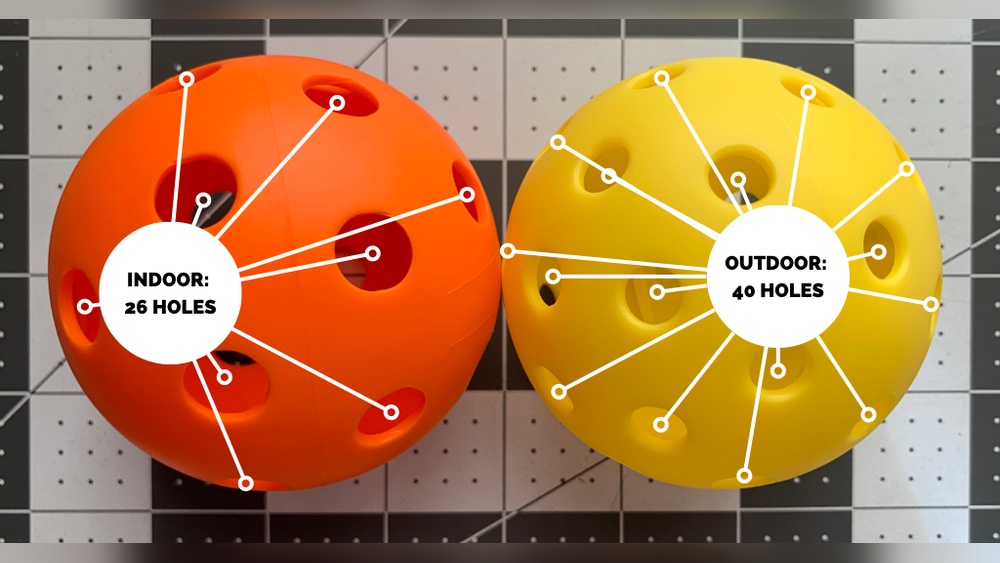
Pickleball is growing fast all over the world. But if you’re new to the game, you might be surprised to learn that the number of holes in a pickleball can make a big difference. The two most popular options are 26-hole and 40-hole pickleballs. Players often ask: Which one is better? What’s the real difference? Is it just about the number, or does it change your game?
This guide will help you understand everything about 26 vs 40 hole pickleballs. You’ll learn what sets them apart, how each type performs, and which is best for your skill level and playing environment. We’ll also break down 26 specific points of comparison, so you’ll never wonder which ball to choose again. By the end, you’ll have the confidence to pick the right ball for your next match.
What Are 26-hole And 40-hole Pickleballs?
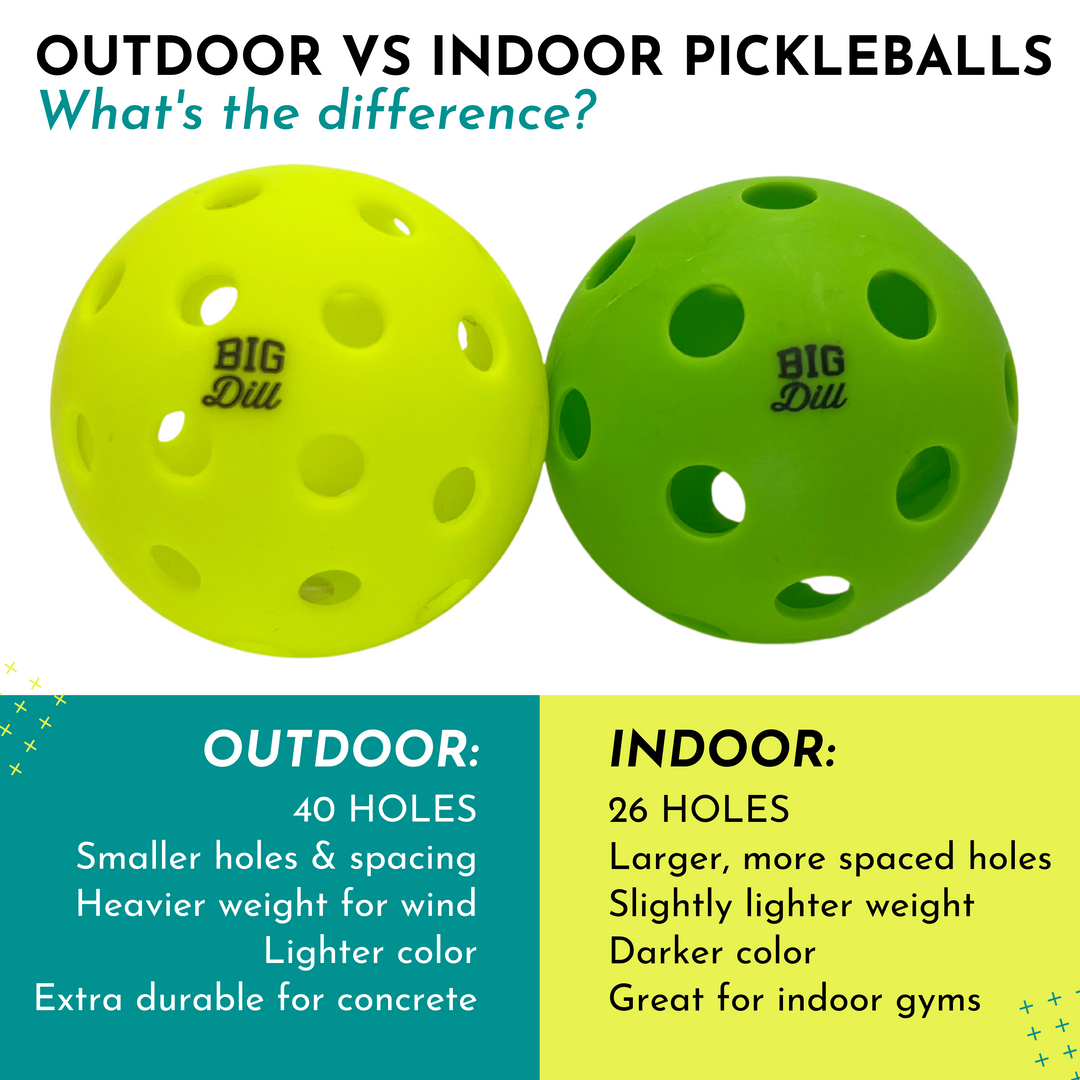
The number of holes in a pickleball isn’t random. These balls are designed for different purposes. 26-hole pickleballs are usually made for indoor play, while 40-hole pickleballs are made for outdoor play.
The holes are not just for looks. They affect aerodynamics, speed, and bounce. Indoor balls have larger, fewer holes (26), so they move differently than outdoor balls with smaller, more numerous holes (40). This changes how you play, how the ball reacts, and even the sound it makes.
1. Hole Size And Distribution
26-hole balls have larger holes spaced evenly around the ball. This lets them move smoothly through the air inside a gym. The larger holes also make the ball less affected by air resistance.
40-hole balls have smaller holes. There are more of them, so the ball’s surface is covered more completely. This helps the ball move in a straighter line when there’s wind outside. It also means the ball doesn’t wobble as much.
2. Intended Playing Surface
26-hole pickleballs are designed for indoor courts. They work best on hardwood or smooth gym floors.
40-hole pickleballs are made for outdoor courts. These could be concrete, asphalt, or special pickleball surfaces. Outdoor balls can handle rougher ground and unpredictable weather.
3. Bounce Consistency
Indoor balls (26 holes) bounce higher and softer. The bounce is consistent because the surface is smooth and the holes are larger.
Outdoor balls (40 holes) bounce lower and harder. The smaller holes and denser material help the ball stay in control on rough surfaces.
4. Ball Weight
26-hole balls are usually lighter (around 0.8 ounces). This makes them easier to control indoors, where wind isn’t an issue.
40-hole balls are often slightly heavier (about 0.88 ounces). The extra weight helps them stay on course outside, even if it’s windy.
5. Durability
Outdoor courts are tougher on balls. 40-hole balls are made of harder plastic to survive rough surfaces and UV light from the sun. This means they last longer outside.
26-hole balls are softer, so they’re perfect for smooth floors but can crack quickly if used outside.
6. Speed Of Play
Indoor balls (26 holes) are slower. The larger holes create more air resistance, making rallies longer and easier to control.
Outdoor balls (40 holes) are faster. The small holes cut through the air, so the ball moves quicker and points end sooner.
7. Sound
The sound a pickleball makes is different depending on the type. 26-hole balls make a quieter, softer pop when hit. This is good for indoor play where echoes can be loud.
40-hole balls make a louder, crisper sound. This sharp “pop” is familiar on outdoor courts.
8. Visibility
Indoor balls often come in bright, bold colors (like neon yellow or orange) because indoor lighting can be dim. The 26-hole design also makes the ball look bigger and easier to see.
Outdoor balls are usually darker (yellow or green) to stand out against the sky and trees. The smaller holes don’t affect visibility much outdoors.
9. Wind Resistance
A major factor: 26-hole balls are not made for wind. The large holes make them unpredictable outside.
40-hole balls are specifically designed for wind resistance. The smaller holes and heavier weight keep the ball steady, even in gusts.
10. Spin Potential
Indoor balls (26 holes) allow for more spin. The softer plastic and larger holes let skilled players “grab” the ball with their paddle and add spin.
Outdoor balls (40 holes) are harder and less grippy, so spin is harder to achieve.
11. Price
You’ll often find 26-hole balls are cheaper, mostly because they use less material and are not as durable.
40-hole balls cost a little more but last longer outdoors, which can make them a better value for outdoor players.
12. Popularity In Tournaments
Most official tournaments use 40-hole balls for outdoor events and 26-hole balls for indoor events. However, the 40-hole ball is more common in major competitions due to the popularity of outdoor pickleball.
13. Ball Deformation
Indoor balls (26 holes) are softer and more likely to get out of shape after lots of play. They can even crack if used outside.
Outdoor balls (40 holes) hold their shape longer, even after hundreds of games.
14. Control Vs. Power
If you want control, the 26-hole ball is best. It’s easier to place your shots and make gentle drops.
For power play, the 40-hole ball is better. It responds well to fast swings and hard smashes.
15. Skill Level Suitability
Beginners often find 26-hole balls easier to start with. The slower speed and softer feel make rallies last longer, helping you learn.
Advanced players prefer 40-hole balls for the challenge and speed, especially outdoors.
16. Paddle Compatibility
Some paddles are built for soft indoor balls (26-hole), while others are made to handle harder outdoor balls (40-hole). Using the wrong ball with the wrong paddle can affect your shots.
17. Weather Tolerance
26-hole balls can crack in cold outdoor weather.
40-hole balls are made to survive heat, cold, and even rain (although you shouldn’t play in rain for safety).
18. Performance In Humidity
Indoor balls don’t absorb moisture and work well in climate-controlled gyms.
Outdoor balls can become slippery in high humidity, so grip and control may suffer. Some brands coat their balls for better performance.
19. Ball Color Fading
26-hole balls are rarely exposed to the sun, so colors stay bright.
40-hole balls may fade over time if left outdoors, but top brands add UV protection to slow this process.
20. Storage Needs
Indoor balls (26 holes) need less care—just keep them dry and out of direct sunlight.
Outdoor balls (40 holes) last longer if kept in a cool, dark place and not left on the court after play.
21. Reaction To Court Texture
Indoor balls glide over smooth gym floors, giving a soft bounce.
Outdoor balls are made for rough surfaces and don’t get caught on cracks or debris.
22. Cracking Frequency
If you use a 26-hole ball outside, it will probably crack quickly.
40-hole balls are built tougher, so cracks are less common unless it’s very cold.
23. Age Group Preferences
Kids and seniors often prefer the 26-hole ball for its softer touch and slower speed.
Competitive adults usually go for the 40-hole ball, especially outside.
Credit: www.bigdillpickleballcompany.com
24. Brand Options
Some brands only make indoor balls (26-hole), while others focus on outdoor balls (40-hole). Major brands like Onix, Dura, and Franklin make both types.
25. Official Approval
The USA Pickleball Association (USAPA) tests and approves both types for official play, but the rules specify which ball to use depending on the event.
26. Common Mistakes When Choosing
Many new players use the wrong ball for the wrong environment. For example, using a 26-hole ball outside leads to cracks and unpredictable play. Using a 40-hole ball indoors makes the game too fast and less enjoyable for beginners.
To avoid these mistakes:
- Always check if you’re playing inside or outside
- Bring both types to the court, just in case
- Ask your club or league which ball they use
Comparing 26-hole Vs 40-hole Pickleballs: At A Glance
Here’s a quick look at the main differences:
| Feature | 26-Hole Pickleball | 40-Hole Pickleball |
|---|---|---|
| Best For | Indoor Play | Outdoor Play |
| Hole Size | Larger | Smaller |
| Bounce | Softer, higher | Harder, lower |
| Durability | Less durable | More durable |
| Speed | Slower | Faster |
| Typical Weight | ~0.8 oz | ~0.88 oz |
| Sound | Softer pop | Louder pop |
Which Should You Choose? Key Scenarios
Choosing between 26 and 40 hole pickleballs isn’t just about numbers. It’s about your goals, the weather, and how you like to play.
You Should Choose 26-hole Pickleballs If:
- You mostly play indoors
- You’re a beginner or teaching new players
- You want longer rallies and more control
- You play in a gym or smooth-surfaced facility
You Should Choose 40-hole Pickleballs If:
- You play outdoors on rough courts
- You like fast, powerful games
- You’re playing in windy conditions
- You compete in tournaments
Real-world Examples
Imagine you’re at your local rec center. The gym is well-lit, and the floor is smooth. You start with a 26-hole ball. The ball bounces nicely, points last longer, and it’s easy to control your shots. Everyone enjoys the slower pace.
But if you bring that same ball outside on a windy day, the game changes. The ball wobbles in the air, and sometimes it even blows away. Rallies are unpredictable, and the ball may crack after just a few games.
Switch to a 40-hole ball on the outdoor court. Now, the ball cuts through the wind and holds its shape. The game is faster, but you have more control, and the ball lasts for weeks.
Unique Insights Beginners Miss
Many beginners think any pickleball will do. But here are two things most people don’t realize:
- Indoor balls can ruin your outdoor game. Using a 26-hole ball outside can lead to frustration and wasted money, as the ball breaks quickly and flies unpredictably.
- Switching balls changes your paddle feel. Because outdoor balls are harder, they can make your paddle vibrate more, especially with cheap paddles. It’s smart to test both types and see what feels best for you.
Data: Ball Lifespan And Playability
Pickleball manufacturers have tested ball durability extensively.
| Ball Type | Average Lifespan | Typical Use Case |
|---|---|---|
| 26-Hole Indoor | 20-40 games | Gym floors, no wind |
| 40-Hole Outdoor | 40-100 games | Asphalt/concrete, all weather |
Notice that outdoor balls last longer, but only when used on the right surface.

Credit: www.bigdillpickleballcompany.com
Advanced Comparison: Ball Flight And Spin
Aerodynamics play a big role in pickleball performance.
| Ball Type | Flight Path | Spin Response |
|---|---|---|
| 26-Hole | Floats, more curve | More spin possible |
| 40-Hole | Straight, less curve | Less spin |
This means that indoor players can use spins and trick shots more easily, while outdoor play is about speed and power.
Testing Balls Yourself
The best way to know which is right for you is to test both types. Play a few games indoors with both balls, then try them outside. Notice how each ball feels, bounces, and sounds. Most players quickly develop a preference for one or the other.
Official Standards And Regulations
The USA Pickleball Association sets standards for approved balls. You can always check their website to see which balls are approved for your event or club. For more information, visit the USA Pickleball Association.
Tips For Maximum Ball Life
- Don’t leave balls in direct sunlight or a hot car
- Store balls in a dry place
- Don’t use indoor balls outside
- Rotate your balls so they wear evenly
Frequently Asked Questions
Why Do Indoor And Outdoor Pickleballs Have A Different Number Of Holes?
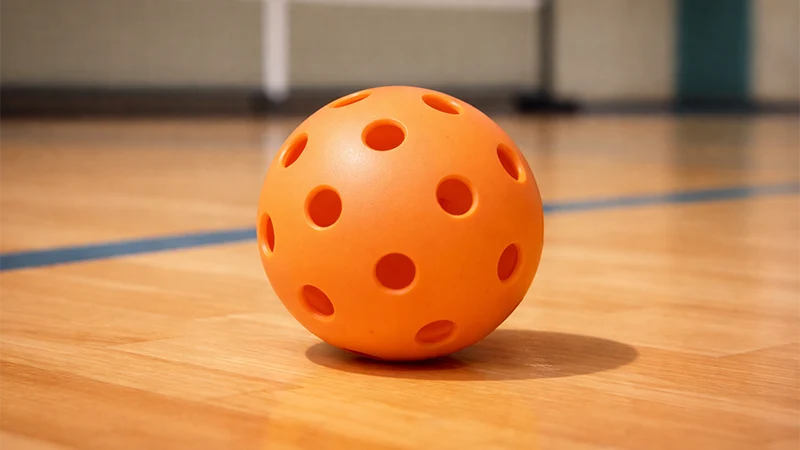
Indoor balls have 26 larger holes to make the ball slower and easier to control on smooth floors. Outdoor balls have 40 smaller holes to help them fly straight and resist wind. The different designs match the different challenges of each environment.
Credit: artpickleball.com
Can I Use A 26-hole Pickleball Outside?
You can, but it’s not a good idea. 26-hole balls are not built for outdoor surfaces or wind. They break easily and don’t fly well outside. Always use a 40-hole ball for outdoor play.
Is There A Big Difference In Price Between 26 And 40 Hole Balls?
The price is usually similar, but 40-hole balls can cost a little more because they use tougher materials. However, they last longer outdoors, so the value is often the same.
How Do I Know Which Ball My Club Uses?
Ask your coach or check with the club manager. Most clubs follow official guidelines: 26-hole balls for indoor courts, 40-hole balls for outdoor. Some clubs even provide both types.
What Is The Best Brand For 26 And 40 Hole Pickleballs?
Popular brands include Onix, Franklin, and Dura. All three make high-quality balls for both indoor and outdoor use. Look for USAPA approval to be sure the ball meets official standards.
Choosing between 26 vs 40 hole pickleballs isn’t just about numbers. It’s about the court, the weather, and your style. When you pick the right ball for the right place, your game will improve, and you’ll have more fun on the court.