

Pickleball is more than just a sport; it’s a fast-growing community activity that brings together players of all ages and skill levels. As its popularity rises, many people wonder what makes a pickleball court unique—especially what materials and construction methods are used.
Knowing what a pickleball court is made of is important if you’re thinking about building one, playing professionally, or just curious about the sport’s infrastructure. The surface you play on affects everything from how the ball bounces to player safety and game enjoyment.
Let’s explore in detail what makes up a pickleball court, what choices exist, and how they impact the playing experience.
The Basic Structure Of A Pickleball Court
A standard pickleball court measures 20 feet wide by 44 feet long for both singles and doubles play. The dimensions are smaller than a tennis court, but the design and materials are just as critical.
The court is made up of several key layers and components:
- Sub-base: The foundation that supports the court
- Base: The main structural layer, often made of concrete or asphalt
- Surface coating: The top layer that provides color, texture, and grip
- Lines and markings: Painted for visibility and game rules
- Net system: Not technically part of the court base, but essential for play
Each part serves a special role. The right materials and construction ensure the court is safe, durable, and enjoyable for players.
Common Materials Used In Pickleball Court Construction
Asphalt
Asphalt is one of the most common base materials for outdoor pickleball courts. It is chosen because it is durable, cost-effective, and offers a good balance between bounce and player comfort. Asphalt courts are usually made by pouring hot asphalt mix over a prepared sub-base, then compacting it to a smooth finish.
A typical asphalt layer is about 2-3 inches thick. After the base is set, an acrylic surface coating is applied to add color and texture.
Pros of asphalt:
- Good shock absorption
- Less expensive than concrete
- Flexible under temperature changes
Cons of asphalt:
- Can crack over time due to weather
- Needs regular maintenance to stay smooth
Concrete
Concrete is another popular choice, especially for those seeking a longer-lasting court. Concrete is poured in slabs over a sub-base, then finished with a smooth surface. This material is less likely to warp or shift than asphalt, which makes it ideal for locations with significant temperature changes.
Concrete courts are typically 4 inches thick, reinforced with steel mesh for added strength.
Pros of concrete:
- Extremely durable and long-lasting
- Less prone to cracking
- Low maintenance
Cons of concrete:
- More expensive upfront
- Harder surface, which can be tough on joints
Modular Tiles
For indoor or temporary courts, modular tiles are a flexible option. These are interlocking tiles made from high-impact polypropylene or similar plastics. They snap together over almost any flat surface.
Players like modular tiles because they can be installed quickly, moved, and replaced easily if damaged.
Pros of modular tiles:
- Quick installation
- Good shock absorption
- Available in many colors and textures
Cons of modular tiles:
- Less permanent than concrete or asphalt
- Not as smooth as poured surfaces
Synthetic Surfaces
Some modern courts use synthetic surfaces, such as cushioned acrylic or polyurethane coatings. These surfaces are installed over a hard base (like concrete) and offer extra comfort for players. The cushioning helps reduce joint stress, making these courts popular for older players or those playing frequently.
Pros of synthetic surfaces:
- Excellent comfort and shock absorption
- Customizable grip and bounce
- Good for multi-sport use
Cons of synthetic surfaces:
- Higher cost
- Requires professional installation

Credit: www.sportsimports.com
Layers Of A Pickleball Court
To understand what a pickleball court is made of, you need to look at the layers from the ground up.
The Sub-base
The sub-base is the lowest layer, often made from compacted gravel or crushed stone. This layer provides stability and helps with drainage. A well-prepared sub-base prevents the court from shifting, settling, or cracking over time.
Proper grading is key, so water drains away and doesn’t pool under the court.
The Base Layer
The base layer is usually asphalt or concrete. This is the main structural part of the court. It must be poured or installed with care to ensure a flat, even surface. Any bumps or dips will affect how the ball bounces and how players move.
For outdoor courts, the base is often sloped slightly (about 1%) to allow water to run off.
Surface Coating
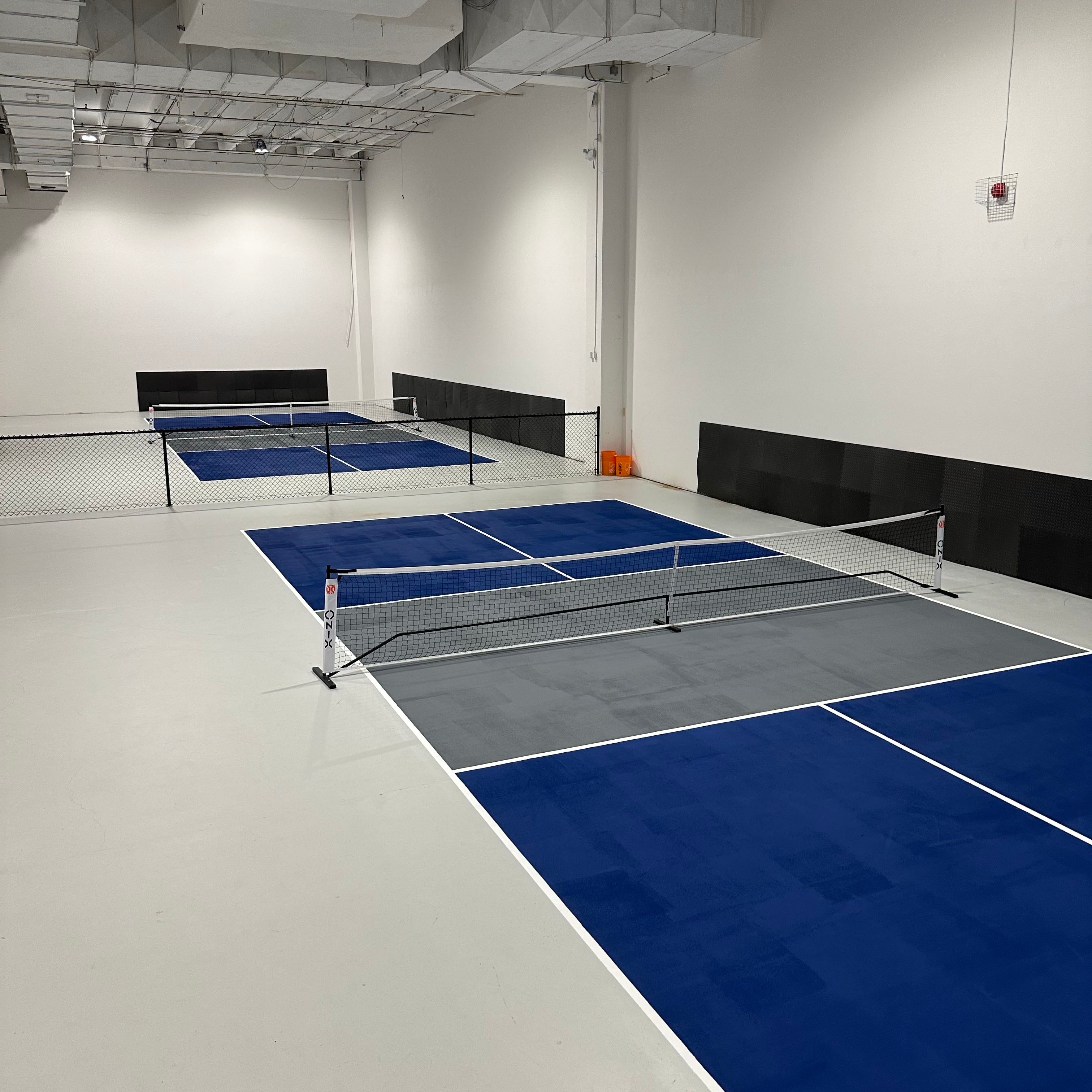
The surface coating is what players see and feel underfoot. It is typically an acrylic or polyurethane paint system that includes sand or other grit for texture. This layer gives the court its color (usually green and blue), improves traction, and protects the base from sun and rain.
Multiple coats are applied—often a primer, color coats, and a finishing coat.
Court Lines And Markings
Lines are painted with special outdoor paint that resists fading and wear. The lines must be sharp and visible, with the standard color being white or yellow. Line width is usually 2 inches.
A court with clear, durable lines helps players see boundaries clearly, reducing disputes and mistakes during play.
Outdoor Vs Indoor Pickleball Courts
The environment affects what materials are best. Let’s compare outdoor and indoor court construction:
| Feature | Outdoor Courts | Indoor Courts |
|---|---|---|
| Main base material | Asphalt or concrete | Concrete or modular tiles |
| Surface coating | Acrylic, UV-resistant | Non-glare polyurethane or tiles |
| Drainage needed? | Yes, critical | No, less important |
| Weather exposure | Rain, sun, temperature changes | Controlled environment |
| Common problems | Cracking, fading, water damage | Slippery surfaces if not cleaned |
Outdoor courts must withstand sunlight, rain, and freeze-thaw cycles. Indoor courts focus more on comfort, traction, and reducing noise.
Credit: slipdoctors.com
Surface Coatings: Types And Benefits
The top surface of a pickleball court is more than just paint. It is a system designed for performance.
Acrylic Coatings
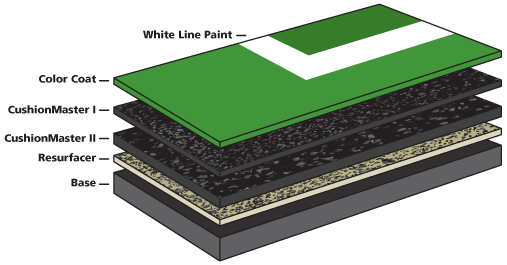
Acrylic is the most common surface coating for both asphalt and concrete courts. It comes in several layers:
- Resurfacer: Fills in small imperfections and creates a smooth base.
- Color coats: Provide the actual playing color, often mixed with silica sand for grip.
- Finish coat: Seals and protects the surface.
These coatings are UV-resistant and can be customized for texture. Some courts use more sand for extra grip, while others have a smoother finish for faster play.
Cushion Layers
For added comfort, some courts use a cushion layer under the acrylic. This is usually a rubberized or foam mat. It helps reduce impact on knees and ankles, especially for older or frequent players. Cushion layers are more common on high-end courts or where multi-sport use is planned.
Polyurethane Coatings
Polyurethane is used mainly indoors. It offers good grip, is resistant to wear, and can be cleaned easily. Polyurethane surfaces can be made with more or less texture, depending on player preference.
Insight: Many beginners overlook the importance of surface texture. Too much grip can slow the game, while too little makes it slippery. The right balance improves both safety and playability.
Color Choices And Visibility
Color is not just about style. The colors chosen for a pickleball court affect:
- Ball visibility
- Player orientation
- Heat absorption
Most courts use a two-tone design: a darker color (like green or blue) for the playing area, and a lighter color (such as beige or light blue) for out-of-bounds. This makes it easier to see the ball and lines.
Some facilities use custom colors for branding or aesthetics, but the main goal is always visibility and comfort. Dark colors absorb more heat, making the surface hotter in the sun.
Net Systems And Posts
While not part of the surface, the net system is essential. Posts are usually made of steel or aluminum, anchored outside the sidelines. The net is 36 inches high at the sidelines and 34 inches at the center.
Permanent nets have ground sleeves and are very stable. Temporary nets use weighted bases and are used for courts that double as basketball or tennis spaces.
Fencing And Court Perimeter
Almost all outdoor pickleball courts have fencing. The fence keeps balls in play and protects spectators. Most fences are:
- 10 feet high
- Made of galvanized steel mesh
- Coated with vinyl or powder for weather resistance
Gates, benches, and sometimes windscreens are included. These features are not strictly part of the playing surface, but they improve the safety and enjoyment of the court.
Building A Pickleball Court: Step-by-step
If you’re considering building a pickleball court, the process involves several clear steps.
- Site selection and preparation: Choose a flat area with good drainage. Remove grass, roots, and debris.
- Excavation and grading: Dig down to create space for the sub-base. Grade the area to allow water runoff.
- Install sub-base: Spread and compact gravel or crushed stone. This layer should be about 4-6 inches thick.
- Pour base layer: Lay asphalt (2-3 inches) or concrete (4 inches). Make sure it is level, with a slight slope if outdoors.
- Apply surface coating: Once the base cures, apply multiple layers of acrylic or polyurethane coating.
- Paint lines and markings: Use high-visibility, durable paint.
- Install net system and fencing: Place posts, set net height, and add fence if needed.
- Final inspection: Check for smoothness, drainage, and line accuracy.
Building a court usually takes several weeks, depending on weather and material availability. Costs can range from $10,000 to $40,000 or more, depending on location and materials.
Comparing Court Surfaces: Performance And Player Impact
Understanding how different materials affect play helps you choose the right surface for your needs. Here’s a comparison of the main options:
| Surface Type | Bounce Quality | Player Comfort | Maintenance Needs |
|---|---|---|---|
| Asphalt | Good | Moderate | Medium |
| Concrete | Excellent | Hard | Low |
| Modular Tiles | Fair | High | Low |
| Synthetic (Cushioned) | Good | Very High | Medium |
Non-obvious insight: Asphalt and concrete provide the best, most consistent bounce, but many recreational players prefer synthetic or modular courts for their comfort. Tournament play almost always uses hard surfaces.
Key Factors When Choosing Court Materials
If you’re deciding what your pickleball court should be made of, consider these factors:
- Climate: Asphalt is less ideal in regions with extreme freeze-thaw cycles; concrete is better for stability.
- Budget: Asphalt is generally cheaper, but concrete lasts longer.
- Player age and frequency: Older players or high-use courts benefit from cushioned surfaces.
- Maintenance: Concrete needs less upkeep but is harder to repair if damaged.
- Location: Indoor courts can use modular tiles, saving cost and installation time.
Common mistake: Some people skip proper sub-base preparation to save money. This almost always leads to cracks, uneven surfaces, and water damage later on.
Court Accessories And Their Materials
Beyond the main court, there are additional items to consider:
- Benches: Usually made from weather-resistant plastic or metal
- Windscreens: Durable mesh fabric, attached to fences
- Lighting: Poles and LED fixtures for night play, made from powder-coated steel or aluminum
- Scoreboards: Plastic, metal, or weatherproof wood
While not required for play, these accessories improve player experience and are often made with durability and weather resistance in mind.
Maintenance And Longevity
No matter what a pickleball court is made of, proper maintenance is essential for a long life and good play. Here’s what’s needed:
- Regular cleaning: Sweeping debris, removing water, and washing the surface
- Crack repair: Filling small cracks early to prevent spreading
- Re-coating: Applying new acrylic or polyurethane every 4-8 years, depending on use
- Line repainting: Keeping lines bright and visible
A well-maintained court can last 20 years or more, especially if built with high-quality materials.
Cost Considerations
Building and maintaining a pickleball court involves several costs:
- Initial construction: $10,000–$40,000 for a single court, depending on materials and site work
- Surface re-coating: $2,000–$6,000 every few years
- Net system and posts: $500–$2,000
- Fencing: $5,000–$10,000 for full court enclosure
The main cost drivers are the base material and location. Asphalt is cheaper but may require more frequent repairs. Concrete is more expensive but lasts longer. Modular tiles cost more per square foot but save on installation.
Pickleball Court Innovations
New technologies are making courts even better:
- Shock-absorbing coatings: Reduce injury risk for older players
- UV-stable colors: Keep courts looking new for longer
- Recycled materials: Some modular tiles use recycled plastics, making them eco-friendly
- Smart nets: Electronic scorekeeping and play tracking are being tested at some facilities
These innovations improve performance, safety, and sustainability.
Environmental Impact
Pickleball courts can be environmentally friendly if built with care. Using recycled materials for sub-base or tiles, water-permeable coatings, and LED lighting all reduce the court’s footprint.
Some communities repurpose old tennis or basketball courts for pickleball, saving resources and space. Always check local regulations before building to ensure compliance with environmental guidelines.
Credit: www.sportmaster.net
Common Mistakes In Court Construction
Building a court is a big investment. Avoid these common mistakes:
- Poor drainage: Water under the court causes cracks and slippery spots.
- Skipping the sub-base: Without a stable foundation, the court will settle unevenly.
- Using cheap coatings: Low-quality paint fades quickly and becomes slippery.
- Incorrect line placement: Even a few inches off can affect play and tournament eligibility.
- Ignoring local codes: Building without permits can lead to fines or forced removal.
Consult with experienced court builders and follow guidelines from the USA Pickleball Association for best results. For more technical details, refer to the official Pickleball Wikipedia page.
Frequently Asked Questions
What Is The Best Material For A Pickleball Court?
The best material depends on your needs. For outdoor courts, concrete is most durable, but asphalt is more budget-friendly. For indoor or portable courts, modular tiles are a good choice. If comfort is a priority, consider a cushioned synthetic surface.
How Thick Should The Court Base Be?
For asphalt, a 2–3 inch base is standard. For concrete, use at least 4 inches, reinforced with steel mesh if possible. The sub-base (gravel or stone) should be 4–6 inches thick and well-compacted.
Can You Play Pickleball On A Tennis Court?
Yes. Many facilities paint pickleball lines on existing tennis courts. The surface is suitable, but the dimensions are different. Portable nets are used, and sometimes tennis nets are lowered for pickleball.
How Often Does A Pickleball Court Need Resurfacing?
Resurfacing is needed every 4–8 years, depending on use, weather, and quality of the original installation. High-traffic or outdoor courts may need attention sooner. Keeping the surface clean and repairing cracks extends its life.
Are There Eco-friendly Options For Pickleball Court Construction?
Yes. Some courts use recycled materials for sub-base or modular tiles. Water-permeable coatings and LED lighting reduce environmental impact. Repurposing old courts is another eco-friendly choice.
Pickleball courts are the foundation of a sport enjoyed by millions. The materials and methods used to build them shape the way the game is played, how safe it is, and how long the court lasts. By understanding what a pickleball court is made of, you can make informed choices—whether you’re building, maintaining, or simply stepping onto the court for your next match.