
Pickleball vs Tennis: The Full Comparison for Players of All Levels
If you walk by a local park these days, you might hear the familiar pop of a tennis ball—but you’re just as likely to hear a sharper “dink” from a pickleball paddle. Both sports are winning fans around the world, often from the same communities. Yet, while they seem similar, pickleball and tennis have important differences. Each offers a unique experience, appeals to different groups, and comes with its own learning curve.
If you’re considering which sport to try, or just curious how they compare, this guide gives you a clear, in-depth look at both. Let’s break down every aspect, from courts and equipment to gameplay, strategy, health benefits, and even social culture.
By the end, you’ll have all the facts to choose the right sport for your style, needs, and goals.
Origins And Popularity
Understanding where each sport comes from helps explain why they feel so different today.
The History Of Tennis
Tennis dates back hundreds of years. The modern game started in the late 19th century in England. It quickly became popular in Europe and then the world, leading to major events like Wimbledon and the US Open. Today, tennis is played by millions, from club level to professional tours.
The Rise Of Pickleball
Pickleball is much younger. Invented in 1965 on Bainbridge Island, Washington, it started as a backyard game for families. Over the last decade, its popularity has exploded, especially in the United States. According to the Sports & Fitness Industry Association, pickleball was the fastest-growing sport in America from 2020 to 2023, with over 8.9 million players in 2022.
One reason for its rise: pickleball is easier to learn and less demanding on the body, making it attractive for all ages.
Court Size And Layout
The space you play in has a big effect on speed, tactics, and physical demands.
Tennis Court
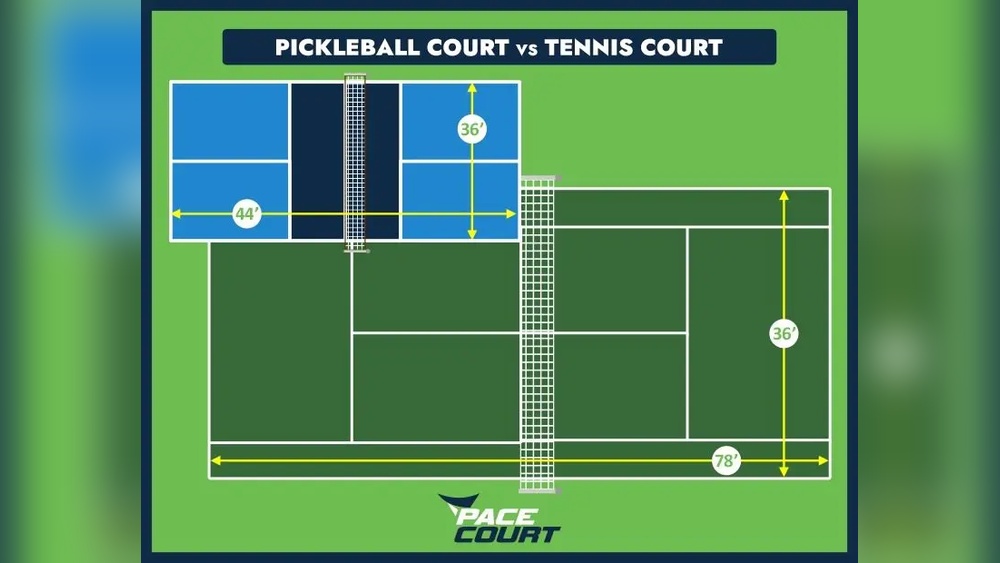
A standard tennis court is large:
- Singles: 78 feet (23.77 m) long and 27 feet (8.23 m) wide.
- Doubles: Same length but 36 feet (10.97 m) wide.
The net sits 3 feet (0. 914 m) high at the center. You need plenty of room to run, lunge, and reach shots.
Pickleball Court
A pickleball court is much smaller:
- 44 feet (13.41 m) long and 20 feet (6.1 m) wide for both singles and doubles.
The net is lower: 34 inches (0.86 m) at the center. There’s also a unique area called the “kitchen” (the non-volley zone), a 7-foot space on each side of the net where players cannot volley.
Side-by-side Comparison
Here’s a quick look at court sizes:
| Sport | Court Length | Court Width | Net Height (center) |
|---|---|---|---|
| Tennis | 78 ft (23.77 m) | 27 ft (8.23 m) – Singles 36 ft (10.97 m) – Doubles |
36 in (0.914 m) |
| Pickleball | 44 ft (13.41 m) | 20 ft (6.1 m) | 34 in (0.86 m) |
Insight: The smaller pickleball court means less running and more quick reactions, making it friendlier for players with less mobility or limited space.
Equipment Differences
What you hold and hit changes the feel of the game.
Tennis Equipment
- Racket: Made of graphite, composites, or aluminum. 27-29 inches long, with a large head and strings.
- Ball: Pressurized rubber covered with felt, about 2.7 inches in diameter and 57 grams.
- Shoes: Heavier, with better lateral support for quick movement.
- Other gear: Players may need vibration dampeners, wristbands, and more.
Pickleball Equipment
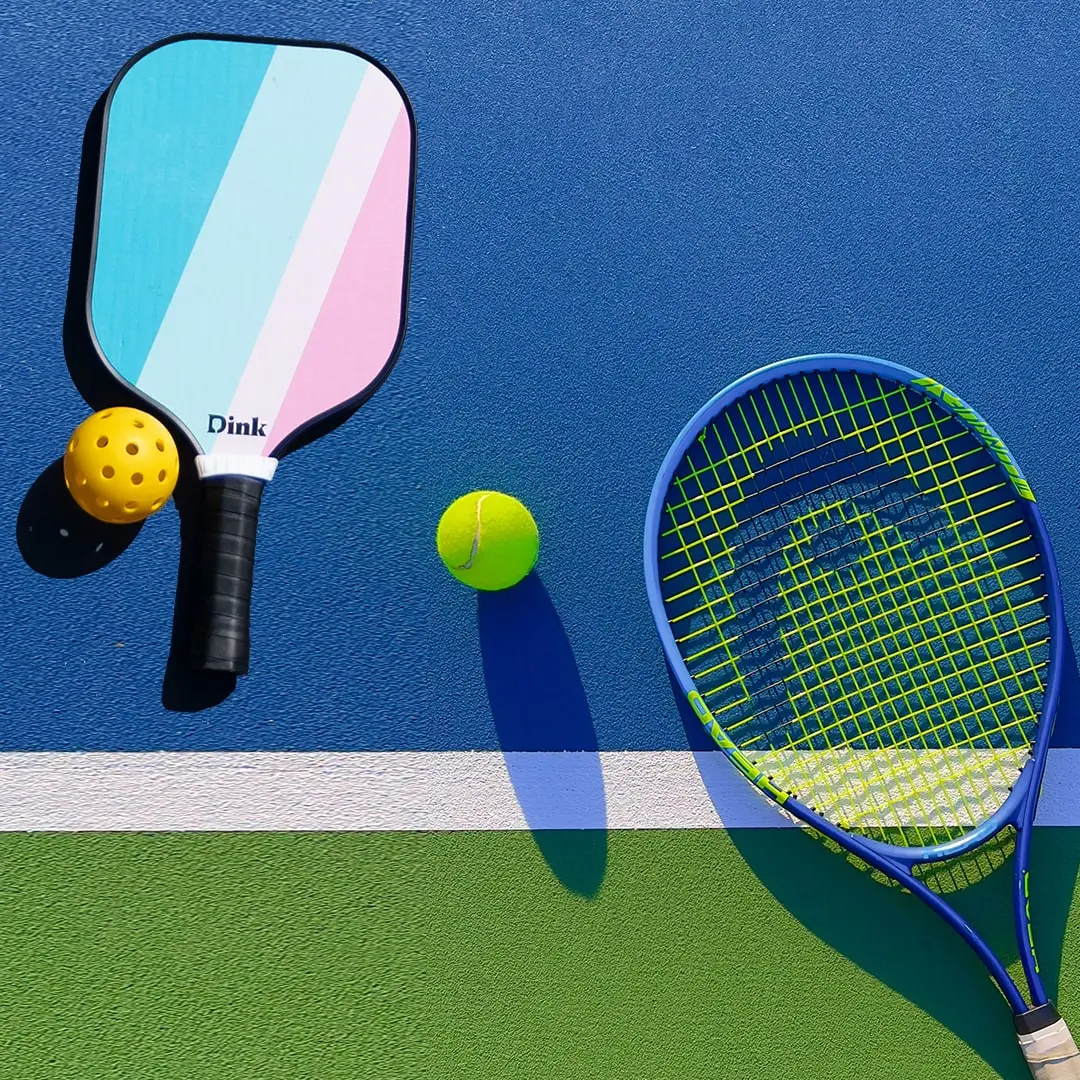
- Paddle: Solid, no strings. Made of wood, composite, or graphite. Shorter and lighter (about 15-16 inches long, 7-8 inches wide).
- Ball: Plastic with holes, similar to a wiffle ball. Lighter (22-26 grams).
- Shoes: Lightweight court shoes or even tennis shoes.
- Other gear: Simpler—often just a paddle and ball.
Equipment Comparison
| Sport | Main Hitting Tool | Ball Type | Average Cost (starter set) |
|---|---|---|---|
| Tennis | Strung Racket | Pressurized Felt Ball | $60–$150 |
| Pickleball | Solid Paddle | Plastic Ball with Holes | $30–$80 |
Tip: Pickleball paddles are less technical and cheaper than tennis rackets, making it easier for beginners to start playing.
Rules And Scoring
This is where the games really split.
Tennis Rules
- Scoring: Points go 15, 30, 40, game. Win six games (by two) for a set; best of three or five sets wins the match.
- Serving: Overhead serve, must land diagonally in service box.
- Lets: If the ball touches the net but lands in, replay the serve.
- Double Faults: Two missed serves lose the point.
- Boundaries: Singles and doubles use different sidelines.
Pickleball Rules
- Scoring: Only the serving side scores. Games go to 11 points (must win by two).
- Serving: Underhand serve, paddle must contact ball below the waist.
- Double Bounce Rule: Each side must let the ball bounce once before volleying.
- Kitchen Rule: No volleys in the non-volley zone.
- Boundaries: Same lines for singles and doubles.
Scoring Example
A beginner in tennis may find the scoring system confusing, while pickleball’s system is more direct.
Non-obvious insight: Pickleball’s “only server scores” rule means games can shift quickly, as a losing team can’t rack up points just by holding their serve.
Credit: dinkusa.com
How The Games Are Played
From the first serve to the final point, the experience is unique in each sport.
Tennis Gameplay
Rallies can be long, with heavy topspin, slicing, lobs, and drop shots. Players run side to side and often back and forth, covering lots of ground. Matches can last hours. Singles test your stamina and shot-making. Doubles bring in more teamwork and net play.
Pickleball Gameplay
Points are usually faster. The smaller court and lighter ball mean less ground to cover, but you need quick reflexes at the net. The kitchen rule leads to “dinking”—soft shots just over the net to draw errors. Games are often more social, as doubles is the main format.
Example: In pickleball, a typical point is four players at the net exchanging quick, soft shots, waiting for someone to make a mistake. In tennis, a point may involve running deep to return a lob or smashing an overhead.
Skill And Learning Curve
How hard is it to get started? What does it take to improve?
Tennis
Learning tennis takes time. Hitting with a racket feels awkward at first. Judging bounce, spin, and pace is tricky. Many beginners struggle with consistent serves or making clean contact. It can take months to rally comfortably.
Non-obvious insight: Tennis rewards physical athleticism early on, but true mastery requires learning spins, footwork, and advanced tactics.
Pickleball
Most people can start rallying within minutes. The slower ball and smaller court mean you get more action and less frustration. The biggest early challenge is learning the kitchen rule and controlling the ball during dinks.
Example: A group of new players can play real games in their first session. In tennis, it may take several lessons before rallies are common.
Credit: www.playpickleball.com
Physical Demands And Injury Risk
Your body will thank you for picking the right sport for your fitness and age.
Tennis Physical Demands
- Cardio: High, especially in singles.
- Strength: Moderate to high—serves and groundstrokes require power.
- Flexibility: Important for reaching shots.
- Injury risk: Common injuries include tennis elbow, shoulder strain, and ankle sprains. Hard courts can be tough on knees.
Pickleball Physical Demands
- Cardio: Moderate—less running, but quick bursts of movement.
- Strength: Lower—paddles and balls are lighter.
- Flexibility: Useful but less critical.
- Injury risk: Lower, but falls and wrist injuries can happen, especially for older players.
Tip: Pickleball is often recommended for those returning from injury, older adults, or anyone looking for a lower-impact sport.
Strategy And Tactics
Both sports offer deep strategy, but the focus is very different.
Tennis Strategy
- Power and placement: Using spin and pace to move opponents.
- Serving: A big weapon—aces and service winners are common.
- Baseline vs. net: Players may focus on rallying from the back or attacking the net.
- Mental strength: Matches can swing back and forth over several hours.
Pickleball Strategy
- Dinking: Soft shots in the kitchen to set up a mistake.
- Third shot drop: A key tactic—using a soft shot after the serve return to approach the net.
- Teamwork: Communication is critical in doubles to avoid collisions.
- Patience: You often win points by waiting for your opponent to make a mistake, not by hitting winners.
Example: In pickleball, being aggressive at the wrong time often leads to losing the point. In tennis, aggression is rewarded, especially with a strong serve or forehand.
Social And Community Aspects
How easy is it to find a game? What’s the vibe on the court?
Tennis Community
Tennis clubs are found worldwide, from city parks to private clubs. The sport has a long tradition, with leagues, lessons, and tournaments. Some clubs can feel formal, but public courts are open to all. Singles and doubles are both common.
Pickleball Community
Pickleball is famous for its welcoming, social atmosphere. Most games are doubles. Players mix in and rotate often, so newcomers are included. Courts are popping up in community centers, retirement communities, and even converted tennis courts.
Non-obvious insight: Pickleball’s smaller court means spectators and players are closer together, which builds a strong sense of community.
Weather And Location Flexibility
Where you can play also matters.
Tennis
Tennis courts are outdoors and indoors, but finding indoor courts can be expensive or limited. Bad weather can cancel play.
Pickleball
Pickleball is played both outdoors and indoors. Portable nets and smaller courts mean you can set up a game almost anywhere—a driveway, gym, or even a parking lot.
Tip: Pickleball’s flexibility means you can play year-round in more places.
Cost Of Playing
How much will you spend to get started and keep playing?
Tennis Cost
- Court fees: Many public courts are free, but private clubs charge for membership or court time.
- Equipment: Racket ($60–$200+), balls ($2–$5 per can), shoes ($60–$120).
- Lessons: Private lessons are common and can be costly.
Pickleball Cost
- Court fees: Many pickleball courts are free or low-cost, especially in community centers.
- Equipment: Paddle ($30–$150), balls ($10–$20 for a set), shoes ($40–$100).
- Lessons: Group lessons are common, private coaching less so.
| Sport | Typical Start-Up Cost | Ongoing Costs |
|---|---|---|
| Tennis | $120–$350 | Balls, stringing, court fees |
| Pickleball | $50–$180 | Balls, paddle upgrades |
Insight: The lower cost of pickleball is a big reason for its rapid growth among families and older adults.
Health And Fitness Benefits
Both sports are great for your body, but in slightly different ways.
Benefits Of Tennis
- Cardiovascular health: Long rallies and matches boost stamina.
- Coordination and agility: Quick footwork and hand-eye skills.
- Strength building: Repeated strokes build arm and core muscles.
- Mental focus: Long matches test concentration.
Data: Studies show regular tennis players have a 47% lower risk of death from heart disease compared to non-players.
Benefits Of Pickleball
- Cardio and movement: Constant motion, but less intense than tennis.
- Balance and reflexes: Fast exchanges at the net sharpen reflexes.
- Joint health: Lower impact reduces injury risk.
- Social well-being: Group play supports social and mental health.
Non-obvious insight: Because pickleball is easier to play for longer periods without exhaustion, it may offer more consistent weekly exercise for older adults.
Who Should Play Which Sport?
Not sure which one is best for you? Here’s some guidance.
Pickleball Is Best For:
- Beginners looking for a quick start
- Older adults or those with joint issues
- People seeking a social, low-pressure environment
- Families and kids (because of the smaller court and slower ball)
- Anyone with limited space or access to courts
Tennis Is Best For:
- Players who enjoy a physical challenge and want a strong workout
- Those who love tradition, tournaments, and global events
- People looking to develop advanced techniques and tactics
- Athletes who want to push their speed, power, and endurance
Tip: Many people play both! Tennis players often add pickleball to their routine for a fun, social alternative that’s easier on the body.
The Culture And Image Of Each Sport
How each game is seen in society can affect your experience.
Tennis Image
Seen as a classic, sometimes elite sport, tennis has a long history, famous stars, and global tournaments. It’s often associated with country clubs and high-level athleticism, but it’s also played in parks everywhere.
Pickleball Image
Pickleball is viewed as more casual, approachable, and friendly. It’s known for being fun, accessible, and inclusive—especially for older adults. The sport is becoming trendy among all ages, and its “everyone’s welcome” vibe sets it apart.
Non-obvious insight: Pickleball’s rapid growth is shifting its image from “retirement sport” to “mainstream favorite,” especially among young professionals and families.

Credit: www.angi.com
Common Mistakes When Choosing Between Them
If you’re deciding, avoid these frequent errors:
- Assuming one is easier: Tennis looks harder, but pickleball requires quick reactions and tactics at the net.
- Ignoring fitness level: Tennis is more demanding. If you have knee or shoulder issues, pickleball is usually better.
- Not trying both: Many clubs offer intro sessions for each. Trying both often surprises people.
- Buying expensive gear right away: Start with basic equipment. Upgrade only as you play more often.
- Thinking age is a barrier: Both sports are played by all ages. It’s about finding the right group.
Future Of Both Sports
Tennis continues to thrive with global stars and big tournaments. However, pickleball’s growth is reshaping recreation in many communities. City parks now paint both tennis and pickleball lines on the same courts. More schools and retirement centers are teaching pickleball as an introduction to racquet sports.
According to the USA Pickleball Association, the number of places to play pickleball in the US grew from about 1,500 in 2010 to over 10,000 by 2023. Tennis remains one of the world’s most-played sports, but pickleball’s rise means more people are discovering racquet sports than ever before.
For those looking to dig deeper, see the Wikipedia Pickleball article for more statistics and history.
Final Thoughts
Pickleball and tennis both offer exciting, social, and healthy ways to stay active. Whether you love the athletic test of tennis or the quick, fun rallies of pickleball, you’ll find a community ready to welcome you. The best way to choose?
Try both, see which fits your body, schedule, and personality, and don’t be afraid to switch it up as your needs change. The most important thing is to get moving, meet new people, and enjoy the game.
Frequently Asked Questions
What Is The Main Difference Between Pickleball And Tennis?
The main difference is the court size, equipment, and gameplay. Pickleball uses a smaller court, a solid paddle, and a plastic ball, making it less physically demanding and easier for beginners. Tennis uses a larger court, a strung racket, and a pressurized ball, leading to longer rallies and more running.
Is Pickleball Easier To Learn Than Tennis?
Yes, most people find pickleball easier to pick up. The smaller court, slower ball, and simple rules let beginners rally and play games on their first day. Tennis has a steeper learning curve due to the larger court and more technical strokes.
Can You Play Pickleball On A Tennis Court?
Yes, many parks paint pickleball lines on tennis courts. Portable pickleball nets are used, and you can fit up to four pickleball courts on one tennis court. This has helped pickleball grow quickly in many communities.
Which Sport Is Better For Older Adults?
Pickleball is often recommended for older adults due to its lower impact and smaller court size. However, many seniors play tennis at a high level. It depends on your fitness, mobility, and preference.
Do You Need Special Shoes For Pickleball Or Tennis?
Court shoes are best for both sports. Tennis shoes have more lateral support for side-to-side movement. For pickleball, lightweight court shoes or tennis shoes work well. Avoid running shoes, as they can cause slips or ankle injuries.