
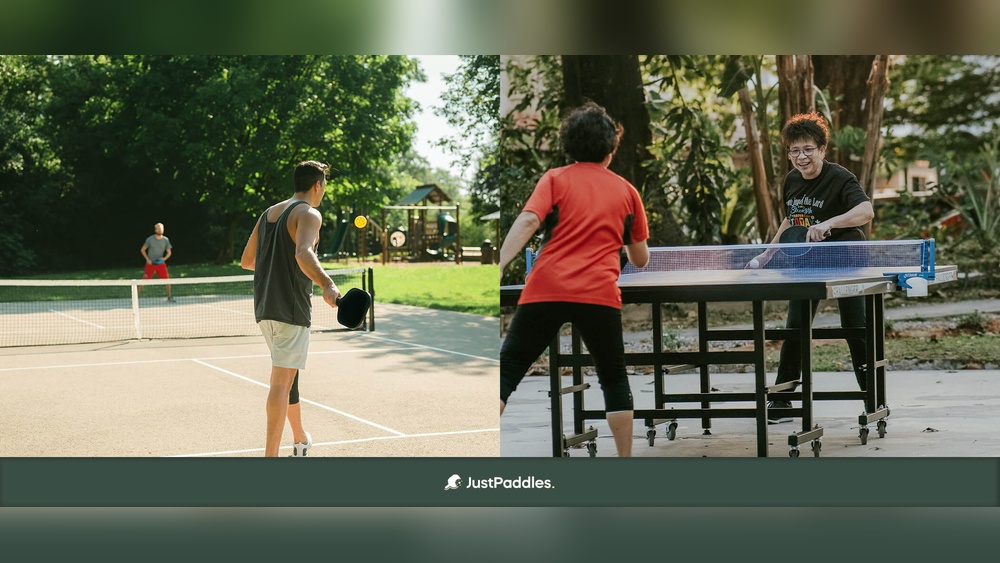
Pickleball Vs Tennis Vs Ping Pong: A Complete Comparison
Pickleball, tennis, and ping pong are three racquet sports that attract millions around the world. All have their own fans, unique rules, and special skills. At first glance, they might seem similar—each uses a paddle or racquet, a net, and a ball.
But step onto the court or watch a match, and you’ll see how different the experiences are. Choosing which one to play or follow isn’t just about the size of the court or speed of the ball; it’s about your goals, interests, and even your lifestyle.
Whether you want a social game with friends, a fast-paced challenge, or a sport that fits in your garage, understanding the real differences is essential. This guide dives deep into all aspects—rules, equipment, strategies, health benefits, and more—so you can choose the right game for you or simply appreciate the variety in racquet sports.
Basic Overview Of Each Sport
Before comparing, let’s get clear about what each sport is.
What Is Pickleball?
Pickleball is a paddle sport that mixes elements of tennis, badminton, and ping pong. It is played on a small court, with a solid paddle, and a plastic ball with holes. The net is lower than in tennis. Pickleball can be played as singles or doubles. It is popular among all ages, especially older adults, because it is easy to learn but still challenging.
What Is Tennis?
Tennis is a classic racquet sport played on a rectangular court with a higher net. Players use stringed racquets to hit a felt-covered rubber ball over the net. Tennis can be played as singles (one-on-one) or doubles (two-on-two). It is known for speed, endurance, and power.
What Is Ping Pong?
Ping pong, or table tennis, is played indoors on a small table divided by a net. Players use small paddles to hit a lightweight plastic ball. It is an Olympic sport, famous for fast reflexes, spins, and close-quarters play. Ping pong is easy to set up at home or in clubs.
Court Dimensions And Playing Surfaces
The size and surface of the playing area shape how each sport feels and the skills needed.
| Sport | Court/Table Size | Surface | Net Height |
|---|---|---|---|
| Pickleball | 20 x 44 ft (6.1 x 13.4 m) | Hard (outdoor/indoor) | 36 in (sideline), 34 in (center) |
| Tennis | 27 x 78 ft (singles), 36 x 78 ft (doubles) | Hard, clay, grass | 42 in (post), 36 in (center) |
| Ping Pong | 5 x 9 ft (1.52 x 2.74 m) | Wooden table | 6 in (15.25 cm) |
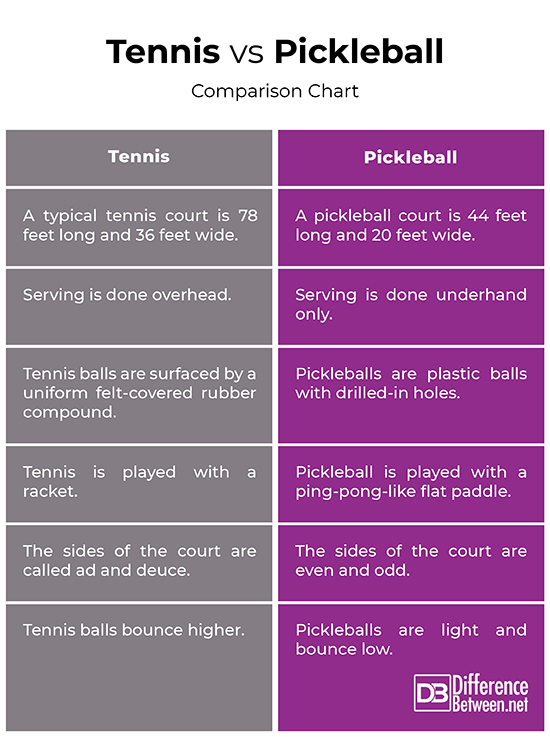
Pickleball courts are about one-fourth the size of a tennis court. This means less running and a more social atmosphere. Tennis courts can be clay, grass, or hard, each affecting speed and bounce. Ping pong tables fit in small rooms, making it easy to play almost anywhere indoors.

Credit: pickleballunion.com
Equipment: Racquets, Paddles, And Balls
The gear you use makes a huge difference in how the game feels.
Racquet/paddle Differences
- Pickleball uses a solid paddle, usually made from lightweight composite or wood, about 8 inches wide and 16 inches long.
- Tennis uses a stringed racquet, 27-29 inches long, with a large oval head for power and spin.
- Ping pong paddles are small, wooden, and covered with rubber for grip and spin. They are about 6-7 inches wide.
Ball Differences
- Pickleball: Uses a plastic ball with holes (like a wiffle ball). Outdoor balls are heavier and have smaller holes.
- Tennis: Uses a pressurized rubber ball covered in felt. The ball is bigger and much heavier than those in the other sports.
- Ping pong: Uses a small, lightweight plastic ball (40 mm in diameter).
Non-obvious insight: Paddle and racquet size not only affect power but also control. Pickleball paddles offer a unique blend—they’re easier to use than tennis racquets but give more control than ping pong paddles.
Rules And Scoring
The rules set the tone for each sport, making some games longer, faster, or more tactical.
Pickleball Rules And Scoring
- Played to 11 points (must win by 2).
- Only the serving side scores points.
- Serve must be underhand, diagonally across the court.
- “No-volley zone” (the kitchen): Players cannot volley within 7 feet of the net.
- Double bounce rule: The ball must bounce once on each side after the serve before volleys are allowed.
Tennis Rules And Scoring
- Games, sets, and matches: Usually best of 3 or 5 sets.
- Each set is won by winning 6 games (must lead by 2).
- Each game: Points go 15, 30, 40, game.
- Both sides can score when serving or receiving.
- Serves are overhand.
Ping Pong Rules And Scoring
- Played to 11 points (must win by 2).
- Both sides can score on any serve.
- Serve switches every 2 points.
- The ball must bounce once on each side for serves.
Non-obvious insight: The “kitchen” in pickleball makes strategy very different from tennis—aggressive net play is limited, adding a unique tactical layer.

Credit: www.youtube.com
Playing Style And Skill Requirements
The style of play and key skills needed are shaped by the court, equipment, and rules.
Pickleball Style
Pickleball is a game of placement, quick reflexes, and smart shot selection. Because the court is small and the ball doesn’t bounce high, power is less important than in tennis. Dinking (soft shots over the net) and volleys are common.
Players often stand close to the net, ready to pounce on mistakes.
Tennis Style
Tennis is about power, speed, and endurance. Players cover a large area, hitting with topspin, slice, and flat shots. Serving is a huge part of the game—aces and strong serves can win points outright. Matches can last hours, testing both physical and mental strength.
Ping Pong Style
Ping pong is all about reflexes, quick thinking, and spin. The ball travels extremely fast over a short distance. Players use backspin, topspin, and sidespin to control shots. The game is less about power and more about precision and reaction time.
Practical tip: If you have knee or joint problems, pickleball’s smaller court and slower pace can be much easier on your body than tennis.
Physical Demands And Health Benefits
All three sports provide exercise but in different ways.
Pickleball
- Less running than tennis, but still provides aerobic exercise.
- Good for improving balance, coordination, and flexibility.
- Lower risk of joint injuries due to slower pace and smaller court.
- Great for older adults or those returning to exercise.
Tennis
- High-intensity: Lots of running, sprinting, and lateral movement.
- Builds cardiovascular endurance, muscle strength, and agility.
- Can be tough on knees, ankles, and shoulders.
- Burns more calories per hour than pickleball or ping pong.
Ping Pong
- Less physically demanding overall.
- Excellent for hand-eye coordination and mental sharpness.
- Fast-paced rallies improve reflexes.
- Can be played even with limited space or by those with mobility issues.
Statistic: A study in the British Journal of Sports Medicine found that racquet sports like tennis are associated with a 47% lower risk of death from any cause, possibly due to their combination of aerobic activity and social interaction.
Social And Accessibility Aspects
How easy is it to start playing? Who usually plays? Is it a social game or more competitive?
Pickleball
Pickleball has exploded in popularity, especially among older adults and beginners. The rules are simple, and most people can learn the basics in just one session. Courts are popping up in parks and recreation centers worldwide. It’s common to see open, social games where players mix and rotate partners.
Tennis
Tennis is more established, with clubs and courts available in many towns. Learning the basics can take longer, and the game often feels more competitive. However, there is a strong social side in tennis clubs, leagues, and group lessons.
Ping Pong
Ping pong is the most accessible—tables fit in homes, offices, or community centers. The equipment is cheap, and anyone can play within minutes. The sport is popular for both casual play and serious competition.
Non-obvious insight: Pickleball is often used as a “bridge sport” for people moving from tennis to something less physically demanding but still competitive.
Popularity And Global Reach
The three sports have different levels of popularity worldwide.
| Sport | Estimated Players Worldwide | Top Countries |
|---|---|---|
| Pickleball | 10 million+ | USA, Canada, UK |
| Tennis | 87 million+ | Global (USA, France, Australia, China) |
| Ping Pong | 300 million+ | China, Germany, Sweden, South Korea |
Tennis has the longest history and the biggest pro events—Wimbledon, US Open, and the Olympics. Ping pong is a national sport in China and huge in Asia and Europe. Pickleball is growing fastest, especially in North America.
Professional Scene And Competition
Pickleball Pros
Professional pickleball tours are new but growing fast. Prize money is increasing, and players are starting to get sponsorships. The sport is working toward international recognition.
Tennis Pros
Tennis has a long-established pro scene—ATP and WTA tours, Grand Slams, and Olympic events. Top players like Roger Federer and Serena Williams are global stars, earning millions in prize money and sponsorships.
Ping Pong Pros
Ping pong has a strong professional circuit, especially in Asia. The World Table Tennis Championships and the Olympics draw top talent. Chinese players dominate the sport.
Practical tip: If you want a chance to go pro, pickleball’s rapid growth means there are more opportunities for new talent compared to tennis or ping pong.
Cost To Start And Maintain
Your budget can influence which sport you choose.
Pickleball
- Paddles: $30–$200
- Balls: $2–$4 each
- Shoes: $50–$100 (court shoes recommended)
- Public courts are often free or low-cost.
Tennis
- Racquet: $50–$300
- Balls: $2–$5 per can (need regular replacement)
- Shoes: $60–$150 (court shoes needed)
- Club memberships or court fees may apply.
Ping Pong
- Paddle: $10–$100
- Balls: $1–$3 each
- Table: $150–$2,000 (shared tables available in clubs)
- Minimal other equipment.
Non-obvious insight: While ping pong appears cheapest, high-quality tables and advanced paddles for competition can be surprisingly expensive.
Learning Curve And Beginner Experience
How Hard Is It To Get Started?
Pickleball
Most beginners can rally after just 10–20 minutes. The light paddle and slow ball make it easy to learn the basics. Mastering advanced play takes time, but you can enjoy games right away.
Tennis
Tennis is tougher to master. New players often struggle with hitting the ball consistently and serving. Lessons help, but it takes practice to play a full match.
Ping Pong
Ping pong is the easiest to start—just pick up a paddle and hit the ball. Mastering spins and advanced tactics takes longer, but beginners can have fun immediately.
Experience-based advice: If you want a social game with a fast sense of achievement, try pickleball or ping pong first.
Injury Risks And Safety
All sports have some risk, but the type and level of injury varies.
Pickleball
Most common injuries are minor: strains, sprains, or falls. The smaller court and lighter ball reduce the risk of serious injuries compared to tennis.
Tennis
Tennis players face higher risk for shoulder, elbow, and knee injuries, especially from high-impact serves and running on hard surfaces. Overuse injuries are common.
Ping Pong
Ping pong is very safe. Injuries are rare and usually minor—like bumps or wrist strains from fast play.
Practical tip: Always warm up and stretch before any racquet sport. Good shoes and proper technique lower your risk.
Strategies And Advanced Play
How Do Tactics Change At Higher Levels?
Pickleball
Top players use the “third shot drop” to move from defense to attack. Patience and soft hands win points. Dinking (gentle shots just over the net) sets up winning volleys.
Tennis
Power and variety matter. Serve-and-volley, baseline rallies, and drop shots are key weapons. Reading your opponent’s patterns is crucial.
Ping Pong
Spin is everything. Advanced players use deceptive serves, fast counter-hits, and quick footwork. Anticipation and reaction time separate the best from the rest.
Non-obvious insight: In pickleball, patience wins more often than power—rushing the net or hitting hard isn’t always the best choice.
Weather And Playing Conditions
Can you play all year, or are you limited by location?
Pickleball
Mostly outdoors, but indoor courts are growing. Wind affects the plastic ball more than in tennis. Rain can stop outdoor games.
Tennis
Outdoor and indoor options are common. Weather and court surface can change the style of play dramatically. Grass courts are rare outside major events.
Ping Pong
Almost always played indoors—weather is never an issue. Makes it ideal for year-round play.
Practical tip: If you live somewhere with harsh winters or heavy rain, ping pong or indoor pickleball are the most reliable.
Credit: www.differencebetween.net
Which Sport Is Right For You?
Choosing between pickleball, tennis, and ping pong depends on your goals, fitness, and interests.
- For social play: Pickleball and ping pong are best—easy to learn, fun at all levels, and less serious atmosphere.
- For fitness and challenge: Tennis offers the most intense workout and skill development.
- For small spaces: Ping pong is ideal for apartments, basements, or offices.
- For lifelong play: Pickleball is gentle on the body and popular with seniors.
- For competition: Tennis and ping pong have bigger pro scenes, but pickleball is growing fast.
Non-obvious insight: Many communities have “multi-use” courts now—so you can try more than one sport without major investment.
Real-world Examples
- Pickleball: In the US, public parks are turning unused tennis courts into pickleball courts, reflecting the sport’s boom. Celebrities and former tennis pros are joining the game.
- Tennis: The Grand Slam tournaments attract millions of viewers each year, with prize money for singles winners reaching $2–3 million.
- Ping Pong: In China, table tennis is part of school education. The best players start training at age 5 or 6, leading to global dominance.
Summary Table: Main Differences
Here’s a quick summary for easy comparison:
| Sport | Main Equipment | Court/Table Size | Physical Intensity | Learning Difficulty |
|---|---|---|---|---|
| Pickleball | Solid paddle, plastic ball | 20 x 44 ft | Medium | Easy/Medium |
| Tennis | Stringed racquet, felt ball | 27/36 x 78 ft | High | Medium/Hard |
| Ping Pong | Small paddle, plastic ball | 5 x 9 ft | Low/Medium | Easy/Medium |
Frequently Asked Questions
What Is The Main Difference Between Pickleball, Tennis, And Ping Pong?
The main difference is the playing area and equipment. Pickleball uses a small court and a paddle, tennis uses a large court and a stringed racquet, and ping pong is played on a table with small paddles. The rules, ball types, and physical demands also vary greatly.
Which Sport Is Best For Older Adults?
Pickleball is the top choice for older adults. The smaller court, slower ball, and easy-to-learn rules make it gentle on the body while still offering fun and competition.
Can I Play These Sports Indoors?
Yes, all three can be played indoors. Ping pong is almost always played inside. Pickleball and tennis have indoor facilities in many areas, although tennis needs much more space.
Which Sport Burns The Most Calories?
Tennis generally burns the most calories due to the larger court and more running. An hour of singles tennis can burn 500–700 calories, compared to 350–450 for pickleball and 250–350 for ping pong.
Where Can I Learn More About The Official Rules?
You can find the official rules for each sport on their governing bodies’ websites. For pickleball, the USA Pickleball Association has full resources. For more on tennis and ping pong rules, the International Tennis Federation and International Table Tennis Federation are helpful. For a complete overview, check the Wikipedia Racket Sport entry.
Pickleball, tennis, and ping pong each offer something special. Whether you want a fast, competitive challenge or a fun way to stay active with friends, there’s a racquet sport for everyone. Try all three—you may be surprised by which one captures your passion!