
Pickleball has taken the world by storm. Once a backyard activity, it’s now one of the fastest-growing sports in the United States and spreading quickly worldwide. If you’re new to pickleball, or planning to build your own court, one of the first questions you’ll ask is, “How many square feet is a pickleball court?
” You might think the answer is simple, but there’s more to it than just one number. Court size varies based on use, surroundings, and whether you’re building for recreation or official tournaments. Understanding the exact measurements and the space you need can save time, money, and frustration.
This guide breaks down everything you need to know about pickleball court dimensions. You’ll learn the standard court size, the space required for building, how it compares to other sports courts, and what to consider if you’re planning your own court.
Whether you’re a player, a community organizer, or a homeowner, you’ll find clear answers and practical advice here.
Standard Pickleball Court Dimensions
The official size of a pickleball court is not a guess—there are clear rules set by governing bodies like USA Pickleball. A regulation court is a rectangle, but it’s important to look at more than just the playing surface.
Official Court Size
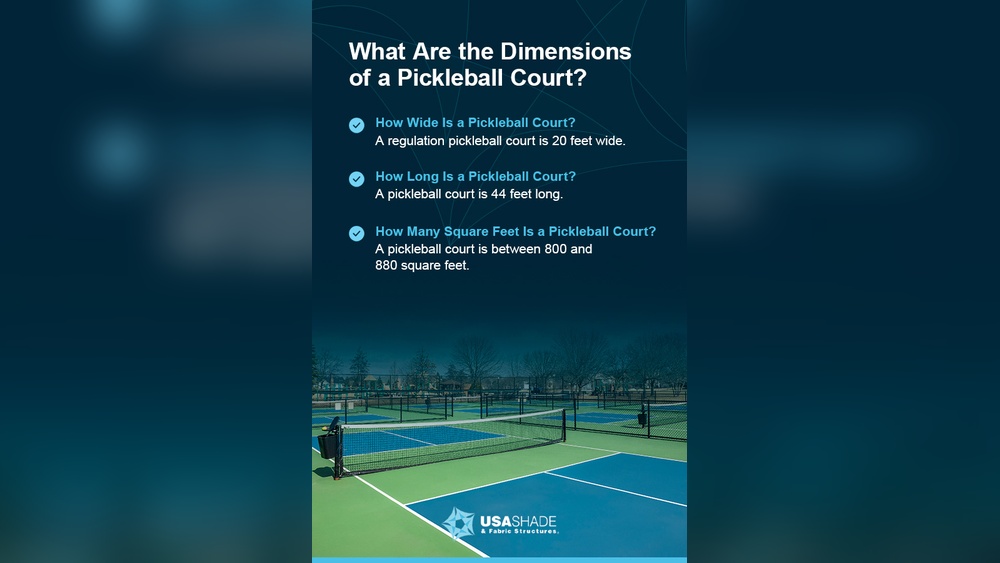
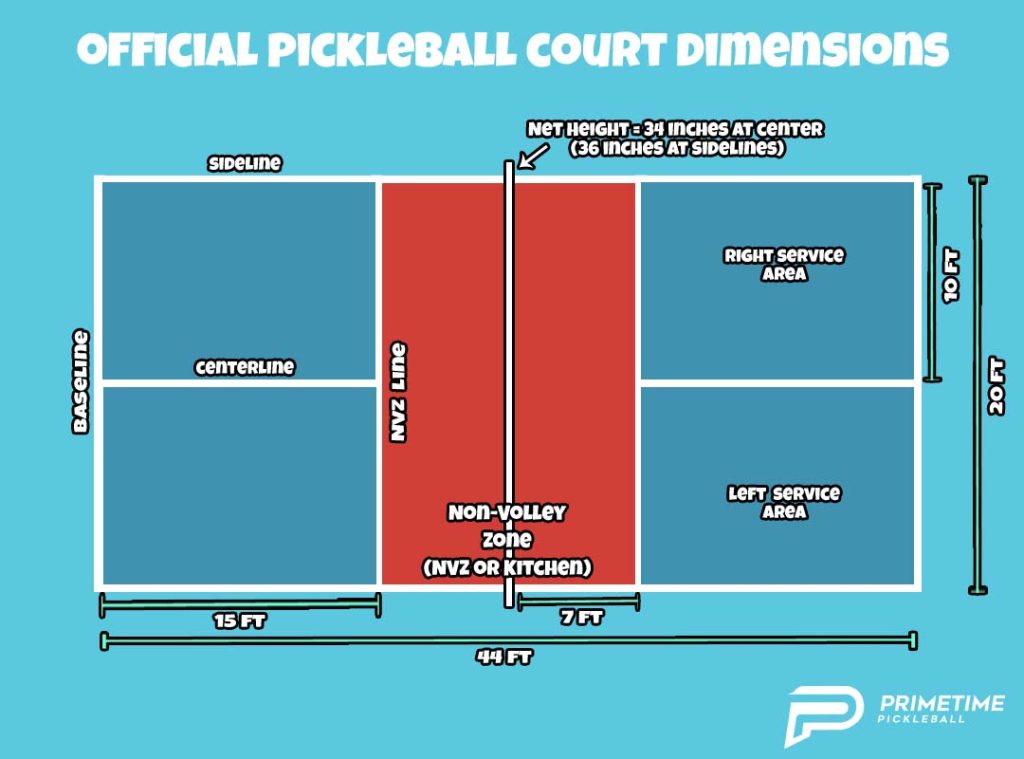
A standard pickleball court, as defined by official rules, measures 20 feet wide by 44 feet long. This size is used for both singles and doubles play. That means the playing area itself is:
- Width: 20 feet
- Length: 44 feet
To find the square footage, simply multiply the width by the length:
20 Ft X 44 Ft = 880 Square Feet
So, the answer to the basic question is: a pickleball court is 880 sq ft.
Why This Size?
The court size is designed for fast play, agility, and to keep the sport accessible for all ages. The smaller surface compared to tennis or basketball means less running, which is one reason pickleball is so popular with people of all fitness levels.
Playing Surface Vs. Total Area
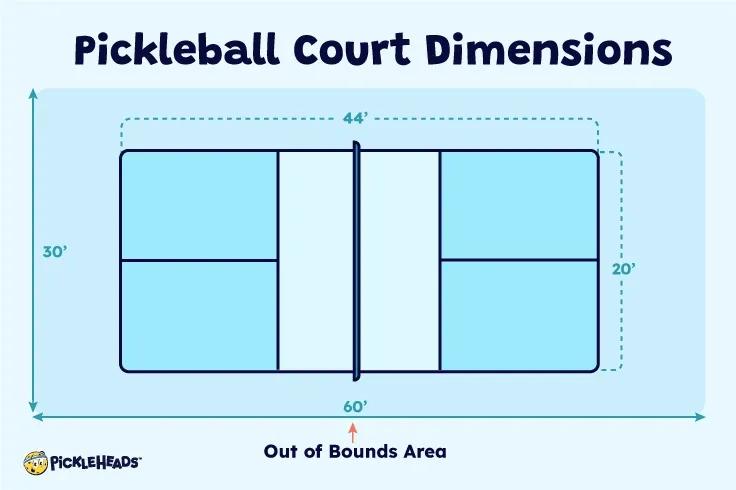
It’s critical to distinguish between the playing surface and the total area needed. The 880 sq ft is just the in-bounds area. For real play, you need extra space around the court for safety and movement.
Total Area Needed For A Pickleball Court
If you’re building or marking out a court, you need more than just the minimum rectangle. Players move past the lines to chase balls and avoid injury, so there’s a required clear zone around the court.
Official Recommendations
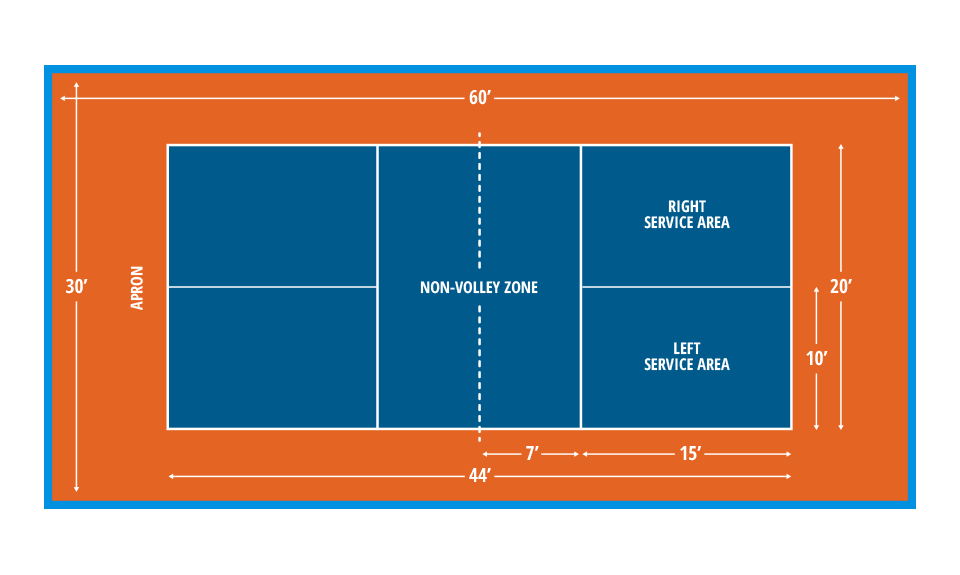
USA Pickleball recommends a minimum total playing area of 30 feet wide by 60 feet long. This accounts for space around the court for safe movement, which gives:
30 Ft X 60 Ft = 1,800 Square Feet
This total area is important for planning construction, fencing, or gymnasium layouts.
Ideal Space For Tournaments
For comfortable play, especially in tournaments, many facilities use a larger buffer zone. The ideal space is often:
- 34 feet wide by 64 feet long
- This equals 2,176 square feet
This extra room helps with ball retrieval, prevents injuries, and allows for benches or chairs by the sidelines.
Key Takeaway
- The court playing area is always 880 sq ft
- The total area needed is at least 1,800 sq ft, but 2,176 sq ft is ideal for serious play
Pickleball Court Layout And Markings
A pickleball court isn’t just a blank rectangle. There are important lines and zones that create the unique game play.
Main Zones
- Baseline: The back boundary lines.
- Sidelines: The side boundaries.
- Non-volley zone (Kitchen): A 7-foot area on each side of the net where volleys are not allowed.
- Service courts: Divided into left and right, each 10 feet wide and 15 feet long.
The court is symmetrical, and every line is part of the area it marks.
Court Marking Details
All lines should be 2 inches wide and of a contrasting color to the playing surface. This helps players see boundaries clearly, reducing mistakes and injuries.
Pickleball Court Vs. Other Sports Courts
Many people want to know how a pickleball court compares in size to a tennis, badminton, or basketball court. This is important if you’re thinking of converting or sharing space.
Here’s a comparison for quick reference:
| Sport | Court Size (ft) | Square Feet |
|---|---|---|
| Pickleball | 20 x 44 | 880 |
| Tennis (Singles) | 27 x 78 | 2,106 |
| Tennis (Doubles) | 36 x 78 | 2,808 |
| Badminton (Doubles) | 20 x 44 | 880 |
| Basketball (High School) | 50 x 84 | 4,200 |
Notable insights:
- A pickleball court is the same size as a badminton doubles court.
- You can fit about three pickleball courts in the space of one tennis court (doubles).
- A full basketball court is nearly five times bigger than a pickleball court.
Credit: primetimepickleball.com
Multi-court Layouts And Space Efficiency
Many parks and clubs want to maximize space by fitting multiple courts in one area. Knowing the total area needed per court helps you plan efficiently.
Fitting Multiple Courts
If you want to build multiple courts side by side:
- Add extra space between courts for safety.
- USA Pickleball suggests at least 10 feet between sidelines of adjacent courts.
Example: Four Courts Layout
Suppose you want to fit four courts in a row, each with the recommended buffer zones.
- Each court area: 30 x 60 ft = 1,800 sq ft
- Four courts: 4 x 1,800 = 7,200 sq ft
However, you can save space by sharing buffer zones:
| Layout | Width (ft) | Length (ft) | Total Area (sq ft) |
|---|---|---|---|
| Single Court | 30 | 60 | 1,800 |
| Four Courts (2×2 block) | 64 | 64 | 4,096 |
Insight: By grouping courts, you use less space per court due to shared buffer zones.
Converting Tennis Courts
A common strategy is to paint pickleball lines on existing tennis courts. Since tennis courts are much larger, you can usually fit two to four pickleball courts per tennis court, depending on buffer space.
Indoor Vs. Outdoor Court Space
Where you build your court affects the space you need and how you plan the layout.
Outdoor Courts
- Usually allow for larger buffer zones.
- Need fencing and sometimes lighting.
- Must consider surface drainage and sun direction.
Indoor Courts
- Often limited by gym size.
- May need to reduce buffer zones, but always keep safety in mind.
- Lines may overlap with other sports, so use a contrasting color for visibility.
Pro tip: If building indoors, a minimum ceiling height of 18-20 feet is recommended to prevent balls from hitting the ceiling during high shots.
Building A Pickleball Court: What To Consider
If you’re thinking about building a pickleball court, there are several factors to keep in mind beyond the court’s square footage.
Surface Material
The most common surfaces for pickleball courts are:
- Concrete: Durable, long-lasting, and good for outdoor play.
- Asphalt: Less expensive than concrete but may crack over time.
- Acrylic Coating: Applied over concrete or asphalt for better traction and ball bounce.
- Modular Tiles: Used for temporary or indoor courts, easy to install and move.
Each surface affects ball bounce and player movement, so choose based on your needs and climate.
Fencing And Lighting
- Fencing: Recommended height is at least 10 feet to keep balls in play.
- Lighting: For outdoor courts or indoor courts with poor natural light, aim for even, shadow-free coverage.
Drainage
Proper drainage is crucial for outdoor courts. Standing water can damage the surface and make play unsafe.
Orientation
If possible, align your court north-south to prevent the sun from shining directly into players’ eyes.
Accessibility
Leave space for benches, wheelchairs, or viewing areas. If you want your court to be ADA compliant, include ramps and smooth surfaces.
Common Mistakes When Planning Court Space
Even experienced planners make errors when measuring or laying out a pickleball court. Here are mistakes to avoid:
- Ignoring the buffer zone: Only marking the 20 x 44 ft area leads to cramped play and possible injuries.
- Overlapping lines with other sports: Too many lines can confuse players. Use different colors or removable tape for temporary courts.
- Poor drainage planning: Water pooling on the surface will cause delays and long-term damage.
- Not allowing enough space for nets and posts: The net extends past the sideline, so plan for sturdy posts with enough clearance.
- Choosing the wrong surface: Slippery or uneven surfaces increase injury risk and reduce fun.
Credit: www.pickleheads.com
Cost Implications Of Square Footage
Your budget depends directly on the total square footage you’re building or resurfacing.
Basic Cost Estimate
- Surfacing: $4–$10 per square foot (varies by material and location)
- Fencing, lighting, and extra features: Add $10,000 to $30,000+ depending on your choices.
Example: Building one outdoor court (1,800 sq ft at $7/sq ft) = $12,600 for the surface alone.
If you reduce the buffer zone to save money, you risk player safety and the quality of play.
Non-obvious Insights For Court Planners
Most beginners focus only on the lines, but a few extra details make a big difference.
- Court color choice matters: Lighter colors keep the surface cooler under the sun, but too light can cause glare.
- Wind breaks for outdoor courts: Adding mesh screens to fencing can reduce wind, making play more consistent.
- Permanent vs. temporary lines: For shared spaces, temporary lines (tape, chalk) allow for flexibility without ruining other sports.
These small details can turn a basic court into a favorite community destination.
Credit: www.versacourt.com
Practical Examples And Real-world Applications
Backyard Courts
A standard American backyard is around 6,000–10,000 sq ft. A pickleball court with buffer zones (1,800 sq ft) fits in many yards, but check local building codes and HOA rules.
Community Centers
Most gymnasiums can fit multiple courts. For example, a 60 x 100 ft gym (6,000 sq ft) can fit three courts with some shared buffer zones.
School Gyms
Schools often use taped lines for multi-sport use. Teachers should ensure lines are visible and don’t overlap confusingly with basketball or volleyball markings.
Tennis Club Conversions
Many tennis clubs are adding pickleball by painting over part of existing tennis courts. This lets more people play at once and attracts new members, especially older adults.
How To Measure And Mark Your Own Court
If you want to create a court at home or in a community space, here’s a simple process:
- Clear the area: Remove debris, level the surface.
- Measure the playing area: Mark a 20 x 44 ft rectangle.
- Add buffer zones: Measure out at least 5 feet on both sides and 8 feet behind each baseline.
- Mark the lines: Use chalk or tape before painting.
- Install the net: The net should be 36 inches high at the sidelines, 34 inches in the center.
- Check for safety: Walk around the area and ensure there’s no tripping hazard.
Court Size And The Growth Of Pickleball
One reason for pickleball’s explosive growth is the small court size. With only 880 sq ft needed for the playing area, and 1,800–2,176 sq ft for a full setup, you can fit more courts into less space. This means lower costs, more accessibility for schools and communities, and a game that feels fast-paced and social.
A surprising fact: The Sports & Fitness Industry Association reported that over 8.9 million Americans played pickleball in 2022, and facilities are rushing to keep up with demand. Courts are popping up in driveways, retirement communities, and even unused parking lots.
Environmental And Maintenance Considerations
It’s easy to overlook the long-term impact of court construction.
- Eco-friendly materials: Consider recycled surfacing or permeable concrete to reduce water runoff.
- Low-maintenance designs: Proper sealing and high-quality paint reduce yearly upkeep and save money.
- Shared spaces: Using multi-use courts reduces land use and cost.
Planning for the full court area, not just the playing lines, helps ensure your court will be enjoyed for years without unexpected repairs.
Frequently Asked Questions
How Many Square Feet Is The Playing Area Of A Pickleball Court?
The official playing area is 20 feet by 44 feet, or 880 square feet. This is the in-bounds area used in all standard play, both singles and doubles.
How Much Total Space Do I Need To Build A Pickleball Court?
You need a minimum of 1,800 square feet (30 x 60 ft) to allow for movement and safety zones around the court. For tournaments or extra comfort, 2,176 sq ft (34 x 64 ft) is recommended.
Can I Fit A Pickleball Court In My Backyard?
Many standard backyards can fit a pickleball court, especially if you use the minimum 1,800 sq ft. Always check local zoning rules, and remember to leave extra room for fences or landscaping.
How Many Pickleball Courts Fit On A Tennis Court?
Usually, you can fit two to four pickleball courts on one tennis court, depending on buffer space and layout. You’ll need to add extra lines and possibly portable nets.
Where Can I Find Official Guidelines For Pickleball Court Size?
Official guidelines and diagrams can be found at the USA Pickleball website and on Wikipedia for international standards.
Pickleball’s court size makes it one of the most accessible and flexible sports today. Whether for home fun or professional play, understanding the space you need ensures every game is safe, fair, and enjoyable. With this knowledge, you’re ready to mark your court and join the millions enjoying the game.