
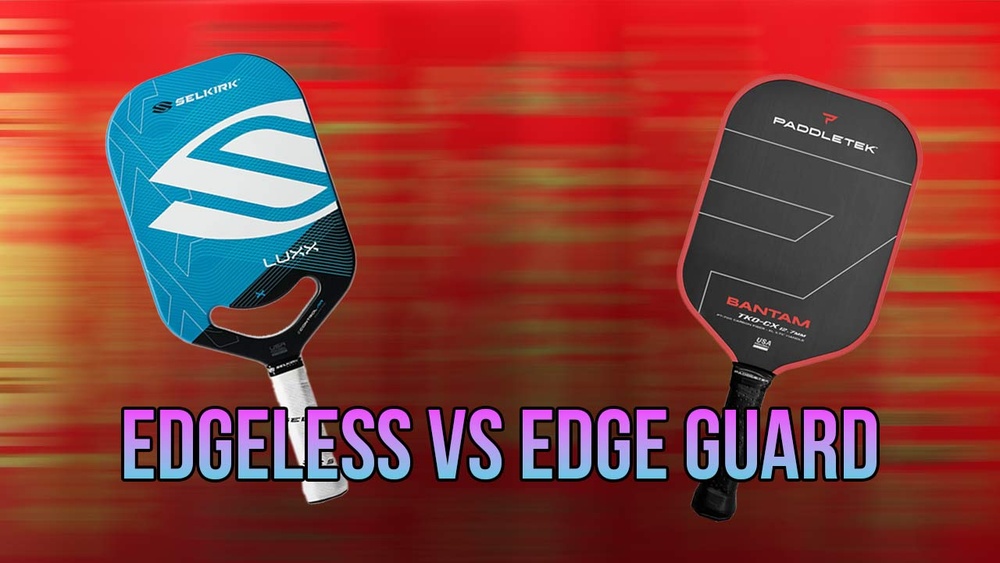
Are you wondering whether to choose an edgeless pickleball paddle or one with an edge? Your choice can change how you play, feel, and win on the court.
Both types have unique benefits and drawbacks that could make or break your game. By the end of this article, you’ll know exactly which paddle fits your style and boosts your performance. Keep reading to find out what’s best for your next match!
Pickleball Paddle Basics
Pickleball paddles come in different shapes and styles. Understanding the basics helps players choose the right paddle. Knowing paddle parts and materials is important. These details affect how the paddle feels and performs on the court.
Picking between edgeless and edged paddles starts with learning the paddle’s core features. Each design offers unique benefits. Let’s explore the key components and materials that build a paddle.
Key Paddle Components
The paddle has three main parts: the face, core, and handle. The face is the flat surface that hits the ball. It must be smooth and durable for good control and power. The core sits beneath the face. It affects the paddle’s weight and how it absorbs impact. The handle lets you grip the paddle firmly. Its length and thickness influence comfort and control during play.
Materials And Construction
Most paddle faces use composite, graphite, or wood. Composite faces offer a balance of power and control. Graphite faces are lightweight and give quick responses. Wood paddles are heavier but cost less. Cores come in polymer, Nomex, or aluminum. Polymer cores are quiet and soft. Nomex cores are stiff and fast. Aluminum cores provide a good middle ground. The edge guard protects the paddle’s perimeter. Edgeless paddles remove this guard for a larger hitting area but less protection.
Credit: www.picklemadness.com
Edgeless Paddle Features
Edgeless pickleball paddles offer a unique feel on the court. They differ from traditional paddles with a noticeable edge guard. The lack of this edge changes how the paddle looks and plays. Many players enjoy the smooth, continuous surface. This design can affect the paddle’s performance and handling.
Understanding the key features of edgeless paddles helps in choosing the right one. Below are some important aspects like design, grip, power, and control.
Design And Shape
Edgeless paddles have a smooth, rounded shape. The absence of an edge guard gives a sleek look. This design reduces the paddle’s weight slightly. The shape often feels larger due to no border. Some players find it easier to maneuver during fast shots. The smooth edges can help in hitting tricky shots near the net.
Grip Characteristics
The grip on edgeless paddles stays the same as regular paddles. It usually has a cushioned, non-slip surface for comfort. The grip size options allow players to find the best fit. A good grip helps in better control and less hand fatigue. Players with smaller hands may find a thinner grip easier to hold. The paddle’s balance with grip affects overall handling.
Power And Control
Edgeless paddles offer a balance between power and control. The lightweight design helps generate faster swings. The smooth surface can give more consistent ball contact. Players can achieve precise shots with less effort. Control improves due to the paddle’s even surface. Some players feel they can place the ball better with an edgeless paddle.
Edge Paddle Features
Edge paddles have unique features that affect play style and comfort. Their design focuses on balance and durability, giving players a solid feel. Understanding these features helps pick the right paddle for your needs.
Design And Shape
Edge paddles usually have a standard rectangular shape. The edges are reinforced with protective materials. This adds strength and reduces damage from hits. The shape offers a larger hitting surface for better accuracy. It also helps with paddle stability during swings.
Grip Characteristics
The grip on edge paddles is firm and cushioned. It prevents slipping, even during long games. The handle length suits most hand sizes for comfort. Grip material absorbs sweat to keep hands dry. This improves control and reduces fatigue.
Power And Control
Edge paddles provide a good mix of power and control. The solid edges help generate more force on hits. Players can place shots precisely with consistent paddle balance. The paddle’s weight distribution supports quick reactions. This makes it easier to handle fast exchanges at the net.

Credit: performancepickleball.ca
Grip Comparison
Choosing between an edgeless and edged pickleball paddle affects your grip experience. Grip plays a key role in control and comfort during play. Understanding grip differences helps pick the right paddle for your style.
Comfort And Feel
Edgeless paddles often provide a smoother grip surface. This can reduce pressure points on your hand. The absence of an edge means less chance of discomfort during long play. Edged paddles have a defined border that some players find easier to hold. This border gives a familiar feel and added security. Comfort depends on personal grip preference and hand size.
Handling And Maneuverability
Edgeless paddles allow seamless hand movement along the grip. This can improve quick wrist actions and control. The smooth shape helps with faster paddle rotation. Edged paddles offer a clear grip boundary, aiding steady handling. The edge can help prevent the paddle from slipping. Both styles support good maneuverability but suit different grip habits.
Power Comparison
Power plays a key role in pickleball. The paddle type affects how strong your shots are. Edgeless and edge paddles differ in their power delivery. Understanding these differences helps you choose the right paddle for your style.
Shot Strength
Edgeless paddles often offer more power. The smooth edge design allows for a larger hitting area. This helps generate stronger shots. Edge paddles have a defined border that can limit the sweet spot size. This may reduce the power you can put behind the ball.
With edgeless paddles, you get consistent power across the face. This consistency helps in making aggressive shots. Edge paddles can feel more controlled but may lack the same punch. Your swing speed also matters. Faster swings create more power regardless of paddle type.
Ball Response
Ball response differs between edgeless and edge paddles. Edgeless paddles usually provide a softer feel on contact. This can help with better ball control and placement. Edge paddles tend to give a firmer response. This firmness can help in quick volleys and fast exchanges.
The paddle’s edge design affects how the ball rebounds. Edgeless paddles may absorb some impact, giving a smoother rebound. Edge paddles can reflect more energy back to the ball. This makes the ball come off faster but with less cushioning.

Credit: pickleballunion.com
Player Preferences
Player preferences play a big role in choosing between edgeless and edge pickleball paddles. Different players find different paddle types better for their needs. The choice depends on skill level and playing style. Understanding these factors helps players pick the right paddle.
Skill Levels
Beginners often prefer paddles with edges. They offer more control and durability. Edged paddles help new players avoid paddle damage from accidental hits. Intermediate players may try edgeless paddles for better sweet spot size. Advanced players choose based on feel and precision. Edgeless paddles give a larger hitting surface. This suits players who want more power and less vibration. Skill level affects comfort and confidence with each paddle type.
Playing Styles
Players who focus on defense might like edged paddles. These paddles allow more control on soft shots and blocks. Aggressive players often select edgeless paddles. They provide a bigger sweet spot for stronger hits. Power hitters benefit from the larger surface area. Players who use quick wrist movements enjoy edgeless paddles too. Each style fits better with a certain paddle design. Choosing a paddle that matches style improves overall play.
Maintenance And Durability
Maintenance and durability are key factors for pickling paddle players. The paddle’s edge design affects how it holds up over time. Understanding these differences helps you care for your paddle better.
Wear And Tear
Edgeless paddles often show fewer chips along the sides. Without a hard edge guard, they resist peeling and cracking better. Edge paddles have a solid border that protects the surface. But this edge can wear down or crack with heavy use. Both types can get scratches, but edges help prevent deep damage. Dirt and moisture can cause damage if not cleaned regularly.
Longevity Tips
Store paddles in a cool, dry place to avoid warping. Wipe paddles with a damp cloth after each use to remove dirt. Avoid hitting hard surfaces to reduce edge damage. Use paddle covers for extra protection during transport. Check edges often for cracks or dents. Fix small issues early to prevent bigger problems. Proper care extends paddle life and keeps performance steady.
Choosing The Right Paddle
Choosing the right pickleball paddle affects how you play. Each paddle type offers unique benefits. Edgeless paddles have smooth edges, while edge paddles include a protective rim. Understanding your needs helps pick the best option.
Consider your playing style, skill level, and comfort. The right paddle improves control and power. It also helps prevent damage during play. Take time to explore what suits you best.
Assessing Your Needs
Think about your skill level. Beginners might prefer paddles with extra protection. Advanced players often choose based on feel and weight. Also, consider how often you play. Frequent players may need a durable paddle.
Consider your hand size and grip style. Comfort matters to avoid fatigue. Weight affects swing speed and control. Decide if you want more power or better touch. These factors guide your paddle choice.
Testing And Trying Out
Try different paddles before buying. Hold and swing each paddle to feel its balance. Notice how the paddle responds to your shots. Play short games using both edgeless and edge paddles.
Ask friends or coaches for opinions. Visit local sports stores to test paddles. Some places offer demo paddles for trial. Testing helps you find the paddle that fits your style.
Frequently Asked Questions
What Is The Difference Between Edgeless And Edge Paddles?
Edgeless paddles lack a hard edge guard, offering a larger sweet spot. Edge paddles have a protective edge guard, enhancing durability but limiting hitting area slightly.
Are Edgeless Paddles More Durable Than Edge Paddles?
No, edgeless paddles are less durable. Edge paddles have protective guards that prevent damage from impacts, making them last longer.
Do Edgeless Paddles Improve Pickleball Performance?
Yes, edgeless paddles provide a bigger hitting surface, which can improve control and power. However, they require careful handling to avoid damage.
Which Paddle Type Is Better For Beginners?
Edge paddles are better for beginners due to their durability and protection. Edgeless paddles suit experienced players seeking a larger sweet spot.
Conclusion
Choosing between edgeless and edge pickleball paddles depends on your style. Edgeless paddles offer a larger sweet spot and smoother hits. Edge paddles provide extra protection and feel more traditional. Think about your playing needs and comfort. Try both types if possible to see what fits best.
Each has pros and cons worth considering. Your paddle choice can affect your control and power. Play smart, pick what feels right, and enjoy the game more.