
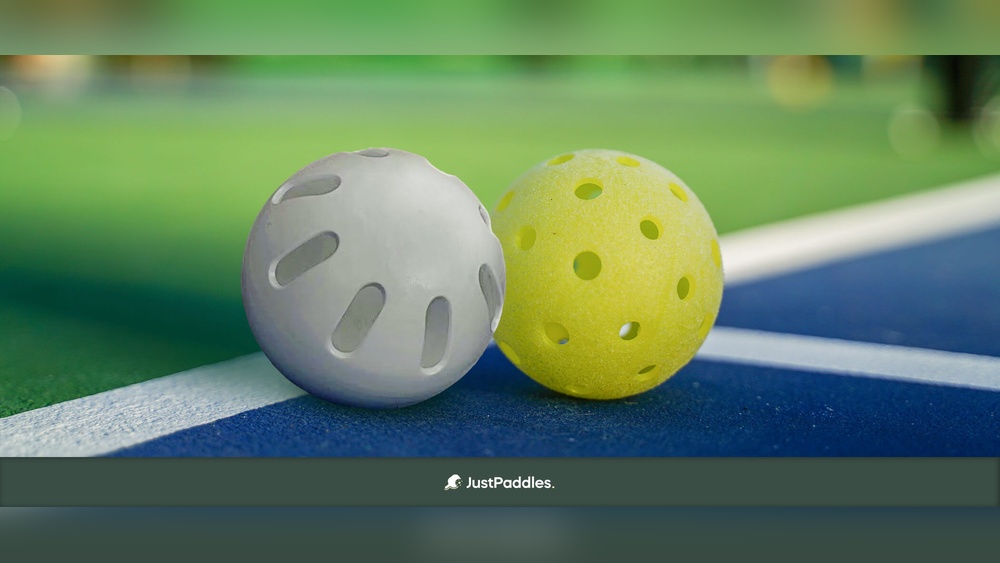
Pickleball Ball Vs Wiffle Ball: All You Need To Know
On first look, pickleball balls and wiffle balls may seem almost the same. Both are lightweight, made of plastic, and covered with holes. But if you look closer, you’ll see big differences in how they’re designed, how they play, and what they’re used for. Many beginners and even experienced players get confused by these two balls. Choosing the wrong one can change your game, damage your equipment, or even break the rules.
Let’s explore every detail that separates a pickleball ball from a wiffle ball. Whether you’re new to these sports, a parent buying for your kids, or a coach, you’ll find practical answers here. By the end of this guide, you’ll know exactly which ball to use, why it matters, and what mistakes to avoid.
What Is A Pickleball Ball?
A pickleball ball is a small, hollow, plastic ball used in the sport of pickleball. The sport is a mix of tennis, badminton, and ping pong, played with paddles and a net. The ball is designed to balance speed, bounce, and control.
Pickleball balls are usually 2.87 to 2.97 inches (73–75.5 mm) in diameter and weigh between 0.78 to 0.935 ounces (22.1–26.5 grams). They have 26 or 40 holes, depending on whether they’re meant for indoor or outdoor play. The holes are round, and the ball is built to bounce well on hard courts.
There are two main types:
- Indoor pickleball balls: Lighter, with bigger holes (usually 26). They move slower and are easier to control.
- Outdoor pickleball balls: Heavier, with more holes (usually 40). They are made to handle wind and rougher surfaces.
Pickleball balls are strictly regulated by the USA Pickleball Association (USAPA). Only certain balls are approved for official competitions.
What Is A Wiffle Ball?
A wiffle ball is also a hollow plastic ball, but it’s mainly used for playing wiffle ball—a backyard game inspired by baseball. The ball is designed to be hit with a plastic bat and is famous for its ability to curve and move in the air.
The standard wiffle ball is about 2. 87 inches (73 mm) in diameter and weighs around 0. 7 ounces (20 grams). It has eight large oblong holes on one side of the ball, which gives it a unique flight pattern.
When pitched, it can curve, dip, or rise, making it hard to hit.
Wiffle balls are usually white, but you can find yellow and other colors for better visibility.
Key insight: The holes in a wiffle ball are much larger and shaped differently than those in a pickleball ball. This big design difference changes how the ball moves and feels.
Pickleball Ball Vs Wiffle Ball: Physical Differences
If you hold both balls side by side, you’ll notice several differences right away. These small details have a big impact on how they perform.
| Feature | Pickleball Ball | Wiffle Ball |
|---|---|---|
| Material | Harder, durable plastic (polymer) | Softer plastic |
| Diameter | 2.87–2.97 in (73–75.5 mm) | 2.87 in (73 mm) |
| Weight | 0.78–0.935 oz (22.1–26.5 g) | 0.7 oz (20 g) |
| Number of Holes | 26 (indoor), 40 (outdoor), round holes | 8, oblong holes on one side only |
| Color | Yellow, orange, green, white | Mostly white, sometimes yellow |
Non-obvious insight: The weight difference is small, but pickleball balls are made to bounce and last through hundreds of hits on hard courts. Wiffle balls are designed to move in the air and are not meant for bouncing.
How The Balls Move And React
The way a ball travels through the air and bounces off the ground is key for any sport.
Pickleball Ball Flight And Bounce
Pickleball balls are made to be predictable. The many small, round holes reduce wind resistance but let the ball move in a straight, stable path. Outdoor balls, with more holes, are heavier to cut through the wind. When a pickleball ball hits the ground, it bounces up to about 30–34 inches (76–86 cm) if dropped from a height of 78 inches (198 cm).
This reliable bounce is important because pickleball is a fast game. Players need to know where the ball will go and react quickly.
Wiffle Ball Flight And Bounce
A wiffle ball is famous for its “crazy” flight. The large, oval holes on one side create uneven air flow, causing the ball to curve, dip, or rise sharply when thrown. Skilled pitchers can make a wiffle ball move in ways that are almost impossible with any other ball.
However, wiffle balls do not bounce well. If you drop a wiffle ball, it will hardly bounce at all. It’s made for air movement, not ground bounce.
Non-obvious insight: If you try to use a wiffle ball for pickleball, the ball won’t bounce properly, and the game becomes almost unplayable.
Purpose And Official Usage
Using the right ball for the right sport is more than just a rule—it makes the game work as it should.
Pickleball Ball In Pickleball
Pickleball can be played indoors or outdoors, but only USAPA-approved balls are allowed in official matches. The type of ball can even change how the game feels:
- Indoor balls: Move slower, are easier to control, and are quieter.
- Outdoor balls: Move faster, are harder to control, and make a louder “pop” sound.
Some popular brands are Dura Fast 40, Onix Pure 2, and Franklin X-40.
Wiffle Ball In Wiffle Ball And Other Games
The wiffle ball is used in wiffle ball, a casual baseball-like game often played in backyards or parks. There are no official leagues as strict as pickleball, but the ball must be the original design. Wiffle balls are also used for baseball batting practice because they’re safe, won’t break windows, and help train hand-eye coordination.
Key mistake to avoid: Never use a wiffle ball in an official pickleball game. It’s not allowed and won’t work well.
Durability And Lifespan
How long a ball lasts depends on what it’s made for.
Pickleball Ball Durability
Pickleball balls are built to take a beating. On outdoor courts, they face rough surfaces, sun, and cold weather. Even so, they do wear out—especially outdoor balls, which can crack after heavy use. Most players find that an outdoor pickleball ball lasts 5–10 games before needing replacement.
Indoor balls usually last longer because the playing surface is smoother.
Wiffle Ball Durability
Wiffle balls are softer and designed for gentle hits with a plastic bat. They can crack or dent if hit with a wooden bat or stepped on. In backyard play, a wiffle ball can last a whole season. But used the wrong way, it may not last more than a few games.
Tip: Never use a wiffle ball with a paddle or on hard courts. It will get damaged quickly.
Cost And Availability
Both balls are cheap compared to most sports equipment, but there are a few things to know.
Pickleball Ball Price
A set of 4–6 pickleball balls usually costs $10–$16. Official tournament balls may cost more, but the price per ball drops if you buy in bulk. Indoor balls are sometimes cheaper than outdoor ones.
Wiffle Ball Price
Wiffle balls are even less expensive. You can get a 3-pack for $4–$8. The price is low because the balls are simpler and have fewer regulations.
Non-obvious insight: Cheap balls may save money, but they often don’t last as long. For serious play, buy USAPA-approved pickleball balls.
Safety Considerations
Both balls are safe compared to baseballs or softballs, but their different designs mean different risks.
Pickleball Ball Safety
Pickleball balls are hard and can hurt if they hit sensitive areas, especially the face or eyes. However, the ball speed is much lower than in tennis or baseball, and most injuries are minor.
Wiffle Ball Safety
Wiffle balls are extremely light and soft. They are designed not to break windows or hurt people. That’s why they’re popular for kids and practice in small spaces.
Key point: Never substitute a pickleball ball for a wiffle ball in backyard play with children. The pickleball ball is too hard and can cause injury.
Playing Experience: What’s It Like?
How does it feel to play with each ball? The experience is very different.
Pickleball Ball In Play
When you play pickleball, the ball moves fast, but not too fast. Players need quick reflexes and precise shots. The ball’s bounce and speed make rallies exciting. Outdoor balls can crack in cold weather or if hit very hard.
Wiffle Ball In Play
Wiffle ball is more about fun, tricks, and creativity. Pitchers can throw curveballs, sliders, risers, and screwballs—sometimes with just a flick of the wrist. Hitting a wiffle ball is harder than it looks because it can “dance” in the air.
Key tip: If you want a game that tests your reaction speed and accuracy, choose pickleball. If you want unpredictable fun and creative pitches, try wiffle ball.
Can You Use Them Interchangeably?
Many beginners wonder if they can use a wiffle ball for pickleball or a pickleball ball for wiffle ball. The answer is simple: no.
- A wiffle ball won’t bounce on a pickleball court and is too light for paddle hits.
- A pickleball ball is too hard and heavy for a wiffle bat, and it won’t curve.
Non-obvious insight: Using the wrong ball can also damage your equipment. Paddles and bats are designed for a certain ball type.
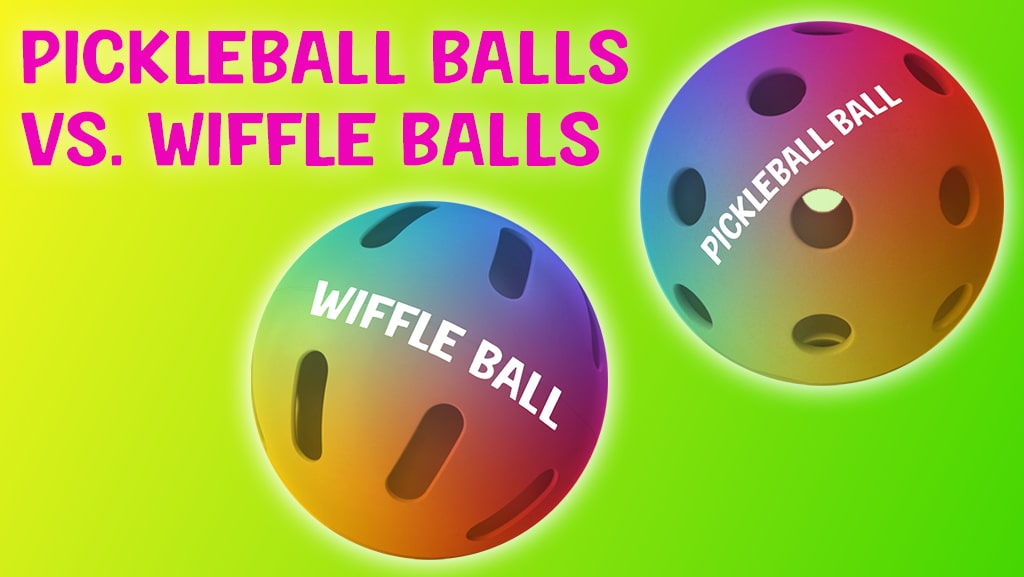
Credit: www.logotech.com
Weather And Playing Conditions
The weather affects each ball differently.
- Pickleball balls can crack in cold temperatures. Outdoor balls are made to resist wind, but they still become brittle in freezing weather.
- Wiffle balls are less affected by weather because they’re used for casual play. However, strong wind can make them almost impossible to control.
Tip: Always choose the right type of pickleball ball (indoor or outdoor) for your playing environment.
Common Mistakes When Choosing Or Using Balls
- Using the wrong ball for the sport. This is the most frequent mistake.
- Buying cheap, unapproved balls. These may not bounce right or last long.
- Not replacing old balls. Cracked or soft balls affect play quality.
- Confusing indoor and outdoor pickleball balls. They look similar but play differently.
- Leaving balls in the sun or cold for too long. Both types can get damaged.
Practical tip: Label your balls for indoor and outdoor use to avoid mix-ups.
How To Choose The Right Ball For Your Needs
When buying balls, consider:
- Sport: Are you playing pickleball or wiffle ball?
- Playing surface: Indoor or outdoor? Hard court or grass?
- Skill level: Beginners may prefer softer, slower balls.
- Weather: Cold weather needs more durable balls.
- Price vs. quality: Don’t always buy the cheapest option.
Example: If you’re coaching kids in a gym, choose indoor pickleball balls or wiffle balls for safety. For official outdoor pickleball matches, buy USAPA-approved outdoor balls.
The Science Behind The Holes
Why do both balls have holes? The answer is in physics.
- Pickleball ball holes: Many small round holes reduce drag, keep the ball stable, and control bounce.
- Wiffle ball holes: Fewer, larger oval holes on one side create uneven airflow, making the ball spin and curve.
Fun fact: The original wiffle ball was invented in 1953. The inventor, David N. Mullany, designed it so his son could throw curveballs without hurting his arm.

Credit: pickleballunion.com
Which Ball Is Right For You?
It depends on your goals:
- Want a fast, competitive paddle sport? Pickleball balls are best.
- Looking for backyard fun or baseball practice? Use wiffle balls.
Never mix them up. If you play pickleball, get the right ball for your surface (indoor or outdoor). If you play wiffle ball, use the original ball with eight holes.
Real-world Examples
- A school gym teacher buys wiffle balls for indoor baseball practice because they’re safe for kids.
- A pickleball club orders hundreds of Dura Fast 40 balls for outdoor tournaments. They test balls before games to make sure they bounce correctly.
- A family brings wiffle balls to a picnic. Kids play a safe game of wiffle ball, and no one worries about broken windows.
Non-obvious insight: Some people try to save money by using wiffle balls for pickleball practice, but it’s actually a false saving. The balls won’t last, and the experience is poor.
Pickleball Ball Vs Wiffle Ball: Quick Comparison
Here’s a quick side-by-side look:
| Aspect | Pickleball Ball | Wiffle Ball |
|---|---|---|
| Main Use | Pickleball (paddle sport) | Wiffle ball game, baseball practice |
| Holes | 26 or 40, round | 8, oval (one side only) |
| Bounce | High, predictable | Low, unpredictable flight |
| Durability | Higher (especially outdoor) | Lower |
| Approved for Official Play | Yes (USAPA approved) | Yes (Wiffle Inc.) |
| Price | $2–$4 per ball | $1–$2 per ball |
Where To Buy And How To Check Quality
Buy pickleball balls from sports stores or official sites. Look for the USAPA approval stamp if you want to play in tournaments. For wiffle balls, buy from major retailers or the official Wiffle Ball company.
Tip: Squeeze the ball lightly. A quality pickleball ball should feel firm, not soft or bendy. Wiffle balls should flex a bit but return to shape.
Caring For Your Balls
- Store in a cool, dry place.
- Avoid direct sunlight for long periods.
- Check for cracks or dents before play.
- Replace damaged balls quickly.
Good care means longer life and better performance.
Expert Opinions And Studies
Sports scientists have tested both balls for bounce, flight, and durability. The official standards are set for safety and fair play. For more details, you can review the guidelines at the USA Pickleball Association.
Frequently Asked Questions
What Is The Main Difference Between A Pickleball Ball And A Wiffle Ball?
Pickleball balls have many small, round holes and are made for bouncing on hard courts. Wiffle balls have eight large, oval holes on one side only, making them curve in the air but not bounce. Each is made for a different sport.
Can I Use A Wiffle Ball For Pickleball Or Vice Versa?
No, using a wiffle ball for pickleball won’t work because it won’t bounce. A pickleball ball is too heavy and hard for wiffle ball. Always use the right ball for the right game.
How Do I Know If My Pickleball Ball Is Approved For Tournaments?
Look for the USAPA stamp or check the official tournament rules. Only certain brands and models are allowed in competitions.
Which Ball Is Safer For Kids?
Wiffle balls are safer for kids because they are lighter and softer. They are less likely to cause injury or damage. Pickleball balls are harder and better for older kids or adults.
How Long Do Pickleball Balls And Wiffle Balls Last?
Pickleball balls last 5–10 games outdoors or much longer indoors if used carefully. Wiffle balls can last a season with gentle use but may break if misused.
Choosing the right ball makes your game better, safer, and more fun. Now you know the real differences—so you can play with confidence, avoid common mistakes, and enjoy the sport you love.

Credit: picklego.co