
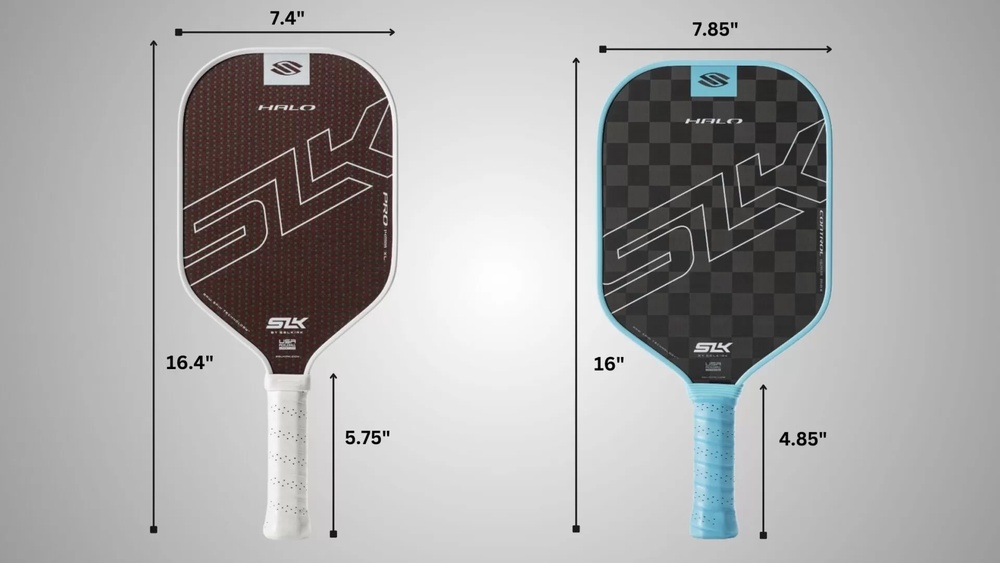
Pickleball is growing fast around the world, and players now have more choices than ever when picking equipment. One of the most common questions, especially for those wanting to improve their game, is about paddle size: Should you choose an XL (extra long) pickleball paddle or a Max (maximum width) pickleball paddle? The answer depends on your playing style, goals, and even your hand size. Understanding the differences between these two paddle types can help you make a smart choice that improves your performance and enjoyment.
When you first look at XL and Max paddles, they might seem similar. Both are designed to offer advantages over standard paddles. But the shape, weight distribution, sweet spot, and even control are different. Many players, even those with experience, do not realize how much paddle shape can affect their game.
A paddle that feels good in your hand can help you play better, while the wrong paddle can make every shot harder. Let’s dive deep into the key differences, benefits, and drawbacks of XL vs Max pickleball paddles, and help you decide which one fits your needs.
What Are Xl And Max Pickleball Paddles?
Before comparing the two, it’s important to understand what each type means.
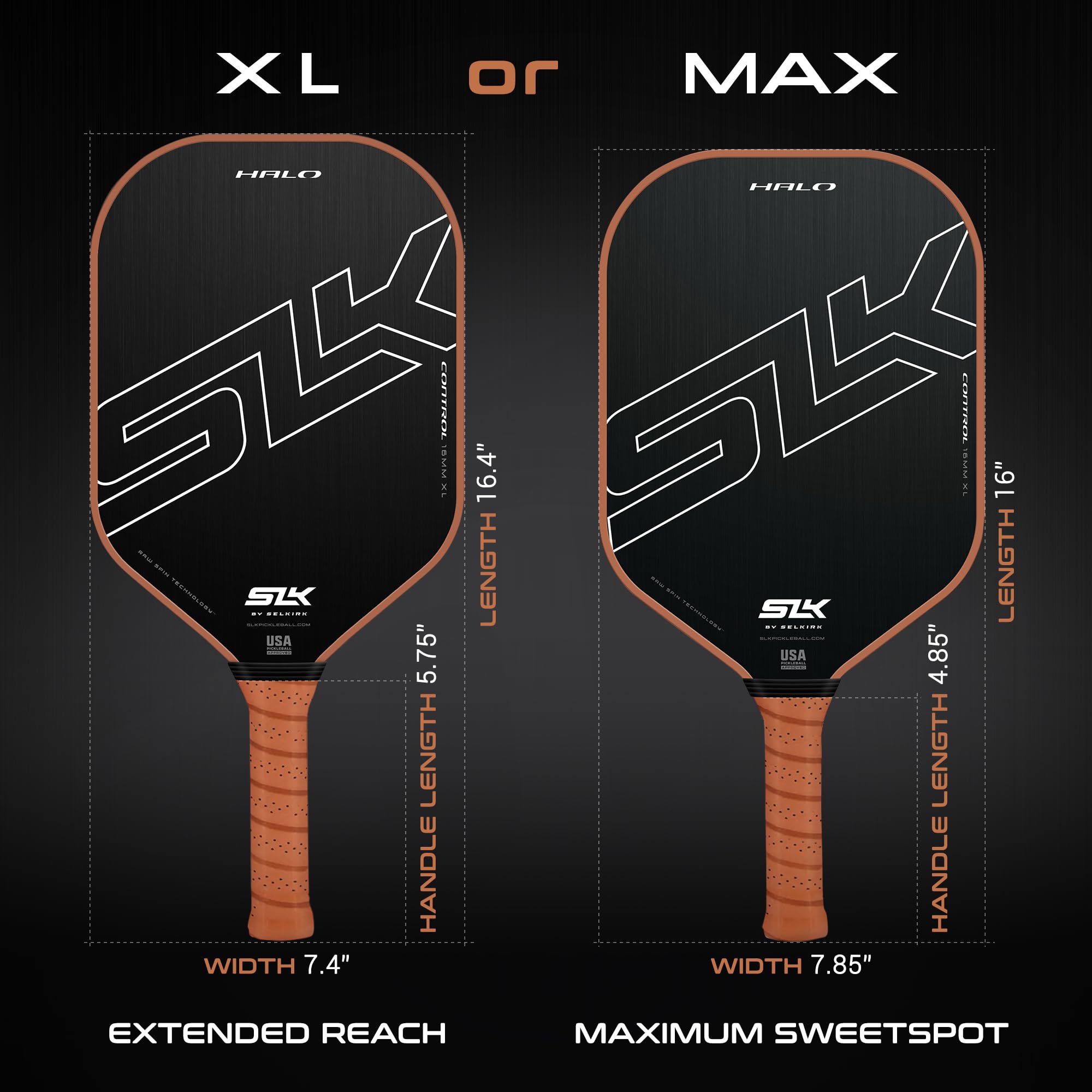
XL pickleball paddles are extra long compared to standard paddles. Most XL paddles are 16.5 inches or longer, while standard paddles are usually around 15.5 to 16 inches. The extra length gives players a longer reach and can add power to shots.
Max paddles, sometimes called widebody paddles, have the maximum width allowed under official rules (8.5 inches). This shape gives a larger sweet spot and better forgiveness, making it easier to hit the ball cleanly.
The official USAPA rules state that the combined length and width of a paddle (including edge guard and butt cap) must not exceed 24 inches, and the length cannot be more than 17 inches.
Xl Paddle Features And Benefits
Extra Reach
One of the main reasons players choose an XL paddle is the extra reach. With a longer paddle, you can cover more court without moving your feet as much. This is especially useful when stretching for a volley or hitting balls that would otherwise be out of reach. Taller players or those with a defensive style often find XL paddles more comfortable.
Power Potential
Longer paddles can generate more power, especially on overheads and drives. The extra length acts like a lever, helping you transfer more energy to the ball. This is similar to how a longer tennis racket can create more speed. For pickleball players who like to attack and play aggressively, this extra power can be a big advantage.
Narrower Sweet Spot
However, the sweet spot on an XL paddle is usually longer and narrower. This means the paddle is less forgiving if you hit near the edge. Players who don’t always hit the center of the paddle may notice more mishits or a “dead” feel on off-center shots.
Shape And Handling
XL paddles are usually more rectangular. This can make them feel less stable, especially on fast exchanges at the net. The extra length can also make the paddle feel heavier, even if the weight is similar to a Max paddle, because the weight is distributed farther from your hand.
Max Paddle Features And Benefits
Larger Sweet Spot
Max paddles are designed for maximum forgiveness. The wider face means there is a bigger sweet spot, making it easier to hit solid shots even if your aim isn’t perfect. For beginners or players who want consistency, this is a major benefit.
Enhanced Control
A wider paddle provides more surface area for blocking, dinking, and soft shots. Players who like to play at the net and control the pace of the game will often prefer the feel of a Max paddle. The shape also makes it easier to return hard shots from opponents.
Stability
The wider body of a Max paddle can make it feel more stable, especially during quick exchanges. The shape helps reduce twisting in your hand on off-center hits. This can be a big confidence booster, especially for players who are still working on their technique.
Limited Reach
The main trade-off is that Max paddles do not offer the extra reach of XL paddles. For some players, especially those who play singles or like to reach wide balls, this can be a drawback.
Key Differences: Xl Vs Max Pickleball Paddle
To make it easier to compare, let’s look at the main differences side by side.
| Feature | XL Paddle | Max Paddle |
|---|---|---|
| Length | 16.5 – 17 in | 15.5 – 16 in |
| Width | 7 – 7.5 in | 8 – 8.5 in |
| Sweet Spot | Narrow and long | Wide and large |
| Power | Higher, especially for drives | Moderate, more control |
| Control | Good, but less forgiving | Excellent, very forgiving |
| Reach | Extended | Standard |
| Stability | Can twist on off-center hits | Very stable |

Credit: www.selkirk.com
Who Should Choose An Xl Paddle?
Choosing an XL pickleball paddle is not just about wanting to hit harder. Here are some profiles of players who often prefer this style:
- Singles players: In singles, covering the whole court is key. The extra reach from an XL paddle helps you get to more balls and hit passing shots.
- Advanced players: Players with good control and technique can take advantage of the extra power and reach, and are less likely to be bothered by the smaller sweet spot.
- Aggressive players: If you like to drive the ball hard or attack at the net, the longer paddle can add speed to your shots.
- Tall players: Those with longer arms often feel more balanced with an XL paddle.
However, some beginners are tempted to use XL paddles for the extra power, but struggle with mishits and lack of control. If you often hit the edge of your paddle, you may find the XL less forgiving.
Who Should Choose A Max Paddle?
Max paddles are popular with a wide range of players, especially those who want a larger margin for error.
- Beginners: The big sweet spot helps new players hit more consistent shots, building confidence quickly.
- Doubles players: In doubles, quick reactions and control at the net are very important. The wider face is great for blocking and dinking.
- Defensive players: If you prefer to return shots, block, and play a control game, the Max paddle supports your style.
- Players with smaller hands: The balance of a Max paddle can feel more natural and less tiring for those with smaller hands.
One thing many people don’t realize: even advanced players sometimes use Max paddles in tournaments, especially if their focus is on control rather than power.
Detailed Comparison: Performance Factors
Let’s break down some important aspects of paddle performance and see how XL and Max paddles compare.
Power
XL paddles have the edge when it comes to raw power. The extra length gives more leverage, allowing you to hit harder drives and overheads. However, if you don’t hit the sweet spot, you may lose power quickly. Max paddles generate less power, but the wide face makes it easier to consistently hit solid shots.
Control
Max paddles shine here. The large sweet spot and stable feel let you place the ball with precision. XL paddles can offer good control for skilled players, but off-center hits are less forgiving.
Spin
Both paddle shapes can generate spin, but XL paddles may offer a slight advantage for topspin drives due to the longer face. However, the difference is small and depends more on paddle surface and player technique.
Reach
This is where the XL paddle is the clear winner. If you find yourself stretching for balls or missing wide shots, the extra length can make a big difference.
Maneuverability
Max paddles tend to be easier to move quickly, especially near the net. The balanced shape and weight make fast reactions easier. XL paddles can feel slower, especially for players with less wrist strength.
Sweet Spot
The Max paddle’s sweet spot covers much of the face, making it easy to hit clean shots even if your timing or aim is not perfect. The XL paddle’s sweet spot is smaller and more focused along the center line.
Durability
Both types are made with similar materials—fiberglass, carbon fiber, or composite cores—so durability is more about brand and quality than shape. However, a wider paddle (Max) may be more likely to scrape the ground during low shots.
Comparing Popular Xl And Max Paddle Models
Many brands offer both XL and Max models. Here’s a comparison of some popular paddles.
| Paddle Model | Type | Length | Width | Weight | Key Feature |
|---|---|---|---|---|---|
| Paddletek Tempest Reign Pro | XL | 16.5 in | 7.5 in | 7.6-8.0 oz | Extended reach, power |
| Selkirk Amped Epic | Max | 15.75 in | 8 in | 7.8-8.4 oz | Large sweet spot |
| Engage Encore EX 6.0 | XL | 16.5 in | 7.5 in | 7.5-8.3 oz | Spin, reach |
| Onix Z5 Widebody | Max | 15.5 in | 8.3 in | 7.5-8.2 oz | Forgiveness |
This shows that both types can be found across brands, with weight and materials often being similar. The main difference is the length and width.
How To Choose: Step-by-step Guide
Making the right decision involves more than just looking at numbers. Here’s a practical approach:
1. Assess Your Playing Style
Are you aggressive or defensive? Do you play singles or doubles? Power players and singles specialists often prefer XL paddles. Control-focused and doubles players may lean toward Max paddles.
2. Try Both Types
If possible, borrow or demo both paddle styles. Notice how each feels in your hand, especially during volleys and dinks.
3. Check The Sweet Spot
Hit a variety of shots. Do you consistently find the center, or do you often hit the edge? If you often mishit, the Max paddle might be better.
4. Consider Your Physical Build
Taller players or those with longer arms may be more comfortable with an XL paddle. Players with smaller hands or shorter reach might prefer the balance of a Max paddle.
5. Look For Weight And Grip Size
Don’t ignore other paddle factors. Make sure the paddle weight and grip size are comfortable for you. This can make more difference than the shape alone.
6. Think About Your Goals
Are you aiming to compete at a high level, or just have fun? Competitive players may want to experiment with XL paddles for extra reach and power.
7. Read Reviews And Ask Questions
Talk to other players and check online reviews. Many players share their experiences and may offer insights you hadn’t considered.
Non-obvious Insights Most Beginners Miss
Many new players focus only on paddle weight or price and ignore how paddle shape affects their play. Here are two important insights:
- The right paddle shape can help you avoid injury. If you struggle to reach balls and have to stretch or twist awkwardly, an XL paddle can reduce strain on your shoulders and back.
- A larger sweet spot means more than just “easier shots.” It also makes your paddle more forgiving on quick reflex volleys, where you don’t have time to aim carefully.
Also, some players assume that “more power is always better,” but in pickleball, control and consistency often win matches. Many intermediate players improve fastest when they switch from XL to Max paddles, especially in doubles.
Common Mistakes When Choosing Between Xl And Max
It’s easy to make mistakes when picking a paddle. Here are a few to avoid:
- Choosing based only on appearance: Some paddles look cool but may not match your needs.
- Copying pros without understanding why: Professional players have unique skills and can handle less-forgiving paddles.
- Ignoring grip size: An uncomfortable grip can lead to blisters or even injury.
- Not considering your main playing format: Singles and doubles require different skills and sometimes different equipment.
- Overlooking paddle balance: Even with the same weight, the balance point changes how the paddle feels.
The Impact Of Paddle Technology
Modern paddles use advanced materials like carbon fiber, honeycomb polymer cores, and textured surfaces. These features can help both XL and Max paddles perform better. For example, a Max paddle with a rough surface can still generate plenty of spin, while an XL paddle with a soft core can improve touch.
Some companies are now offering hybrid shapes—paddles that try to combine the reach of an XL with the sweet spot of a Max. These may be worth trying if you want the best of both worlds.
For more about official paddle specifications and testing, the USA Pickleball Association offers detailed information.
Credit: shawthingmanagement.com
User Experience: What Do Real Players Say?
It’s helpful to hear from actual players. Many who switch from a standard paddle to an XL notice an immediate difference in reach and power, but some find the adjustment period challenging. They often mention needing to “re-learn” their timing, especially on volleys.
Players moving from a standard to a Max paddle usually report more consistent play, fewer mishits, and better confidence at the net. Some advanced players say they switch between XL and Max paddles based on whether they are playing singles or doubles.
A common theme: the best paddle is the one that matches your style and feels good in your hand. Don’t be afraid to experiment.
Table: Quick Reference—which Paddle Fits You?
Here’s a simple way to match your needs with the right paddle type.
| Player Type | Best Paddle Type | Reason |
|---|---|---|
| Singles, aggressive, tall | XL | Power and reach |
| Doubles, control focus | Max | Large sweet spot, stability |
| Beginner | Max | Forgiveness, confidence |
| Advanced, precise hitter | XL | Leverage skilled play |
| Small hands, quick reflexes | Max | Easy handling |

Credit: www.selkirk.com
Frequently Asked Questions
What Is The Main Difference Between Xl And Max Pickleball Paddles?
The main difference is shape and playing style. XL paddles are longer and offer more reach and power, while Max paddles are wider, with a bigger sweet spot for forgiveness and control.
Can Beginners Use Xl Paddles?
Beginners can use XL paddles, but many find them harder to control due to the smaller sweet spot. Max paddles are usually easier for learning and building confidence.
Does Paddle Weight Matter More Than Shape?
Both weight and shape are important. Weight affects how quickly you can move your paddle, while shape changes the sweet spot, reach, and control. The best choice balances both for your style.
Are There Paddles That Combine Xl And Max Features?
Some brands offer hybrid paddles that try to mix the benefits of both. These usually have an “elongated widebody” shape and may suit players who want both reach and a large sweet spot.
How Do I Know If My Paddle Is Usapa Approved?
Look for a USAPA approval stamp on the paddle or check the manufacturer’s website. Approved paddles meet size and material rules for official play.
Choosing the right paddle is personal. Whether you select an XL or Max pickleball paddle, understanding the pros and cons will help you get more out of every match. If you can, try both styles before buying. Remember, your paddle is your most important tool—choose wisely, and your game will thank you.