

Paddle tennis and pickleball have captured the attention of sports lovers around the world. Both games are fast, fun, and easy to learn. But they are not the same. Many people see a small court, a paddle, and a ball and think the differences are minor.
In reality, each game has its own history, rules, equipment, and strategies. Understanding these differences can help you decide which sport fits your interests and skills best.
If you’re considering starting a new racket sport, or you simply want to know what sets paddle tennis apart from pickleball, this article will guide you through everything you need to know. From court size to scoring, from player demographics to culture, you’ll get a clear, detailed comparison.
By the end, you’ll be ready to step onto either court with confidence.
Origins And History
Paddle tennis and pickleball have unique stories that shaped their development and popularity. Understanding their roots helps explain their current styles.
Paddle Tennis
Paddle tennis began in New York City in 1915, invented by Frank Peer Beal. Beal wanted a tennis-like game for children that could be played on smaller urban courts. He created a version with no doubles alleys, a solid paddle, and a depressurized tennis ball. The sport grew in popularity, spreading to both coasts of the United States. Over time, adults embraced it, and rules evolved to allow for more advanced play.
There is also a variant called platform tennis, played on a raised court with wire fencing, mostly in cold climates. However, classic paddle tennis (sometimes called “pop tennis”) remains the most common form in the U.S.
Pickleball
Pickleball is a much younger sport, invented in 1965 on Bainbridge Island, Washington. Joel Pritchard, Bill Bell, and Barney McCallum created the game to entertain their families. They combined elements of tennis, badminton, and ping pong, using makeshift paddles and a perforated plastic ball.
The name “pickleball” has a quirky origin. Some say it was named after the Pritchards’ dog, Pickles. Others point to the term “pickle boat,” used in rowing for a crew made up of leftovers from other teams—reflecting the game’s mix of rules.
Pickleball spread quickly through community centers, retirement communities, and schools. Its popularity exploded in the 2010s, and now it’s one of the fastest-growing sports in North America, with millions of players worldwide.
Court Size And Surface
One of the first things you’ll notice when comparing paddle tennis and pickleball is the court. Size and surface affect movement, speed, and strategy.
| Sport | Court Size | Surface | Net Height |
|---|---|---|---|
| Paddle Tennis | 50 ft x 20 ft (15.24 m x 6.1 m) | Asphalt, concrete, or similar | 31 in (78.7 cm) at center |
| Pickleball | 44 ft x 20 ft (13.41 m x 6.1 m) | Wood, concrete, or asphalt | 34 in (86.4 cm) at center |
Paddle tennis courts are slightly larger, which allows for longer rallies and more lateral movement. The surface is usually hard and similar to a traditional tennis court.
Pickleball courts are closer in size to badminton courts. The smaller size makes the game accessible for players of all ages and mobility levels. Both sports are played outdoors and indoors, but pickleball’s court is more common in community gyms, while paddle tennis is often outdoors.
A unique feature in pickleball is the non-volley zone (the “kitchen”), a 7-foot area on each side of the net where volleys are not allowed. This changes the pace and tactics near the net.
Credit: www.pickleheads.com
Equipment Differences
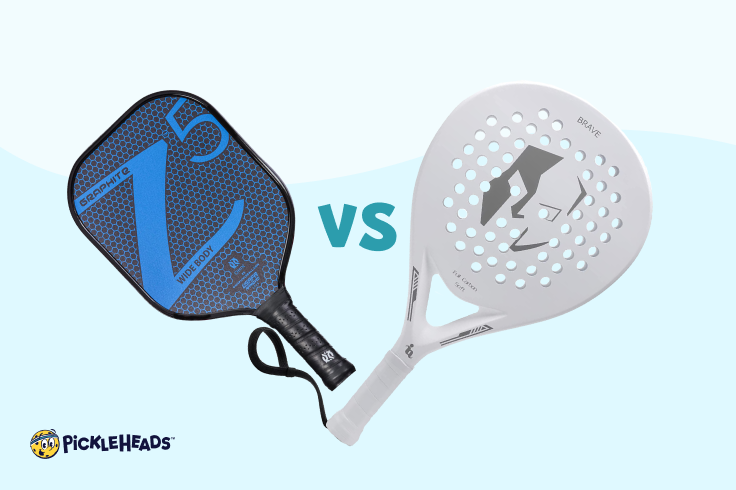
Each sport uses a paddle, but don’t be fooled—these are not the same.
Paddles
- Paddle tennis uses a solid paddle made of wood or composite materials. Paddles are larger than pickleball paddles, usually 16-18 inches long, with holes drilled to reduce air resistance.
- Pickleball paddles are smaller, lighter, and often made of composite, graphite, or polymer. They are about 8 inches wide and 15-16 inches long, with a flat surface and no holes.
The feel and power are different. Paddle tennis paddles give more weight and control for harder shots, while pickleball paddles are easier to swing quickly and allow for finesse.
Balls
- Paddle tennis uses a depressurized tennis ball, which is softer and bounces less than a standard tennis ball.
- Pickleball uses a plastic ball with holes (similar to a wiffle ball). The ball is lighter, slower, and doesn’t bounce as high.
Shoes And Clothing
Both sports require comfortable, non-marking court shoes for safety and quick movement. Clothing is similar to tennis: athletic shorts, shirts, and sometimes hats or visors for sun protection.
Non-obvious insight: Many new players use running shoes, but these lack the side support needed for fast lateral moves. Invest in real court shoes to avoid injury.
Rules And Scoring
While the basics might look similar, the rules and scoring systems set these sports apart.
Paddle Tennis Rules
- Serve: Underhand, one serve per point, from behind the baseline. The ball must land in the opposite service box.
- Scoring: Uses traditional tennis scoring (15, 30, 40, game), but with one serve only.
- Let rule: No lets on serve—if the ball touches the net but lands in, play continues.
- Doubles & singles: Both formats are common, though doubles is more popular.
- Court lines: No doubles alley—singles and doubles use the same court width.
Pickleball Rules
- Serve: Underhand, with the paddle below the waist. The ball must be served diagonally and land in the opposite service court.
- Scoring: Only the serving team scores points. Games are played to 11 (win by 2).
- Double bounce rule: After the serve, each side must let the ball bounce once before volleying.
- Non-volley zone: Players cannot volley balls while standing in the 7-foot kitchen area.
- Doubles & singles: Both are played, but doubles is more common.
Non-obvious insight: In pickleball, the double bounce rule reduces the advantage of strong servers and forces more strategic play, especially for beginners.

Credit: www.dupr.com
Game Play And Strategy
The heart of both sports is fast, strategic play, but the style and approach can feel very different.
Paddle Tennis Game Play
The larger court and heavier ball make paddle tennis rallies longer and more physical. Players often use topspin and slice, much like in tennis. Net play is common, and doubles partners need to communicate quickly to cover the court.
Key strategies include:
- Aggressive net play: Controlling the net often leads to winning points.
- Lob and smash: Lobbing over opponents and smashing overheads are common tactics.
- Spin: Players use topspin and slice for ball control and to force errors.
Pickleball Game Play
Pickleball is known for its quick reflexes and “dinking” (soft, controlled shots) near the kitchen. The small court and light ball make power less important than placement and touch.
Key strategies include:
- Dinking: Keeping the ball low and soft in the kitchen to force errors.
- Third shot drop: After the serve and return, a soft drop shot to the kitchen resets the rally.
- Net control: Taking position at the net is crucial, but the kitchen rules limit aggressive net play.
Players need quick hands and good anticipation. A common beginner mistake is trying to hit hard on every shot—control and patience usually win the point.
Popularity And Demographics
Both sports are growing, but their audiences and communities are a bit different.
Paddle Tennis Popularity
Paddle tennis has strong roots in the United States, mainly in California, New York, and Florida. It’s also played in South America and parts of Europe (not to be confused with “padel,” a different sport popular in Spain and Latin America).
Most paddle tennis players are adults, but the sport is accessible to all ages. It’s especially popular in urban areas with limited space for full-size tennis courts.
Pickleball Popularity
Pickleball is exploding in popularity. According to the Sports & Fitness Industry Association (SFIA), there were over 4.8 million pickleball players in the U.S. by 2022—a number growing each year.
What’s unique is the age range. Pickleball is beloved by older adults for its social aspect and low-impact play, but it’s also catching on with younger players and families.
Pickleball is now played in over 70 countries, and many cities are building dedicated courts to meet demand.
Fun fact: Pickleball tournaments can attract thousands of participants and are broadcast online, helping the sport reach a global audience.
Health And Fitness Benefits
Both paddle tennis and pickleball are great for your health. They offer aerobic exercise, improve coordination, and help build strength. But each provides its own fitness profile.
Paddle Tennis Benefits
- Cardio: The larger court means more running and lateral movement.
- Strength: Using a heavier paddle and ball builds arm and shoulder muscles.
- Agility: Quick direction changes train the lower body and core.
Pickleball Benefits
- Joint-friendly: Smaller court and lighter ball make it easier on knees and hips.
- Reflexes: Fast net play sharpens reaction time.
- Social wellness: The sport’s friendly, social environment can improve mental health.
Real insight: Many people who struggle with tennis injuries find they can play pickleball comfortably, even after years away from racket sports.
Community And Culture
The spirit of each sport is shaped by its players and events.
Paddle Tennis Culture
Paddle tennis communities are often tight-knit, centered around clubs or public courts. Leagues and tournaments are common, and there is a strong focus on sportsmanship. Players often know each other and build lasting friendships.
Because paddle tennis is less mainstream, it can be easier for newcomers to join local games and find coaching.
Pickleball Culture
Pickleball’s culture is famously welcoming. Most open play sessions mix players of all levels, and it’s common for beginners to get advice from experienced players. Social events, round robins, and potlucks are part of the scene.
Pickleball has a strong volunteer culture—many clubs are run by players who organize matches and teach newcomers. It’s easy to feel like you’re part of a “pickleball family. ”
Cost And Accessibility
Trying a new sport can be expensive, but both paddle tennis and pickleball are affordable compared to many other sports.
Paddle Tennis Costs
- Paddle: $60–$150 for a quality paddle.
- Balls: $5–$10 for a can of balls.
- Court fees: Many public courts are free, but club membership may be required in some areas.
Pickleball Costs
- Paddle: $40–$150, with many good options under $100.
- Balls: $10–$20 for a set of balls.
- Court fees: Public access is common, and many community centers offer free or low-cost play.
Practical tip: Many local parks now have painted pickleball lines on tennis or basketball courts. You can play with just a portable net and basic gear.
Competitive Play And Tournaments
If you enjoy competition, both sports offer leagues and tournaments for all levels.
Paddle Tennis Competition
- Local leagues: Many cities have club leagues and open tournaments.
- National championships: The United States Paddle Tennis Association (USPTA) runs national events.
- Formats: Singles, doubles, and sometimes mixed doubles.
Pickleball Competition
- Wide range: Local clubs, regional tournaments, and even professional tours.
- National & international: The USA Pickleball Association (USAPA) sanctions hundreds of events, and there’s an official world ranking.
- Age categories: Many tournaments have age brackets, making competition fair and accessible.
Observation: Pickleball’s growth means that even new players can find beginner tournaments and have a real chance to win medals.
Comparing Skill Transfer From Tennis
If you have a background in tennis, you may wonder which sport will feel more natural.
Paddle Tennis For Tennis Players
Transitioning from tennis to paddle tennis is usually smooth. The strokes, grips, and tactics are similar, though the paddle and ball require some adjustment. Players often find their footwork and volley skills transfer easily.
Pickleball For Tennis Players
Tennis players may struggle at first with pickleball’s slower ball and kitchen rules. Smashing is less effective, and soft touch shots become more important. However, strong hand-eye coordination and anticipation help tennis players excel quickly.
Hidden challenge: Tennis players sometimes “overhit” in pickleball, sending the ball long or into the net. Learning control and patience is key.
Which Sport Is Right For You?
Choosing between paddle tennis and pickleball depends on your goals, interests, and physical needs.
Consider paddle tennis if you:
- Enjoy fast, physical play and long rallies
- Have a tennis background
- Want to play outdoors in a slightly more competitive environment
Consider pickleball if you:
- Prefer a social, welcoming scene
- Need a joint-friendly sport
- Want quick, fun games with easy rules
Personal advice: Try both if you can. Most communities offer demo days or beginner classes. Many players enjoy both sports for different reasons.
Common Mistakes For Beginners
No matter which sport you choose, avoid these beginner pitfalls:
- Using the wrong shoes: Invest in court shoes for safety.
- Trying to hit too hard: Focus on control and consistency, not power.
- Neglecting footwork: Good positioning is more important than flashy shots.
- Ignoring the rules: Learn the basic rules and etiquette—especially the kitchen in pickleball.
- Not warming up: Both sports can strain muscles if you start cold.
The Future Of Paddle Tennis And Pickleball
The future looks bright for both sports, but especially for pickleball, which is gaining media attention and investment. Paddle tennis remains strong in traditional regions and may see a revival as urban areas look for space-efficient sports.
Innovations like new paddle materials, court surfaces, and digital scoring systems are making both games more accessible. As more people look for fun, social, and healthy activities, both paddle tennis and pickleball are poised for long-term growth.
For more detailed rules and tournament information, you can visit the official USA Pickleball Association.

Credit: pickleballunion.com
Frequently Asked Questions
What Is The Main Difference Between Paddle Tennis And Pickleball?
The main difference is in the equipment and court size. Paddle tennis uses a larger, solid paddle and a depressurized tennis ball on a bigger court, while pickleball uses a smaller, lighter paddle and a plastic ball with holes on a smaller court. Pickleball also has a unique “kitchen” zone that changes net play tactics.
Can You Play Pickleball On A Paddle Tennis Court Or Vice Versa?
You can adapt either court for both sports with some adjustments. The width is the same, but paddle tennis courts are longer. You can tape or chalk lines for pickleball on paddle tennis courts, but the net height and surface may feel different.
Is Paddle Tennis Or Pickleball Better For Seniors?
Pickleball is generally easier on the joints and popular with seniors. The smaller court and lighter ball reduce impact and make long rallies less tiring. However, many active seniors enjoy paddle tennis for its faster pace.
How Long Does A Typical Game Last?
A paddle tennis set (best of three) can last 30–60 minutes, depending on skill level. Pickleball games to 11 points usually last 15–25 minutes, but tournament matches (best of three games) can take up to 45 minutes.
Do I Need To Be Athletic To Start Playing Either Sport?
No! Both sports are designed to be fun and accessible for all skill and fitness levels. Many beginners start with little or no racket sport experience and quickly improve. Good sportsmanship and a willingness to learn matter more than athletic ability.
Whether you choose paddle tennis, pickleball, or both, you’ll discover a welcoming community and a fun way to stay active. Grab a paddle, find a court, and enjoy the game!