
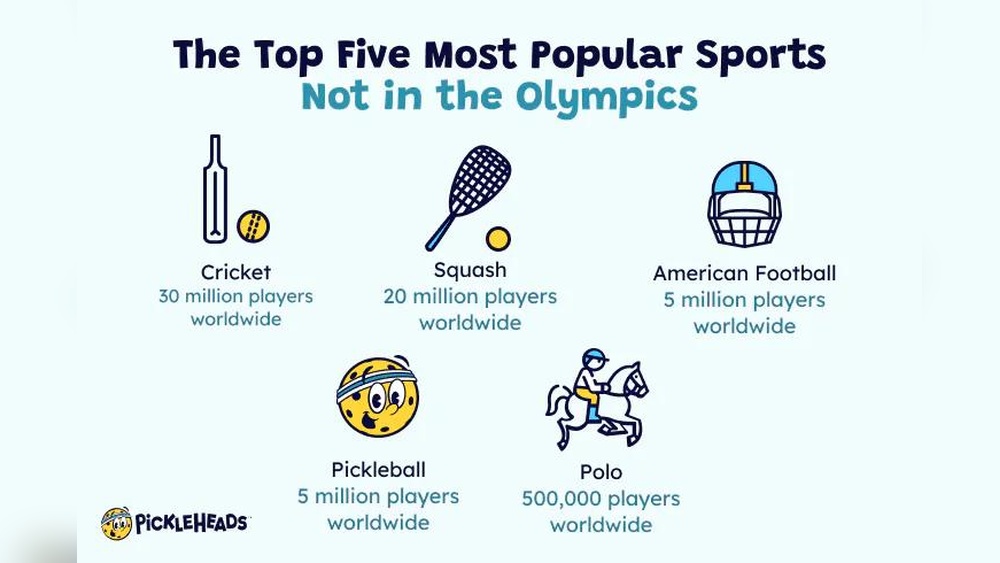
Pickleball has captured the attention of athletes, sports fans, and even celebrities across the globe. With its unique mix of tennis, badminton, and ping-pong, this fast-growing sport is popping up in local parks, gyms, and major sports networks. As more people pick up a paddle and join the pickleball craze, one big question stands out: Will pickleball be an Olympic sport? The answer is not simple, but the journey toward Olympic status is both fascinating and complex. Let’s explore the current landscape, the history, and the real challenges pickleball faces on its path to Olympic recognition.
The Rise Of Pickleball: A Brief History
Pickleball’s story began in 1965 on Bainbridge Island, Washington, when three dads created a backyard game to entertain their children. Using improvised paddles, a wiffle ball, and a lowered badminton net, they gave birth to a sport that would eventually explode in popularity.
For years, pickleball was mainly played in retirement communities and recreation centers. However, in the past decade, the sport has moved far beyond its humble origins. Today, pickleball is played by more than 36 million people in the United States alone (2023 data), and its reach is spreading quickly to Europe, Asia, South America, and beyond.
There are several reasons for this growth:
- It’s easy to learn, but hard to master.
- The game is social and fun for all ages.
- It requires less space and equipment compared to other racket sports.
This explosive rise matters because the International Olympic Committee (IOC) pays close attention to sports with a strong global following.
What Makes An Olympic Sport?
Not every popular activity can become an Olympic event. The IOC has a rigorous process for adding new sports. Understanding these requirements is essential to see where pickleball stands.
Key Ioc Criteria
1. Worldwide Popularity
The sport must be played by men in at least 75 countries and by women in at least 40 countries, spread across three continents.
2. Governing Body
There must be an international federation (IF) that governs the sport, follows anti-doping rules, and supports fair play.
3. Spectator Appeal
The sport should attract viewers, both in-person and on TV or digital platforms.
4. Athlete Safety
The sport must be safe for athletes, with clear rules and protective measures.
5. Gender Equity
Events for both men and women should be offered.
6. Cost And Logistics
The sport must be practical to host, with reasonable equipment costs and minimal impact on the environment.
Steps Toward Olympic Inclusion
The journey to the Olympics involves:
- Gaining recognition by the IOC.
- Forming an international federation that follows IOC rules.
- Building a strong, global competitive scene.
- Showing clear value to the Olympic Games’ program.
Where Pickleball Stands Today
Pickleball is making progress, but it still has a way to go before it can be considered for the Olympics.
Current Global Reach
Pickleball is now played in over 70 countries. The International Federation of Pickleball (IFP) reports more than 90 member nations as of 2024. The sport is especially popular in the U.S., Canada, India, Spain, and Australia. However, some regions—especially Africa and parts of Asia—have limited participation.
International Federation Of Pickleball (ifp)
The IFP is the main organization pushing for Olympic status. Founded in 2010, it works to standardize rules, promote international competitions, and support new national governing bodies. The IFP is now focusing on:
- Expanding membership in underrepresented continents.
- Hosting more international tournaments.
- Supporting anti-doping efforts in line with World Anti-Doping Agency (WADA) standards.
Competitive Structure
Pickleball has established its own World Championships and a variety of international tournaments. The USA Pickleball and the Professional Pickleball Association (PPA) have also raised the sport’s profile with televised events, celebrity matches, and prize money.
Still, a truly global tournament with broad participation from all continents is not yet a reality.
How Close Is Pickleball To Olympic Status?
While progress is real, pickleball does not yet meet all the requirements for the Olympics. Let’s break down the gaps:
Country And Continental Reach
Pickleball needs to show consistent, organized play in at least 75 countries for men and 40 for women. While the IFP’s membership numbers are close, not all countries have active, competitive leagues. Some are still building basic infrastructure.
International Recognition
The IFP has begun the process of seeking formal recognition from the IOC. This is a critical step, but it requires strict adherence to IOC rules, global governance, and anti-doping compliance.
Competition And Spectatorship
Pickleball’s professional scene is growing, but it is still small compared to sports like tennis or badminton. While some matches are broadcast, the global audience is limited. More international stars and compelling rivalries are needed to boost worldwide excitement.
Gender Balance And Youth Development
Pickleball does well in offering both men’s and women’s events. However, youth development programs are not as strong in many countries. The IOC prefers sports with clear, long-term pipelines for young athletes.
Anti-doping And Fair Play
The sport is working to align with WADA standards. Full compliance is necessary before the IOC will consider it.
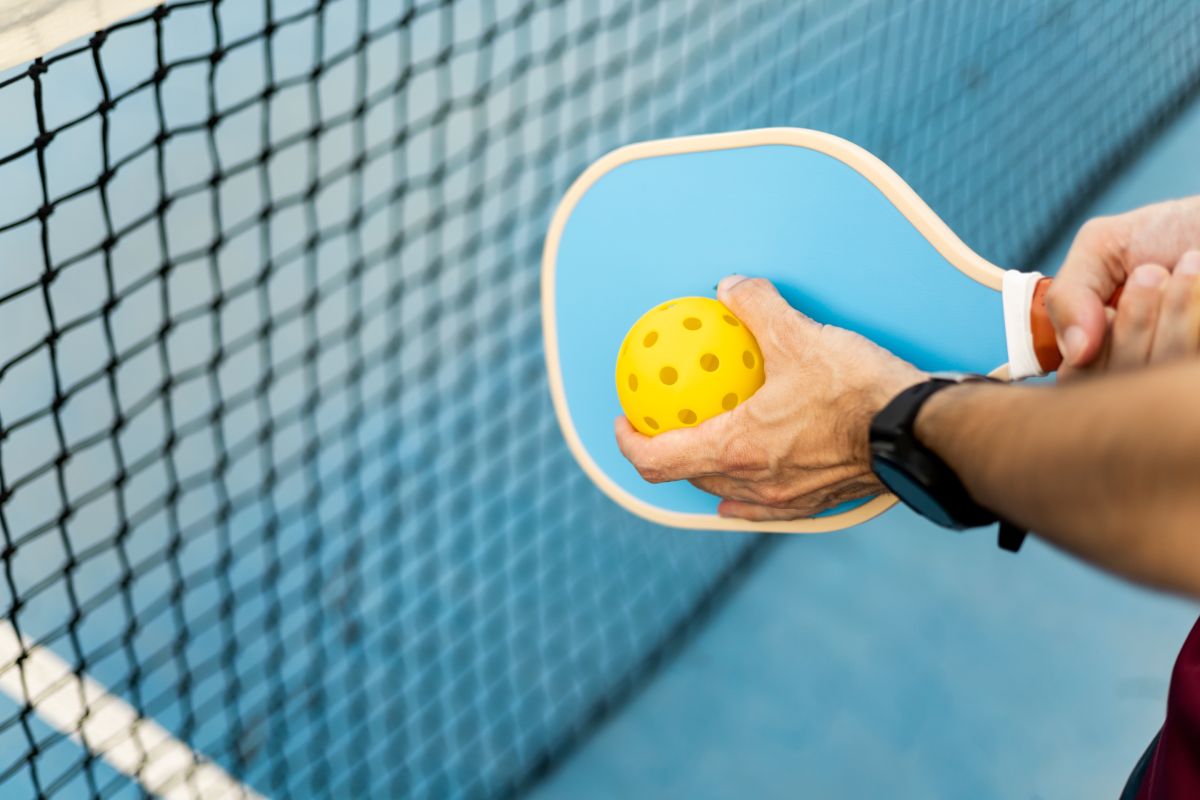
Credit: pickleballsuperstore.com
Lessons From Other Sports’ Olympic Journeys
To understand pickleball’s chances, it helps to look at sports that recently joined the Olympics.
Skateboarding
- First included in Tokyo 2020.
- Had a strong youth following and global popularity.
- International governance through the World Skate federation.
- Years of lobbying and demonstration events.
Surfing
- Also debuted in Tokyo 2020.
- Built a global competitive scene and media appeal.
- Overcame logistical challenges (beach locations, weather).
Baseball/softball
- Added and removed several times.
- Even with global popularity, faced challenges with scheduling, anti-doping, and professional athlete participation.
Each sport faced unique hurdles, but all needed years of organizing, lobbying, and proving their value to the Olympic movement.
What Would Olympic Status Mean For Pickleball?
Being an Olympic sport would change pickleball forever. Here’s why:
Increased Funding And Support
Olympic sports receive more funding from national governments and sports ministries. This money goes toward coaching, facilities, and youth programs.
Global Visibility
Olympic inclusion puts a sport on the world stage. TV networks, sponsors, and media outlets pay much more attention.
Growth At All Levels
More people would try pickleball, especially in countries where the sport is new. Schools and clubs would add it to their programs.
Tougher Competition
The level of play would rise quickly. National teams would work year-round to compete for medals.
Higher Standards
Olympic status means stricter rules, fair play, and anti-doping efforts. This brings new challenges but also raises the sport’s professionalism.
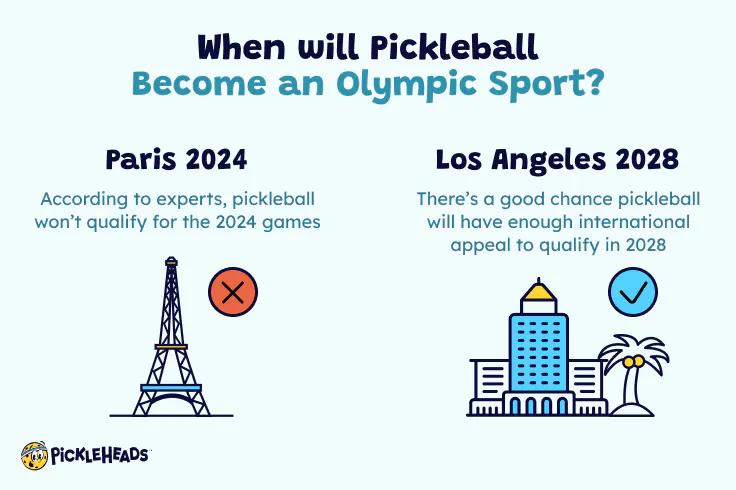
Credit: www.pickleheads.com
The Roadblocks: Why Isn’t Pickleball In The Olympics Yet?
Despite its growth, pickleball faces a few big challenges:
1. Limited Global Reach
While numbers are growing, pickleball is still heavily concentrated in North America. In many countries, the sport is new or not widely played.
2. Infrastructure Gaps
Many countries lack courts, trained coaches, or organized leagues. Some regions don’t have any pickleball presence at all.
3. Perception Challenges
Some traditional sports fans see pickleball as “just a backyard game” or a pastime for older adults. Changing this perception will take time and consistent effort.
4. Competition With Other Sports
The IOC has a limited number of spots for new sports. Pickleball must compete with other emerging games for attention and inclusion.
5. Governance And Unity
Pickleball’s international governance is still developing. Some countries have competing organizations, which can slow progress.
What Pickleball Needs To Do Next
If pickleball wants to join the Olympic program, several steps are essential:
Expand Internationally
Pickleball leaders must focus on Africa, parts of Asia, and the Middle East. Building clubs, providing equipment, and creating youth programs are keys to success.
Strengthen The Ifp
A united, professional international federation is crucial. The IFP must continue standardizing rules, supporting fair play, and providing clear leadership.
Boost The Competitive Scene
More international tournaments, especially in non-traditional pickleball countries, will help. Creating global stars and rivalries will also build excitement.
Improve Youth Development
Investing in junior competitions, scholarships, and school programs will create a long-term pipeline of talent.
Align With Ioc Values
Full anti-doping compliance, gender equity, and fair governance are non-negotiable for Olympic status.
How Pickleball Compares To Other Olympic Sports
Let’s see how pickleball stacks up against some Olympic racket sports:
| Sport | Global Reach | Olympic Status | Governing Body |
|---|---|---|---|
| Tennis | Over 200 countries | Since 1988 | International Tennis Federation (ITF) |
| Badminton | Over 160 countries | Since 1992 | Badminton World Federation (BWF) |
| Table Tennis | Over 140 countries | Since 1988 | International Table Tennis Federation (ITTF) |
| Pickleball | 70+ countries | No | International Federation of Pickleball (IFP) |
This comparison shows that pickleball still needs to grow its global reach to match other Olympic racket sports.
Not-so-obvious Insights: What Beginners Often Miss
Many people who follow pickleball closely are focused on the sport’s rapid growth in their own country. But two less obvious realities matter most for Olympic inclusion:
- It’s not just about numbers. The IOC looks for active, organized play and international tournaments—not just how many people play casually.
- Unity matters. Sports with divided leadership or multiple “world” governing bodies almost never get Olympic approval. Pickleball must keep its international leadership strong and united, avoiding splits that could slow progress.

Credit: www.selkirk.com
Timeline: When Could Pickleball Become An Olympic Sport?
Predicting the future is tricky, but experts suggest a possible timeline:
| Stage | Estimated Timeframe | Details |
|---|---|---|
| Expand to 75+ countries | 2-4 years | Active, competitive play on every continent |
| IOC Recognition | 2 years after expansion | IFP meets all governance and anti-doping standards |
| Olympic Consideration | Next available cycle (2028 or 2032) | Sport is proposed for Olympic inclusion |
| First Olympic Appearance | 6-10 years from now | If all steps succeed and IOC approves |
This means that the earliest realistic Olympic debut for pickleball is likely 2032. However, delays are possible if growth or governance slow down.
What Would Olympic Pickleball Look Like?
If pickleball joins the Olympics, what could fans expect? Here are some possibilities:
- Singles and Doubles Events: Both men’s and women’s competitions, plus mixed doubles.
- Shorter Match Formats: The Olympics often use shorter formats to fit TV schedules.
- National Teams: Qualifiers and national trials would decide who represents each country.
- Global Stars: New faces would emerge from many different countries, not just the U.S.
How Fans Can Help Grow The Sport
Regular players and fans have a role in making pickleball an Olympic sport:
- Introduce the sport to friends and family, especially in countries where it’s not yet popular.
- Support local clubs and join national associations.
- Watch and share international tournaments online to boost spectator numbers.
- Encourage youth programs and school participation.
Every new player and fan helps build the case for Olympic inclusion.
The Future Of Pickleball: Excitement And Challenges
Pickleball’s journey to the Olympics is a story of both hope and hard work. Its easy learning curve, fun style, and wide appeal set it apart from many other sports. Yet the final steps are not guaranteed. Expanding globally, building strong leadership, and aligning with Olympic values are all required.
If the sport’s leaders, players, and fans keep up the momentum, pickleball may soon join the ranks of Olympic legends. Until then, every match played, every new court built, and every young athlete inspired brings pickleball closer to its Olympic dream.
For those interested in the official process, the International Olympic Committee shares detailed information on how sports are added: Olympics.com.
Frequently Asked Questions
What Does Pickleball Need To Become An Olympic Sport?
Pickleball must show active, organized play in at least 75 countries for men and 40 for women, have a strong international federation, follow IOC and anti-doping rules, and build a worldwide competitive scene. It also needs to show spectator appeal and gender equity.
How Many Countries Play Pickleball Today?
As of 2024, pickleball is played in over 70 countries, with the International Federation of Pickleball (IFP) reporting more than 90 member nations. However, not all have strong leagues or national competitions yet.
Has Pickleball Ever Been Part Of The Olympics?
No, pickleball has never been an Olympic sport. It is still in the process of meeting the requirements for inclusion. The earliest possible debut is likely in 2032 if all steps go smoothly.
What Are The Main Challenges For Pickleball’s Olympic Hopes?
The biggest challenges include limited global reach, especially in Africa and parts of Asia, a need for stronger international governance, and building a wider competitive scene. Perception as a casual or “senior” sport also needs to change.
Who Decides If Pickleball Becomes An Olympic Sport?
The final decision rests with the International Olympic Committee (IOC). They review proposals from international federations and consider factors like global popularity, fair play, gender balance, and how the sport fits into the Olympic program.
Pickleball’s Olympic future remains uncertain but promising. With growing momentum and a clear path ahead, the sport’s next decade could be its most exciting yet.