
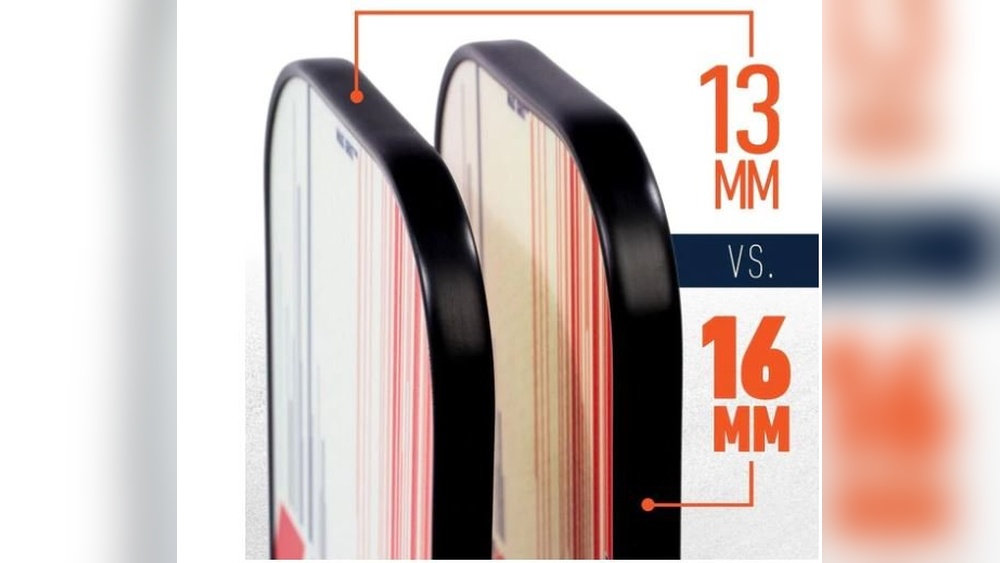
Pickleball is one of the fastest-growing sports in the world, and choosing the right paddle can change your game. If you’re searching for new equipment, you’ll often see two main thickness options: 13mm and 16mm pickleball paddles. These numbers might seem small, but the difference is bigger than you think. Understanding how paddle thickness affects power, control, and feel will help you play better and enjoy the sport more. This guide will break down everything you need to know about 13mm vs 16mm pickleball paddles, so you can make the right choice for your style and skill level.
What Does Paddle Thickness Mean?
Before comparing 13mm and 16mm paddles, it’s important to understand what thickness means in pickleball. Paddle thickness is the measurement of the core’s depth, not including the surface. Most modern paddles use a polymer honeycomb core sandwiched between two thin face layers (usually fiberglass or carbon fiber).
A 13mm paddle core is about half an inch thick, while a 16mm paddle core is closer to 0.63 inches. This difference changes how the paddle feels, how much power it gives, and how well you can control the ball. The trend in the last few years is moving toward thicker paddles, but both thicknesses are popular and have their own strengths.
13mm Pickleball Paddle: Key Features And Benefits
A 13mm paddle is often called a “thin core” paddle. Many players like 13mm paddles for their unique play style and advantages.
Power And Speed
Thinner paddles, like the 13mm, usually offer more power. Because there’s less material to absorb impact, the ball bounces off faster. This makes the 13mm paddle a favorite for aggressive players who love hard drives and fast volleys. If you want to put pressure on your opponents with speed, a 13mm paddle might suit you.
Quick Response
With less core material, a 13mm paddle feels more responsive. You’ll notice the ball coming off the paddle face quickly. Players who enjoy fast exchanges and want to react quickly at the net often choose this thickness.
Weight Distribution
A thinner paddle core usually means the paddle can be lighter overall or have more weight focused in the head or handle, depending on the design. This can help players who like quick wrist movements and flicks.
Drawbacks Of 13mm Paddles
While a 13mm paddle gives you speed and power, it comes with some trade-offs:
- Less control: It’s harder to absorb and soften fast balls, making delicate dinks and drops more difficult.
- Reduced forgiveness: Mishits and off-center shots are less stable.
- Vibration: Some players feel more vibration in their hand, especially if the paddle quality is low.

Credit: www.paddlesshop.com
16mm Pickleball Paddle: Key Features And Benefits
A 16mm paddle is called a “thick core” paddle. These have become very popular with both professionals and casual players.
Control And Touch
The main advantage of a 16mm paddle is superior control. The thicker core absorbs more energy from the ball, helping you slow down fast shots, place dinks more precisely, and reduce errors. If you play a strategic game with a lot of soft shots, you’ll appreciate the 16mm’s feel.
Stability And Forgiveness
A thicker paddle core spreads out the impact of the ball. This makes the paddle feel more stable, even on off-center hits. Many beginners and intermediate players prefer this because it’s easier to keep the ball in play.
Comfort And Feel
16mm paddles usually have less vibration. This means more comfort in your hand and wrist, especially during long matches. Some players with joint pain or sensitive hands find thick paddles much more comfortable.
Drawbacks Of 16mm Paddles
While the 16mm is great for control, there are a few things to consider:
- Less power: The thicker core absorbs more energy, so you may have to swing harder for the same force.
- Slightly heavier: Some 16mm paddles feel heavier, which can slow down your reactions if you’re used to a lighter paddle.
Direct Comparison: 13mm Vs 16mm Pickleball Paddle
To help you see the differences clearly, here’s a side-by-side comparison of the key features:
| Feature | 13mm Paddle | 16mm Paddle |
|---|---|---|
| Power | High | Moderate |
| Control | Moderate | High |
| Touch/Feel | Responsive | Soft, plush |
| Stability | Lower | Higher |
| Forgiveness | Low | High |
| Weight | Usually lighter | Slightly heavier |
| Vibration | More | Less |
| Player Type | Power/aggressive | Control/soft game |

Credit: www.youtube.com
Who Should Choose A 13mm Paddle?
A 13mm paddle is best for players who want speed and power. Here’s who usually benefits:
- Aggressive players: If you like to attack, drive the ball hard, and play fast points.
- Advanced players: Those with good technique who don’t need extra help with control.
- Singles players: Speed and power matter more in singles, making the 13mm a strong choice.
- Players with fast hands: If you have quick reactions and want to maximize speed at the net.
- Younger or stronger players: Those who can swing fast without risking injury or fatigue.
Many top professionals use thinner paddles for singles, where power wins points. A good example is the Selkirk Vanguard Power Air, which is popular among aggressive players for its thin core and explosive power.
Who Should Choose A 16mm Paddle?
A 16mm paddle is ideal for players who want more control, better touch, and added comfort. Consider a 16mm paddle if you are:
- Beginner or intermediate player: The extra forgiveness helps you make fewer mistakes.
- Doubles player: Doubles games rely on dinks, drops, and precise placement.
- Defensive player: If you like to block, reset, and play strategic points.
- Players with sensitive hands: Less vibration means less discomfort.
- Older players: Thicker paddles are often easier on the joints and muscles.
Many pros in doubles use 16mm paddles for their soft game and control. The Joola Hyperion 16mm, for example, is known for its plush touch and stability.
Non-obvious Insights Most Beginners Miss
While it’s easy to focus only on power or control, there are a few details that beginners often overlook when choosing paddle thickness:
1. Core Thickness Changes Sweet Spot Size
A thicker core, like 16mm, usually means a larger sweet spot. This is the area on the paddle that gives the best response. A bigger sweet spot makes your paddle more forgiving on off-center hits. Beginners especially benefit from this, as their shots are less consistent.
2. Spin Potential Is Not Just About Thickness
Many people believe that paddle thickness alone controls spin, but surface material and texture matter more. You can have both 13mm and 16mm paddles with high spin, depending on the surface design. Don’t pick thickness only for spin—look at the face material too.
3. Paddle Thickness Can Affect Your Arm Health
Thicker paddles (16mm) can reduce strain on your arm and wrist because they absorb more shock and vibration. If you play often or have a history of elbow or wrist pain, a thicker paddle may help prevent injury.
Real-world Examples: Popular Paddles In Each Category
Let’s look at some best-selling paddles in both thicknesses:
Popular 13mm Paddles
- Selkirk Power Air Invikta 13mm: Known for explosive power and a fast feel.
- Electrum Model E 13mm: Favored by singles players for speed.
- Paddletek Bantam TS-5 13mm: Popular for its lightweight and pop.
Popular 16mm Paddles
- Joola Hyperion CFS 16mm: Used by pro Ben Johns, praised for control.
- CRBN 1X 16mm: Large sweet spot and excellent touch.
- Selkirk Vanguard 2.0 16mm: Trusted by doubles players for dinking.
This shows how both thickness options have top models trusted by different types of players.
How Paddle Thickness Affects Different Types Of Shots
Choosing between a 13mm and 16mm paddle will change how you play certain shots:
Drives And Smashes
- 13mm paddles hit drives and smashes harder, giving the ball extra speed.
- 16mm paddles slow the ball slightly, so you need to swing harder for the same power.
Dinks And Drops
- 16mm paddles help you absorb power and keep dinks low and soft.
- 13mm paddles can make soft shots harder to control, as the ball pops off quickly.
Blocks And Resets
- 16mm paddles are better for blocking hard shots and resetting the ball into the kitchen.
- 13mm paddles can send the ball back too fast if you don’t have soft hands.
Volleys
- 13mm paddles are quick and fast for reacting at the net.
- 16mm paddles provide more control for placing volleys where you want.
Comparing Durability And Price
Thickness also affects durability and cost. Let’s look at how they compare:
| Aspect | 13mm Paddle | 16mm Paddle |
|---|---|---|
| Durability | Good, but slightly less (less core material) | Excellent, more core absorbs shocks |
| Price Range | $70–$220 | $90–$250 |
| Longevity | 1–2 years (average use) | 1.5–3 years (average use) |
16mm paddles tend to last longer because the thicker core resists wear and tear. However, high-quality 13mm paddles can also be very durable if made by trusted brands.
Other Factors To Consider Besides Thickness
While thickness is important, don’t forget these factors when choosing your paddle:
- Shape: Elongated paddles give more reach; wider paddles offer bigger sweet spots.
- Weight: Lighter paddles are faster, but heavier ones give more power.
- Grip size: Make sure the handle fits your hand.
- Surface material: Carbon fiber, fiberglass, and composite each play differently.
- Brand reputation: Buy from trusted brands with good warranties.
Many players focus too much on thickness and ignore these elements, but the best paddle is the one that feels comfortable in your hand and suits your style.
Transitioning Between 13mm And 16mm Paddles
If you’re thinking about switching paddle thickness, here are some tips to make the transition smoother:
- Practice patience: Your timing and touch will change. Give yourself a few sessions to adjust.
- Work on technique: With a 13mm, focus on control drills. With a 16mm, practice generating power.
- Test before buying: Many stores or clubs offer demo paddles. Try both thicknesses in real games.
- Talk to experienced players: Ask for opinions from those who’ve used both.
Switching thickness can make your game feel new again, so keep an open mind and use the change to improve.

Credit: www.youtube.com
Myths And Misconceptions About Paddle Thickness
There are some common myths about pickleball paddle thickness:
- Myth 1: “Thicker paddles are only for beginners.” Not true—many professionals use 16mm paddles for control.
- Myth 2: “Thin paddles always have more power.” While 13mm paddles are faster, paddle shape, weight, and material can give 16mm paddles good power too.
- Myth 3: “Only thickness matters for feel.” In reality, handle shape, paddle balance, and face material also influence feel.
Understanding these facts will help you avoid marketing hype and choose the paddle that’s right for you.
What The Pros Use: Insights From Top Players
Many professional pickleball players have strong opinions about paddle thickness:
- Ben Johns, one of the world’s top players, uses a 16mm paddle for its control and versatility in doubles.
- Tyson McGuffin is known for switching between thicknesses depending on the event.
- Anna Leigh Waters prefers a 16mm paddle for stability and comfort.
What’s clear is that even the best players don’t stick to one thickness. They choose based on their playing style and needs for each match.
Trying Before You Buy: Testing 13mm Vs 16mm
Nothing beats hands-on testing. Here’s how to do it:
- Visit a pickleball pro shop: Many have demo programs for both 13mm and 16mm paddles.
- Borrow from friends: Try out paddles from your club or group.
- Play different shots: Test power, control, dinks, blocks, and serves.
- Notice comfort: Pay attention to vibration, weight, and how your hand feels.
Remember, the best paddle is the one that makes you feel confident and comfortable on the court.
Final Thoughts: Which Thickness Is Right For You?
Choosing between a 13mm and 16mm pickleball paddle is about finding the right balance between power and control. If you’re a power player, singles competitor, or have fast hands, a 13mm paddle will help you play aggressively. If you value control, play lots of doubles, or want more comfort, a 16mm paddle is likely your best option.
Don’t forget, thickness is just one part of the puzzle. Try both, see what feels best, and don’t be afraid to experiment as your game evolves. For further technical details about pickleball paddles, you can check the official USA Pickleball Equipment Guide.
Frequently Asked Questions
What Is The Main Difference Between A 13mm And 16mm Pickleball Paddle?
The main difference is core thickness. A 13mm paddle is thinner and usually gives more power and speed, while a 16mm paddle is thicker and offers better control, stability, and comfort.
Does A Thicker Paddle Mean Less Power?
Usually, yes. Thicker paddles like 16mm absorb more of the ball’s energy, so you may need to swing harder to get the same power as a 13mm. However, paddle shape and materials also affect power.
Which Paddle Thickness Is Better For Beginners?
Most beginners find a 16mm paddle easier to use. It has a larger sweet spot, more forgiveness on mishits, and is easier on the hand and arm.
Can I Use A 13mm Paddle For Doubles?
Yes, you can, but you may find it harder to control soft shots like dinks and drops. Many doubles players prefer 16mm paddles for their control, but if you like to play aggressively, a 13mm paddle can work.
Is Paddle Thickness The Most Important Factor When Choosing A Pickleball Paddle?
No, thickness is important but not the only thing to consider. Weight, shape, surface material, grip size, and balance all matter. The right paddle is the one that matches your playing style and feels comfortable.
Choosing the right paddle thickness can make a big difference in your pickleball game. Whether you go with 13mm or 16mm, understanding the trade-offs will help you play your best—and enjoy every moment on the court.