
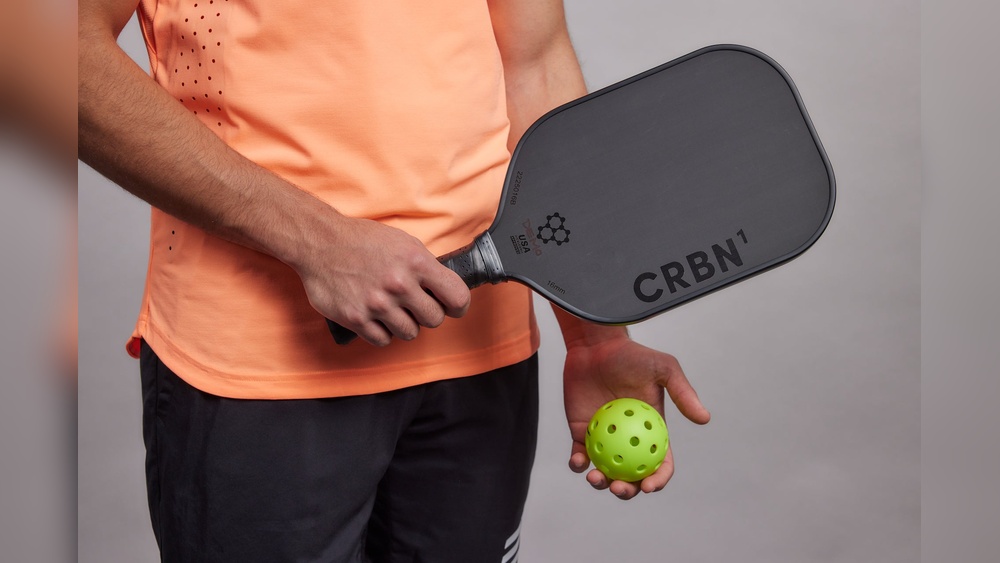
Pickleball is a fast-growing sport, loved for its fast rallies and clever shots. One of the secrets to winning more points is learning how to add spin to your shots. Spin makes the ball curve, bounce low, or even jump sideways, making it harder for your opponent to return. But did you know that your choice of pickleball paddle can make a huge difference in how much spin you can generate? Picking the right paddle can turn your slices, topspins, and tricky serves into real weapons.
Many players want to know: What pickleball paddle has the most spin? The answer is not simple. Several factors—such as paddle surface, core material, and weight—affect spin. Also, what works for one player may not work for another. In this guide, you’ll discover everything you need to know about spin-focused paddles, what features matter most, and which paddles are truly at the top for spin.
What Is Spin In Pickleball And Why Does It Matter?
Spin is when the ball rotates as it flies or bounces, changing its path or bounce direction. In pickleball, adding spin can help you control the ball, create angles, and force errors from your opponent. There are three main types of spin:
- Topspin – Ball spins forward, causing it to dip and bounce higher.
- Backspin (or slice) – Ball spins backward, making it float and bounce lower.
- Sidespin – Ball spins sideways, curving left or right.
If you want to play at a higher level, learning to use spin—and choosing a paddle that helps you—makes a real difference. Players with powerful spin shots often win points outright or set up easy put-aways.
What Makes A Pickleball Paddle Good For Spin?
Not every paddle can generate high spin. There are some key features to look for if you want maximum spin:
Surface Material And Texture
The surface of the paddle is the most important factor. Paddles with a textured surface grip the ball better, allowing you to “grab” and spin it. Rougher surfaces generally create more spin.
- Raw carbon fiber paddles: Known for their sharp texture and extreme spin potential.
- Graphite paddles: Often have a textured coating, but not always as rough as carbon fiber.
- Composite paddles: Usually have a fiberglass or polymer face, sometimes with added grit.
Core Material And Thickness
The core affects control, touch, and sometimes spin. However, the surface matters more for spin than the core. Still, some top spin paddles use:
- Polymer honeycomb cores: The most common, providing a good balance of power and touch.
- Thicker cores (16mm or more): Better control, sometimes helping with consistent spin shots.
Paddle Shape And Edge
A wider paddle face gives you a larger “sweet spot” for spin shots. Some elongated paddles help with reach and leverage, but may have a smaller sweet spot.
Weight
Heavier paddles can add power and spin but may tire your arm faster. Lighter paddles are easier to maneuver but may offer less spin on hard shots.
Usapa Approval
The USA Pickleball Association (USAPA) tests paddles for surface roughness. Super-rough paddles that create “too much” spin are not allowed. All paddles in this guide are USAPA-approved.
Top Pickleball Paddles For Maximum Spin (2024)
Let’s look at some of the best paddles for spin available right now. These paddles are chosen based on player reviews, spin tests, and expert feedback. Each paddle listed here is known for its high spin potential, unique features, and popularity among spin-loving players.
1. Crbn 1x Power Series (16mm)
The CRBN 1X Power Series paddle has become famous for its spin abilities. Its surface is made from raw T700 carbon fiber, which is among the roughest and grippiest materials allowed. Many advanced and pro players say this paddle gives them more spin than any other.
- Core: 16mm polymer honeycomb
- Shape: Elongated for more reach
- Weight: 8.0-8.4 oz
- Spin: Extremely high
- Bonus: Large sweet spot, great for both singles and doubles
Players report it feels “like sandpaper” out of the box, and many see their topspin and slice shots jump to a new level. One non-obvious insight: the raw surface keeps its texture for longer, so you get more spin over time compared to many other paddles.
2. Joola Ben Johns Hyperion Cfs 16
This paddle is used by Ben Johns, the world’s top pickleball player. The Joola Hyperion CFS 16 uses a Carbon Friction Surface (CFS), which is a textured carbon fiber face. It’s engineered for spin, and many players say it creates a “heavy” ball that’s tough to return.
- Core: 16mm reactive polymer
- Shape: Elongated
- Weight: 8.2-8.5 oz
- Spin: Elite
- Bonus: Great for resets and dinks, not just power
One thing beginners often miss: this paddle feels slightly softer than some “power” paddles, so you get more control along with high spin.
3. Selkirk Vanguard Power Air Invikta
The Vanguard Power Air Invikta stands out because it combines a hybrid face (carbon + fiberglass) with a unique open throat design. The surface is coated for extra roughness, and the open throat cuts air resistance, letting you swing faster for more spin.
- Core: Polymer honeycomb
- Shape: Elongated with open throat
- Weight: 7.7-8.1 oz
- Spin: High
- Bonus: Large sweet spot, good for players who want both spin and speed
A non-obvious insight: the open throat design not only helps with swing speed but also reduces vibration, making spin shots more comfortable.
4. Electrum Model E Elite
Electrum paddles are known for their sharp, gritty surfaces. The Model E Elite uses Toray T700 raw carbon fiber, a premium material. This paddle offers a great mix of spin and power, with a slightly “softer” feel for control.
- Core: 16mm polypropylene
- Shape: Elongated
- Weight: 8.1-8.5 oz
- Spin: Very high
- Bonus: Good for “roll” volleys and flicks
Some players overlook how the balance and weight of this paddle help with quick wrist flicks, adding even more spin in fast rallies.
5. Engage Pursuit Mx 6.0
The Pursuit MX 6.0 is loved for its textured graphite surface. Engage uses a special process to create a long-lasting grit that grabs the ball. It’s a favorite for both topspin and slice, and it’s available in several weights.
- Core: 16mm ControlPro polymer
- Shape: Elongated
- Weight: 7.6-8.3 oz (varies)
- Spin: Excellent
- Bonus: Available in lighter or heavier options
Engage’s unique surface stays rough longer than most painted textures, so the spin doesn’t wear off quickly.
6. Paddletek Tempest Wave Pro
While not the newest paddle, the Tempest Wave Pro has a textured graphite surface that still impresses advanced players. It offers great control, and the texture helps players generate both topspin and backspin.
- Core: Smart Response polymer
- Shape: Widebody
- Weight: 7.6-8.0 oz
- Spin: High
- Bonus: Popular among pros for its touch and control
One insight: the balance of this paddle makes it easy for wristy spin shots, which can catch opponents off guard.
7. Selkirk Amped Epic
The Amped Epic is a classic, with a fiberglass face that is slightly textured. While not as sharp as raw carbon fiber, it still gives good spin, especially for players who rely on finesse and control.
- Core: X5 Honeycomb
- Shape: Classic widebody
- Weight: 7.8-8.3 oz
- Spin: Good
- Bonus: Large sweet spot, easy to use
Many beginners miss that fiberglass faces can help with soft spin shots, like dinks and drop shots, not just hard drives.
8. Gearbox Gx6 Power
Gearbox paddles are different—they use a solid carbon fiber build with no honeycomb core. The GX6 Power has a textured face that produces surprising spin, especially for fast hand battles at the net.
- Core: Solid carbon fiber (no honeycomb)
- Shape: Elongated
- Weight: 7.8-8.5 oz
- Spin: Very good
- Bonus: Durable, no “dead spots” over time
The unique construction means the paddle won’t lose spin potential as it ages, unlike some grit-coated paddles.
9. Onix Evoke Premier
The Evoke Premier is used by several top pros and offers a DFR (Direct Fiber Reinforced) surface. It’s not as rough as raw carbon, but its fiber pattern and weight help players whip extra spin, especially on serves and drives.
- Core: Polypropylene honeycomb
- Shape: Elongated
- Weight: 7.8-8.2 oz
- Spin: Good
- Bonus: Used by Tyson McGuffin
This paddle is a great choice for players who want both spin and power in one package.
10. Head Gravity Tour
The Gravity Tour from Head uses a hybrid carbon and graphite face with a unique “sweet spot” shape. The face has a sandpaper-like texture that lasts, and players say it’s great for spins on both groundstrokes and volleys.
- Core: Polymer honeycomb
- Shape: Rounded
- Weight: 7.9-8.1 oz
- Spin: High
- Bonus: Large sweet spot, forgiving for off-center hits
Many new players miss that this paddle’s rounded shape means more consistent spin, even if you don’t hit the exact center.
Comparison Of Top Spin Paddles
To help you compare these paddles, here’s a quick look at how their surface materials and spin ratings stack up:
| Paddle | Surface Material | Spin Rating | Weight Range (oz) |
|---|---|---|---|
| CRBN 1X Power Series | Raw Carbon Fiber | Extreme | 8.0-8.4 |
| Joola Hyperion CFS 16 | Carbon Friction Surface | Elite | 8.2-8.5 |
| Selkirk Power Air Invikta | Hybrid (Carbon/Fiberglass) | High | 7.7-8.1 |
| Electrum Model E Elite | Raw Carbon Fiber | Very High | 8.1-8.5 |
| Engage Pursuit MX 6.0 | Textured Graphite | Excellent | 7.6-8.3 |
How To Choose The Best Spin Paddle For You
Now that you know the top paddles, how do you choose the right one for your game? Here are some key things to consider:
Your Skill Level
- Beginner: Look for a paddle with a wide sweet spot and a medium texture. Too much spin can be hard to control if you’re new.
- Intermediate: Try a paddle with a rougher surface, but not too heavy.
- Advanced: Go for top-tier raw carbon fiber paddles with sharp textures.
Playing Style
- Power hitters: Choose a heavier paddle with a thick core and rough surface.
- Finesse players: Pick a lighter paddle with a forgiving shape and enough texture for controlled spin.
- Doubles specialists: Look for a large sweet spot and balance; you don’t want too much weight.
Common Mistakes When Choosing A Spin Paddle
- Chasing the roughest face: The roughest paddle isn’t always the best for you. Control matters as much as spin.
- Ignoring weight: Too heavy, and you’ll tire fast; too light, and your spin shots lose power.
- Not considering handle shape: A comfortable grip helps you snap your wrist for extra spin.
- Focusing only on pro models: Sometimes, a mid-range paddle gives you better control and more reliable spin for your skill level.
Real-world Spin Test Results
Many paddle reviewers and pickleball websites use spin tests to rate paddles. These tests usually involve hitting the same shot with different paddles and measuring the ball’s spin (in revolutions per minute, or RPM).
Here’s a summary of recent spin test results from several trusted sources:
| Paddle | Average Spin (RPM) | Tested By |
|---|---|---|
| CRBN 1X Power Series | 1850 | Pickleball Studio |
| Joola Hyperion CFS 16 | 1800 | Pickleball Central |
| Electrum Model E Elite | 1750 | Third Shot Sports |
| Engage Pursuit MX 6.0 | 1700 | Pickleball Studio |
| Selkirk Power Air Invikta | 1650 | Pickleball Central |
Spin numbers above 1600 RPM are considered excellent. The difference between 1700 and 1850 RPM is noticeable for advanced players, but for beginners, anything over 1500 RPM will feel “very spinny. ”
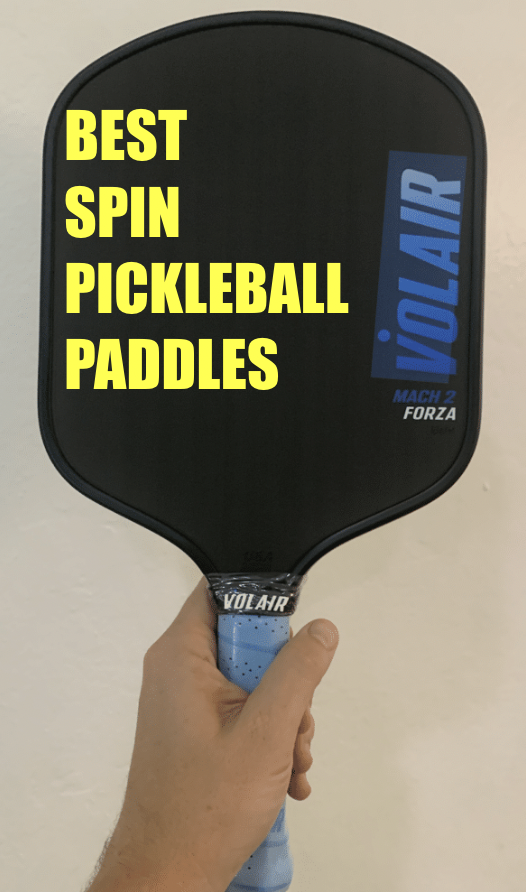
Credit: bepickleballer.com
Paddle Maintenance And Spin Longevity
A paddle’s spin potential can change over time. Most paddles lose some texture as they age, especially those with painted or sprayed-on grit. Here’s how to keep your paddle spinning at its best:
- Clean the surface regularly: Dirt and oil reduce grip. Use a damp cloth or a paddle cleaning eraser.
- Avoid hitting the ground: Scraping the face on the court wears off the texture.
- Store properly: Don’t leave your paddle in direct sun or extreme heat.
- Inspect for wear: If the texture feels smooth, it’s time to consider a new paddle.
Some paddles—especially those with raw carbon fiber—keep their spin longer than others.
Top Spin Techniques: Getting The Most From Your Paddle
Even the best paddle won’t give you spin if your technique is off. Here are some simple tips to maximize spin:
- Brush the ball: Swing up and across, not just through the ball.
- Use your wrist: A quick flick adds extra rotation.
- Contact point matters: Hit the ball near the top or side of the paddle face for more topspin or sidespin.
- Practice different spins: Try topspin serves, slice returns, and sidespin dinks.
Many new players don’t realize that grip pressure affects spin—a relaxed grip lets the paddle move more, helping you create spin.
Myths About Spin Paddles
There are some common myths about pickleball paddles and spin:
- “Only pros need spin paddles.” In reality, spin helps at all levels.
- “You can add grip tape for more spin.” Paddle surface, not handle grip, matters for spin.
- “Any rough paddle is good for spin.” Some paddles have rough paint that wears off fast; long-lasting texture matters more.
When Should You Upgrade To A Spin Paddle?
If you’re starting to play more competitively, or you notice your opponents returning your shots too easily, it’s probably time to upgrade to a spin-focused paddle. Signs you’re ready:
- You want to add topspin to keep the ball in.
- You like slicing your returns and want them to stay low.
- You want to make your serve harder to read.
A better paddle won’t fix all your problems, but it will make learning and using spin much easier.
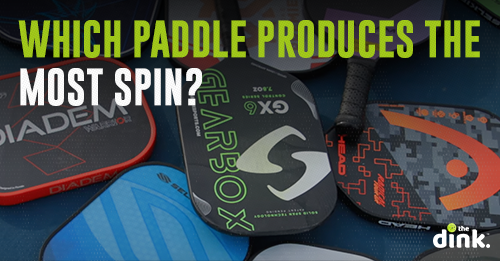
Credit: www.thedinkpickleball.com
Where To Find More Information
For more technical details on pickleball paddle rules and surface testing, check the USA Pickleball Equipment Standards Manual or visit their official site. You can also find spin test videos on YouTube, where you can see side-by-side comparisons in action.
To dive deeper, check out this USA Pickleball paddle guide for the latest on approved paddle technology.
Frequently Asked Questions
What Is The Main Difference Between Raw Carbon Fiber And Graphite Paddles For Spin?
Raw carbon fiber paddles are known for a sharper, longer-lasting texture, which grips the ball better for spin. Graphite paddles can be textured, but often the grit wears off faster. For maximum and consistent spin, raw carbon fiber is usually better.
How Long Does A Spin Paddle’s Surface Texture Last?
It depends on the material. Raw carbon fiber can stay rough for many months, even years, with proper care. Painted or sprayed textures may lose their spin in a few weeks of heavy use. Always check your paddle’s face for smooth spots.
Is There A Maximum Allowed Spin In Pickleball?
There is no direct “spin limit,” but the USAPA does test paddles for surface roughness. If a paddle’s surface is too rough, it won’t be approved for tournament play. All paddles on this list are USAPA-approved.
Should Beginners Buy A High-spin Paddle?
It depends on your goals. High-spin paddles can help you learn new shots, but they also make it easier to hit balls out if your control isn’t developed. Beginners might start with a medium-spin paddle, then upgrade as their skill grows.
How Do I Know If A Paddle Is Right For Me?
Try before you buy, if possible. Look for a comfortable grip, manageable weight, and a surface that matches your needs. If your spin shots feel easier and your control improves, you’ve found the right paddle.
Choosing the right paddle for spin can change your whole game. Take your time, test different options, and enjoy the journey as your shots get trickier and your opponents get more frustrated!
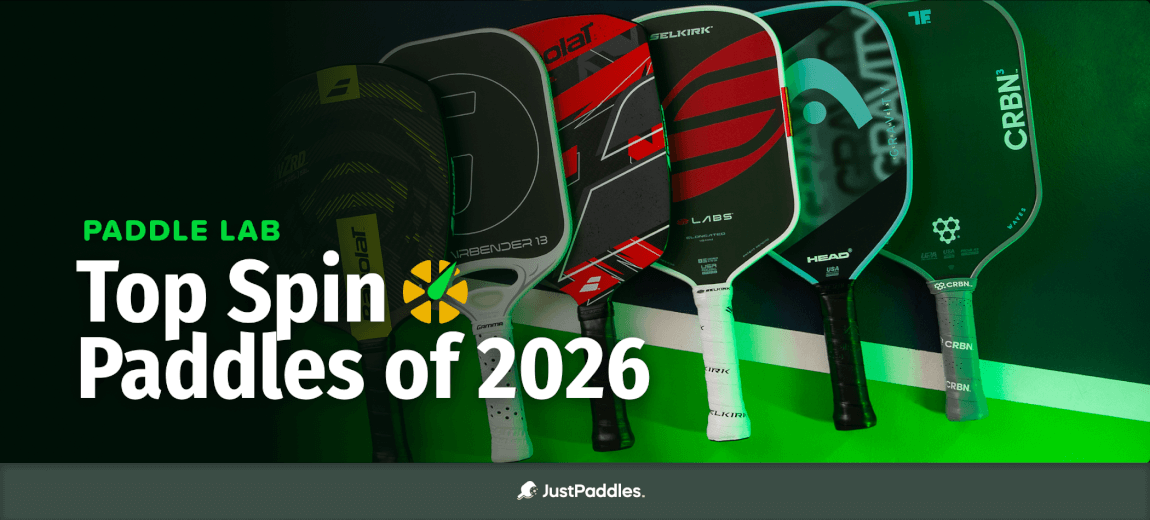
Credit: www.justpaddles.com