
Pickleball and tennis are two of the most popular racket sports in the world today. While many people recognize the games themselves, fewer stop to consider one of their most essential elements: the ball. The pickleball and tennis ball are central to the way each sport is played, affecting speed, bounce, spin, and even injury risk. Whether you are a curious beginner, an experienced player, or just someone who enjoys understanding the science behind sports, learning about these two types of balls can open up a new layer of appreciation and performance insight.
The differences between a pickleball and a tennis ball go far beyond just looks or weight. Each is designed with careful attention to the way the sport is played, the surfaces involved, and the kind of physical demands placed on players. But what are the real differences? How do they affect gameplay, performance, and even the learning curve for beginners? In this article, we will explore every angle: from material and size to bounce characteristics, cost, and even their impact on players’ bodies. By the end, you’ll see why choosing the right ball is not just a small detail—it’s a game changer.
Physical Characteristics
Size And Weight
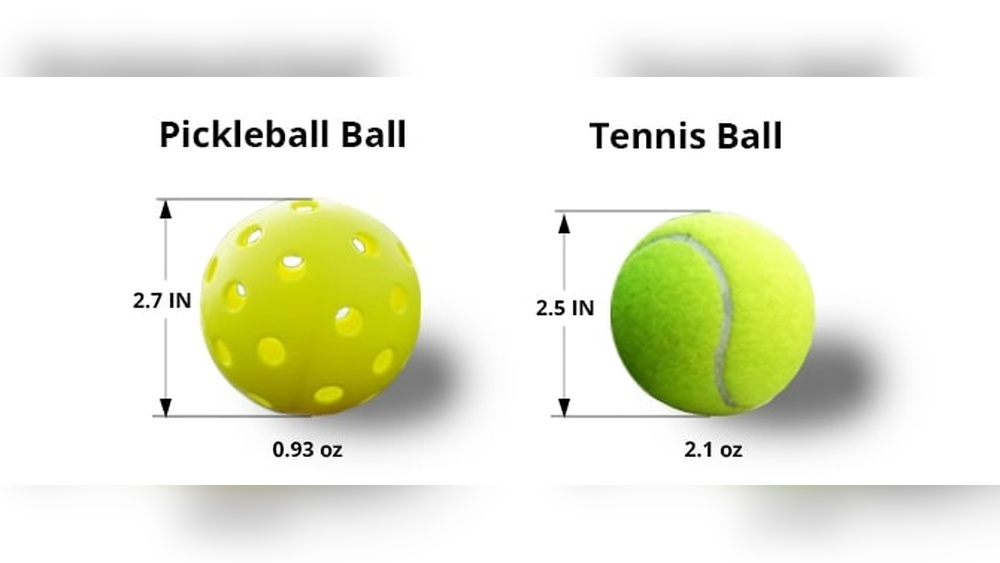
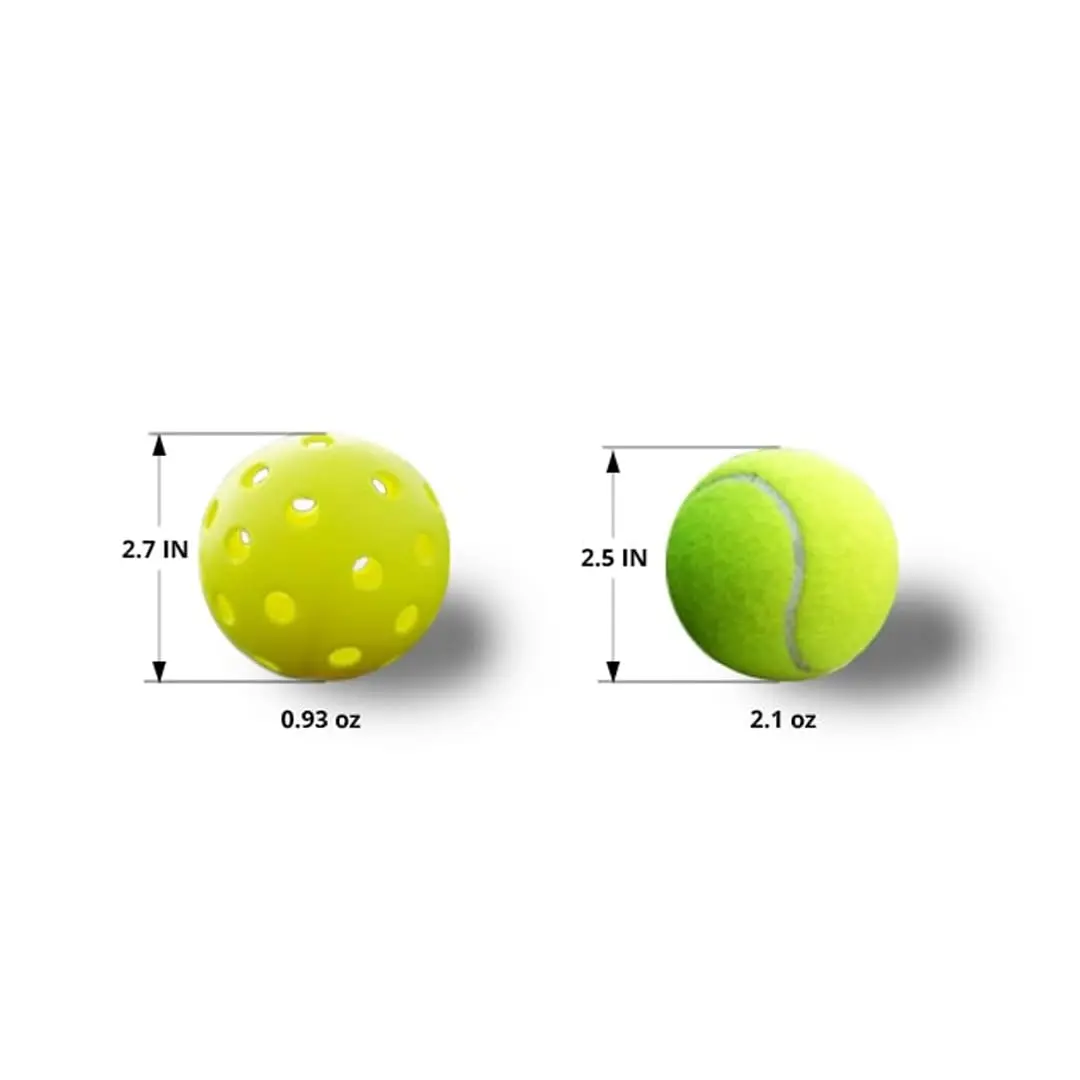
The pickleball is notably different from the tennis ball in both size and weight. A standard pickleball has a diameter of about 2.87 to 2.97 inches and weighs between 0.78 and 0.935 ounces. In contrast, a tennis ball is larger and heavier, with a diameter of 2.57 to 2.70 inches but weighing 1.975 to 2.095 ounces.
This means that while the pickleball looks slightly bigger, it is much lighter. The lightweight nature of pickleballs makes them easier to control for beginners, but also more susceptible to wind when playing outdoors. Tennis balls, with their extra mass, cut through the air more consistently and maintain speed over longer distances.
Material And Construction
Pickleballs are made of hard plastic, often polyethylene, and feature between 26 and 40 holes throughout the surface. These holes are crucial for the way the ball moves—they reduce speed, limit bounce height, and are a big reason why pickleball is accessible to a wide range of ages and skill levels.
Tennis balls, on the other hand, are made of a pressurized rubber core covered in a layer of felt. This felt is usually a blend of wool and nylon, giving the ball its signature fuzzy appearance. The pressurization inside tennis balls is responsible for the lively, high bounce they deliver.
Color And Visibility
Traditionally, pickleballs are available in bright colors such as yellow, green, or orange. These shades are chosen for maximum visibility, especially since pickleball is often played on smaller courts with busy backgrounds. Tennis balls are almost always a specific shade of optic yellow (sometimes called “tennis ball yellow”), which stands out well on both clay and hard courts.
While both sports have experimented with different colors, visibility remains a top concern, especially for older players or those playing in poorly lit environments.
Surface Texture
Pickleballs have a smooth, hard surface, broken only by the uniformly distributed holes. This means minimal friction with paddles and court surfaces, leading to lower spin rates and more predictable flight.
Tennis balls, in contrast, have a fuzzy, felt-covered surface. This felt interacts with the court and racket strings to create a high degree of friction, which is why tennis players can create so much spin—topspin, backspin, and sidespin.
Bounce And Flight
Bounce Height
One of the most obvious differences between a pickleball and a tennis ball is how they bounce. Drop a pickleball from a height of 78 inches (about 2 meters), and it will typically bounce between 30 and 34 inches. A tennis ball dropped from the same height will bounce between 53 and 58 inches, nearly twice as high.
This difference means that pickleball is a “lower-bounce” game, with balls staying closer to the ground. This is a key reason why pickleball is less physically demanding on the knees and back compared to tennis.
Flight Path And Speed
The holes in a pickleball slow it down as it travels through the air, leading to a more “floaty” or arching flight. Outdoor pickleballs, with smaller holes, are designed to reduce the effect of wind, but they are still more affected by breezes than tennis balls.
A tennis ball, with its smooth, heavier construction, travels faster and in a more direct path. Players must react more quickly and move faster to reach a tennis ball than a pickleball.
Spin Capability
Tennis balls are famous for their spin potential. The combination of felt and a flexible, pressurized core allows advanced players to put heavy topspin, slice, or kick on their shots. This adds a layer of strategy and difficulty to tennis.
Pickleballs, on the other hand, are harder to spin. The smooth plastic and holes limit how much spin can be generated, which means rallies are often decided by placement and quick reflexes rather than extreme spin shots.
Durability And Lifespan
Pickleball Durability
Pickleballs are quite durable, especially indoor models. They can last for dozens of games before showing signs of cracking or losing their bounce. Outdoor pickleballs, however, tend to wear out faster. Sunlight and the rougher outdoor courts can cause them to crack or go out of round within 3-10 games, depending on the brand and conditions.
Tennis Ball Durability
Tennis balls are designed to last for a certain number of games, but they lose their bounce as the internal pressure drops. Competitive players often change balls every 7-9 games. Recreational players may use them until the felt is worn or the bounce is “dead.
” For casual games, a can of tennis balls might last several weeks, but serious players will notice a performance drop much sooner.
Cost And Replacement
A single pickleball costs between $2 and $4, while tennis balls are usually sold in cans of three for $3 to $5. However, since tennis balls lose their bounce quickly, the cost per game can be higher for tennis, especially for those who play regularly and want optimal ball performance.
Gameplay Differences
Court Size And Ball Impact
Pickleball courts are smaller—20 feet wide by 44 feet long—compared to tennis courts, which are 36 feet wide by 78 feet long for doubles. The lighter, slower pickleball is perfect for these more compact courts. The tennis ball’s speed and bounce would make rallies uncontrollable in such a small space.
Conversely, the tennis ball’s energy is needed to cover the large tennis court. If you played tennis with a pickleball, rallies would be slow, and the ball might not reach the baseline on a full swing.
Paddle And Racket Interaction
Pickleball paddles are solid, usually made from composite materials, and are smaller than tennis rackets, which have string beds. The lack of strings on pickleball paddles means less “trampoline effect,” so the ball doesn’t come off as fast or with as much spin.
Tennis rackets, with their tightly strung mesh, can generate more power and spin, letting advanced players shape their shots much more precisely.
Rally Length And Pace
Pickleball rallies are often longer, with both players at the net exchanging quick volleys. The slower ball and smaller court keep the action close and reactive.
Tennis, with its faster ball and bigger court, can have shorter, more explosive rallies, especially when one player uses a powerful serve or a fast-paced groundstroke.
Credit: dinkusa.com
Injury Risk And Physical Demands
Impact On Joints
The lower bounce and slower speed of a pickleball put less stress on the knees, hips, and back. This is a big reason why pickleball is popular among older adults and those recovering from injury.
Tennis, with its higher-impact movements, faster sprints, and twisting shots, has a higher risk of joint injuries. Tennis elbow, in particular, is common among frequent players due to the repetitive motion and the heavier ball.
Arm Fatigue
Pickleballs, being lighter, cause less fatigue over long sessions. Tennis balls, especially when hit aggressively, can tire out the arm and shoulder much faster.
Common Mistakes For Beginners
- Underestimating the effect of wind on pickleballs: Outdoor pickleball play can be tricky, as even a slight breeze can change the path of the ball. Many beginners are surprised by how much the ball “floats” or drifts.
- Using old tennis balls in serious games: Many new players do not realize how much the bounce drops after a few hours of play. Using dead balls can change the entire feel of the game and lead to bad habits.
Indoor Vs Outdoor: Ball Differences
Both pickleball and tennis balls come in indoor and outdoor versions. Let’s look at how these differ.
Pickleball: Indoor Vs Outdoor
- Indoor pickleballs: Lighter, fewer holes (26), softer plastic, less bounce, and less affected by wind.
- Outdoor pickleballs: Heavier, more holes (40), harder plastic, more durable, designed to withstand wind and rougher surfaces.
Tennis Ball: Types For Different Surfaces
- Regular duty: Used for indoor courts and clay courts.
- Extra duty: Used for hard courts, with thicker felt for durability.
- High altitude: Pressurized differently to handle thinner air.
Performance Comparison: Quick Reference
To help visualize the main physical and gameplay differences, here’s a quick comparison.
| Feature | Pickleball | Tennis Ball |
|---|---|---|
| Diameter | 2.87–2.97 in (7.3–7.5 cm) | 2.57–2.70 in (6.54–6.86 cm) |
| Weight | 0.78–0.935 oz (22–26.5 g) | 1.975–2.095 oz (56–59.4 g) |
| Material | Plastic | Rubber core, felt cover |
| Bounce Height | 30–34 in (76–86 cm) | 53–58 in (135–147 cm) |
| Spin Potential | Low | High |
| Durability | Moderate (indoor), Low (outdoor) | Low (loses bounce quickly) |
Environmental Impact
Pickleball
Most pickleballs are made from non-biodegradable plastics. While durable, they will not break down easily in landfills. However, because they last longer than tennis balls in indoor settings, their replacement rate is lower.
Tennis Ball
Tennis balls are a major environmental concern. Each year, over 325 million tennis balls are produced, most of which end up in landfills. The rubber and felt are difficult to recycle, though some programs exist to repurpose old balls as playground surfaces or pet toys.
Insight: Recycling Options
Few players realize there are recycling programs for both types of balls. Tennis balls can be collected and sent to organizations that grind them up for new uses. Some creative pickleball players use cracked balls for practice drills or as training aids.
Cost To Players
Let’s compare the average cost for a casual player over a year.
| Item | Pickleball | Tennis Ball |
|---|---|---|
| Initial Cost per Ball | $2.50 | $1.50 (per ball, sold in cans of 3) |
| Average Balls Used per Month | 4 (outdoor) | 8 (recreational) |
| Total Annual Cost | $120 | $144 |
Note: These estimates assume outdoor play and typical wear. Serious tennis players will spend more due to the need for fresh balls.
Learning Curve And Accessibility
For Beginners
Pickleball is often described as easier to learn. The slower ball, lower bounce, and smaller court mean less running, easier rallies, and quicker mastery of basic skills. This is why pickleball has exploded in popularity among people who are new to racket sports.
Tennis, while rewarding, has a steeper learning curve. The faster, bouncier ball requires more athleticism, hand-eye coordination, and practice to control. Beginners often struggle with keeping the ball in play and controlling depth.
For Kids
Pickleball is an excellent entry sport for children. The ball is less intimidating, and the slower pace allows for more fun and less frustration. Tennis often uses “starter balls” (which are larger, softer, and less bouncy) for young children to help bridge the gap.
Credit: masspickleballguide.com
Competitive Play And Official Rules
Official Ball Standards
Both sports have strict standards set by their governing bodies. For pickleball, the USA Pickleball Association (USAPA) and the International Federation of Pickleball (IFP) approve specific balls for tournament play. For tennis, the International Tennis Federation (ITF) maintains a list of approved balls for all competitions.
Ball Changes During Matches
In professional tennis, balls are changed every 7-9 games to ensure consistency. In pickleball, balls are only changed if they crack or go out of round. This can affect the flow and strategy of each sport.
Weather And Playing Conditions
Wind
Pickleballs, especially outdoors, are highly affected by wind. Players must learn to read the breeze and adjust their shots. Tennis balls are heavier and less affected, though strong winds will still change their flight.
Temperature
Extreme heat can soften pickleballs, making them bounce higher and crack more easily. Cold weather can make tennis balls bounce less and feel heavier.
Humidity
High humidity affects felt on tennis balls, making them heavier and slower. Pickleballs, with no felt, are less affected by moisture.

Credit: www.youtube.com
Noise And Community Impact
Many communities have debated the noise level of pickleball. The hard plastic ball striking paddles and courts can produce a sharp, popping sound. Some neighborhoods have restricted pickleball for this reason.
Tennis balls are much quieter, as the felt muffles the impact. On private courts or in noise-sensitive areas, tennis may cause fewer complaints.
Advanced Play And Tactics
Spin And Shot Variety
Advanced tennis players use the ball’s spin to create drop shots, lobs, and angles that are nearly impossible in pickleball. The felt and string interaction is key here.
In pickleball, advanced players rely more on dinking (soft shots), quick volleys, and strategic placement. Spin plays a minor role, but anticipation and reflexes are critical.
Game Speed
Tennis can be explosive, with rallies decided in a split second. Pickleball is often fast at the net but has more “reset” points with softer shots.
Cultural Popularity And Growth
In recent years, pickleball has seen explosive growth in the United States and around the world. Its simple rules and the forgiving nature of the ball have made it popular among seniors, families, and former tennis players looking for a less demanding sport.
Tennis remains a global powerhouse, with established traditions, grand tournaments, and a huge fan base. The tennis ball is iconic, recognized everywhere from Wimbledon to local parks.
Which Should You Choose?
If you are deciding between pickleball and tennis, the ball can help guide your choice. If you want a slower, easier-to-control ball that is gentle on your joints, pickleball is a great option. If you enjoy a faster pace, high bounce, and more spin, the tennis ball will suit your style.
Remember, your enjoyment of the sport depends on more than just the equipment. Try both and see which ball—and sport—feels right for you.
Frequently Asked Questions
What Is The Main Difference Between A Pickleball And A Tennis Ball?
The main difference is in material and construction. Pickleballs are made of hard plastic with holes and are lighter, while tennis balls have a pressurized rubber core covered in felt and are heavier. This leads to different bounce, speed, and spin characteristics.
Why Does A Pickleball Have Holes?
The holes in a pickleball slow down the ball and create a more controlled, arching flight path. This makes the game slower and easier for all ages, but it also means the ball is more affected by wind.
Can I Use A Tennis Ball To Play Pickleball?
No, tennis balls are not suited for pickleball courts or paddles. They are too bouncy and heavy, which would make the game uncontrollable and could damage pickleball paddles.
Which Ball Lasts Longer, Pickleball Or Tennis Ball?
Indoor pickleballs usually last longer than tennis balls, which lose their bounce quickly. Outdoor pickleballs may crack after a few games. Regular tennis balls are designed for a short life at competitive levels.
Where Can I Learn More About The Official Standards For Pickleball And Tennis Balls?
You can find official standards on the governing bodies’ websites, such as the International Tennis Federation for tennis balls.
Both pickleballs and tennis balls are designed for their respective sports. Understanding their differences can help you enjoy the game more, avoid common mistakes, and even protect your health. If you’re new to racket sports, try both and see which one brings you the most fun and challenge.