
Pickleball and tennis are two of the most popular racket sports worldwide. Both offer fast-paced action, fun exercise, and social opportunities. But if you’ve ever stood on a pickleball court and then a tennis court, you know they look and feel very different.
Whether you’re new to these sports, considering building a court, or just curious about the differences, understanding how pickleball courts and tennis courts compare is essential. The design, size, surface, and even the rules shape the experience of each game.
Let’s explore what sets a pickleball court apart from a tennis court, why these differences matter, and how they affect the way the games are played. As you read, you’ll find clear comparisons, insights for players and court owners, and tips that go beyond the basics.
Court Dimensions And Layout
The size and markings of the court are the first things you’ll notice when comparing pickleball and tennis courts. These differences affect everything from movement to strategy.
Pickleball Court Size
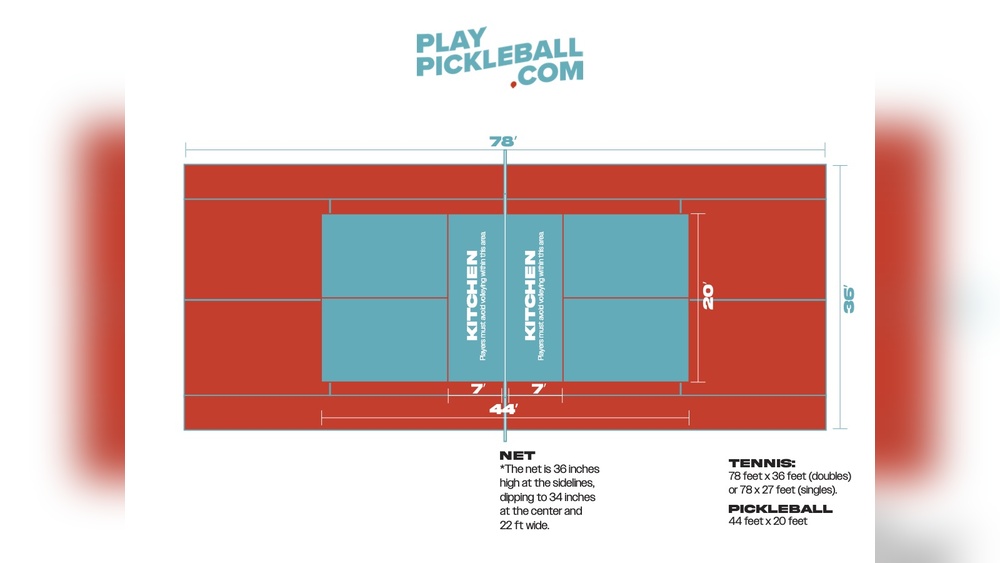
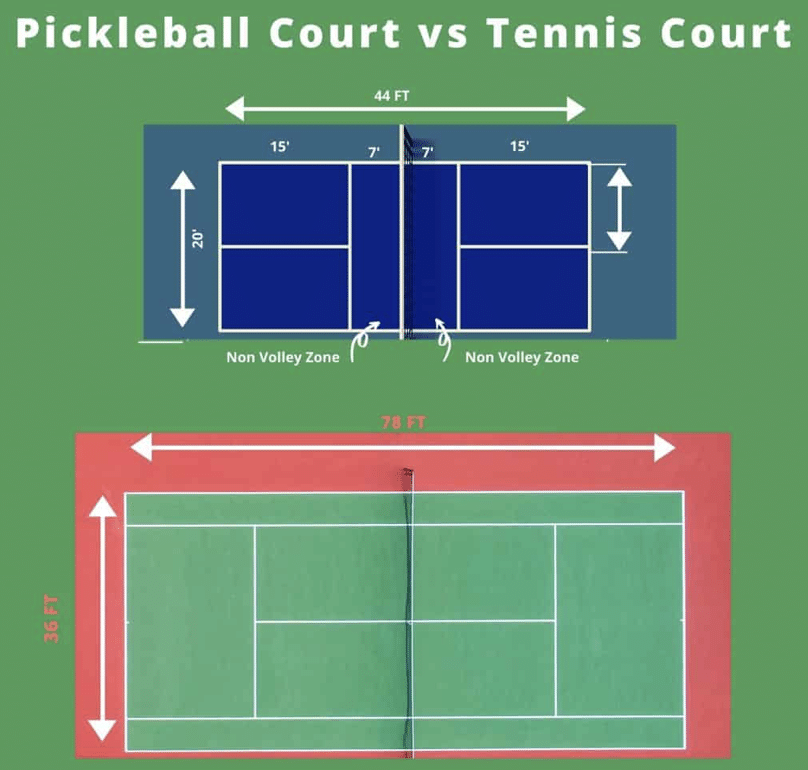
A standard pickleball court is 20 feet wide by 44 feet long for both singles and doubles play. This is about the size of a badminton court. The court is divided into two equal halves, each containing a 7-foot non-volley zone, commonly called the “kitchen,” near the net.
Tennis Court Size
A tennis court is much larger, measuring 36 feet wide by 78 feet long for doubles matches (27 feet wide for singles). This extra space makes tennis more physically demanding, as players must cover more ground with each rally.
Visual Comparison
Here’s a quick view of the main size differences:
| Court Type | Width (feet) | Length (feet) | Area (sq. feet) |
|---|---|---|---|
| Pickleball | 20 | 44 | 880 |
| Tennis (Doubles) | 36 | 78 | 2,808 |
Why Size Matters
The smaller pickleball court makes the game more accessible for all ages and skill levels. You spend less time running and more time hitting. Tennis courts, with their larger playing area, favor endurance, speed, and power. This also means that learning to play pickleball is often easier for beginners who might struggle with the big court in tennis.
Net Height And Design
Both sports use a net, but their height and tension are different, impacting the playing style and types of shots possible.
Pickleball Net
The pickleball net stands at 36 inches high at the sidelines and 34 inches at the center. The net is slightly lower in the middle, which encourages low, fast shots.
Tennis Net
A tennis net is 42 inches high at the posts and 36 inches at the center. This extra height means players must hit the ball higher, especially for lobs and passing shots.
Net Comparison Table
| Sport | Net Height at Posts (inches) | Net Height at Center (inches) |
|---|---|---|
| Pickleball | 36 | 34 |
| Tennis | 42 | 36 |
How Net Height Affects Play
The lower net in pickleball makes volleys and groundstrokes easier, especially for players who are not tall or powerful. In tennis, the higher net requires more skill to clear, especially when close to the net.
Surface Materials And Court Construction
Both pickleball and tennis courts can be built on various surfaces, but there are some key differences to consider.
Tennis Court Surfaces
Tennis courts are famous for their variety of surfaces:
- Hard court (acrylic or asphalt)
- Clay court (red or green)
- Grass court (like Wimbledon)
- Carpet court (rare)
Each surface changes the speed and bounce of the ball. For example, clay is slower, while grass is the fastest.
Pickleball Court Surfaces
Most permanent pickleball courts use hard surfaces, similar to tennis (asphalt or concrete, topped with acrylic paint). Sometimes, pickleball is played indoors on gym floors or even temporary mats. Clay and grass are not used for pickleball because the ball doesn’t bounce well.
Shared And Dedicated Courts
In many parks and clubs, pickleball courts are painted on top of existing tennis courts. This is called “dual striping.” Some facilities build dedicated pickleball courts for a better playing experience, but dual-use courts help maximize space.
Surface Impact
The type of surface affects how you move and how the ball bounces. Pickleball balls have less bounce than tennis balls, so smooth, hard surfaces are best. Tennis players often develop a surface preference over time, while pickleball players mostly play on hard courts.
Lines And Markings
Court lines tell players where to serve, volley, and score. The markings on pickleball and tennis courts look similar but serve different purposes.
Pickleball Court Markings
- Baselines: Back boundary lines
- Sidelines: Sides of the court
- Non-volley zone (kitchen) lines: 7 feet from the net on both sides
- Centerline: Divides the service areas
- Service areas: Right and left sides for serving
The “kitchen” is unique to pickleball and is a critical part of the game’s strategy.
Tennis Court Markings
- Baselines: Back boundary lines
- Sidelines: Singles and doubles side boundaries
- Service boxes: Four rectangles near the net for serving
- Center service line: Divides the service boxes
- No non-volley zone
The extra doubles alleys on each side of the court only come into play during doubles matches.
Overlapping Lines
On shared courts, the extra lines can be confusing, especially for beginners. It’s important to know which color or marking to follow for each sport.
Equipment Differences
The court shapes the game, but so does the equipment. The type of ball, paddle, and racket all work together with the court design.
Pickleball Equipment
- Paddle: Short, solid, usually made of composite or graphite; about 8 inches wide, 15-16 inches long
- Ball: Plastic, with holes (like a whiffle ball), 2.87 to 2.97 inches in diameter
- Shoes: Similar to tennis or court shoes
Tennis Equipment
- Racket: Strings, 27-29 inches long, 9-11 ounces in weight
- Ball: Pressurized rubber, covered in felt, 2.57 to 2.70 inches in diameter
- Shoes: Specially designed for tennis court surfaces
How Equipment Relates To Court Size
Pickleball paddles and balls are smaller and lighter, matching the shorter court and slower pace. Tennis rackets and balls are made for power and distance, fitting the larger court.
Play Style And Movement
The physical layout of the courts leads to very different playing styles.
Pickleball Play Style
- Shorter rallies: Less court to cover, so points are quicker
- Underhand serves only
- Dinking: Soft shots near the net, especially in the “kitchen”
- Less running: Most points are played from close to the net
Tennis Play Style
- Longer rallies: More ground to cover
- Overhand and underhand serves
- Powerful groundstrokes: From the baseline or on the run
- More running and lunging
Movement Insights
Pickleball’s compact court means agility and quick reflexes matter more than raw speed. Tennis, with its larger court, rewards endurance and explosive movements. Beginners often underestimate how much less running is required in pickleball, making it appealing to older athletes or those with mobility issues.
Scoring And Rules Differences
The courts are set up differently because the rules and scoring systems are not the same.
Pickleball Scoring
- Games to 11 points (must win by 2)
- Only the serving team scores
- Players switch sides after each game
- Double bounce rule: Ball must bounce once on each side after the serve before volleys are allowed
Tennis Scoring
- Games, sets, and matches (game: 15, 30, 40, game; set: 6 games; match: best of 3 or 5 sets)
- Either player or team can score on every point
- Players switch sides every odd game
Rule Impact
The pickleball double bounce rule and the kitchen make net play more strategic and less about raw power. Tennis allows for more aggressive, all-court play, with no non-volley zone.
Court Construction And Maintenance
Building and maintaining a court is a big investment. The differences here are important for schools, clubs, or homeowners.
Pickleball Court Construction
- Smaller space required: Fits in backyards or smaller lots
- Lower cost: Less material and labor
- Easier maintenance: Smaller surface to clean and repair
- Can use tennis courts: Temporary nets and lines can convert tennis courts quickly
Tennis Court Construction
- Large space needed: Not suitable for small yards
- Higher cost: More materials, fencing, and lighting
- More maintenance: Especially for clay or grass courts
- Repurposing: Some tennis courts are being converted to multiple pickleball courts due to popularity
Construction Cost Comparison
A new dedicated pickleball court often costs between $10,000 and $35,000. A new tennis court can cost $40,000 to $100,000 or more depending on surface and features.
Popularity And Availability
Both sports are growing, but at different rates and in different places.
Pickleball Growth
Pickleball is the fastest-growing sport in the United States according to the Sports & Fitness Industry Association. There are now over 10,000 locations to play pickleball in the U.S. alone. Growth is especially strong among adults over 50, but younger players are joining too.
Tennis Popularity
Tennis has a long history and is played worldwide. There are more tennis courts globally, with the International Tennis Federation estimating over 489,000 courts. Tennis has strong professional circuits and is an Olympic sport.
Court Conversion Trends
Many communities are converting underused tennis courts into pickleball courts, sometimes fitting four pickleball courts on one tennis court. This is a practical way to meet demand and use space efficiently.
Community And Social Aspects
The courts themselves shape how people interact and play.
Pickleball Community
Pickleball’s smaller court brings players closer together, making conversation and socializing easy. Doubles is the most popular format, and community “open play” sessions are common.
Tennis Community
Tennis can be both social and competitive, but singles is more common, and players are farther apart on the court. Tennis clubs often have structured tournaments and leagues.
Non-obvious Social Insight
Pickleball’s compact court often means less waiting for a game, as more courts can fit in a given space. Tennis players may wait longer between matches in busy clubs.
Credit: topspinpro.com
Health And Physical Demands
Both sports offer excellent exercise, but in different ways.
Pickleball Health Benefits
- Lower impact: Less running, easier on joints
- Quick reflexes: Fast hand-eye coordination drills
- Inclusive: Suitable for all ages and fitness levels
Tennis Health Benefits
- Cardio workout: Lots of running, especially in singles
- Strength and agility: Full-body workout from serves, groundstrokes, and sprints
- Stamina: Longer points and matches
Hidden Health Differences
Pickleball’s quick points help with interval-style training, while tennis builds endurance. Beginners often overlook how tennis can be tough on knees and ankles, especially on hard courts.
Accessibility And Inclusiveness
Which court is more welcoming for newcomers, families, or people with physical limitations?
Pickleball Accessibility
The smaller court and slower ball make pickleball easier for:
- Seniors
- Children
- People recovering from injuries
- Players with limited mobility
Tennis Accessibility
Tennis requires more running and power, which can be challenging for some. However, adaptive tennis programs exist for wheelchair users and people with disabilities.
Non-obvious Inclusion Tip
Pickleball’s rules and court size allow wheelchair users to play with standing partners more easily than tennis does. Many communities now offer inclusive pickleball sessions.

Credit: pacecourt.com
Cost To Play
The court’s size and surface affect the cost for both players and facilities.
Pickleball Costs
- Lower court fees: More courts per area, cheaper to build
- Less expensive equipment: Paddles and balls cost less than tennis rackets and balls
- No need for ball machines or stringing
Tennis Costs
- Higher court fees: Especially at private clubs
- Racket stringing and maintenance
- More expensive balls: Must be replaced more often
Budget Insight
Many parks offer free or low-cost pickleball play, while tennis clubs often require membership. Beginners can start pickleball with less investment.
Multi-sport Use And Adaptability
How Flexible Are These Courts For Other Activities?
Pickleball Adaptability
Pickleball courts are sometimes used for:
- Badminton
- Volleyball (with temporary nets)
- Youth tennis (using soft balls)
Tennis Adaptability
Tennis courts can host:
- Pickleball (with temporary nets and lines)
- Basketball or futsal (with extra markings)
- Other events (concerts, fairs)
Court Sharing Tip
When using a tennis court for pickleball, portable nets and clear markings help avoid confusion. Some clubs use removable tape or paint for temporary pickleball lines.

Credit: pickleballsuperstore.com
Environmental Impact
The size and surface of the courts have environmental implications.
Pickleball Court Environmental Impact
- Less land needed
- Lower water use (no grass courts)
- Easier to repurpose existing spaces
Tennis Court Environmental Impact
- More land and materials
- Grass courts require water and chemicals
- Clay courts need regular maintenance
Green Insight
Communities concerned with sustainability often choose pickleball because it uses fewer resources and allows more people to play in the same space.
Which Court Is Right For You?
Deciding between a pickleball and tennis court depends on your goals, space, and community needs.
Choose A Pickleball Court If:
- You want to play a fast-growing, social sport
- You have limited space or budget
- You’re looking for a sport suitable for all ages
Choose A Tennis Court If:
- You want to play singles and doubles
- You have the space and resources for a large court
- You enjoy longer rallies and more physical challenge
Notable Insight
Many facilities now offer both options—tennis courts with permanent or temporary pickleball lines and nets—so you don’t have to choose one or the other.
For more detailed specifications and official rules, check the Pickleball Wikipedia page.
Frequently Asked Questions
What Is The Main Difference Between A Pickleball Court And A Tennis Court?
The main difference is size. A pickleball court is much smaller (20 x 44 feet) compared to a tennis court (36 x 78 feet for doubles). The net in pickleball is also lower, and there is a unique non-volley zone near the net called the “kitchen.”
Can You Play Pickleball On A Tennis Court?
Yes, you can play pickleball on a tennis court by adding temporary pickleball lines and using a portable net. Many parks use this method to allow both sports on the same court.
Is Pickleball Easier To Learn Than Tennis?
For most beginners, pickleball is easier to start playing. The smaller court, slower ball, and simple rules make it more accessible for all ages and fitness levels.
How Many Pickleball Courts Fit On A Tennis Court?
You can fit up to four standard pickleball courts on one tennis court, though this requires some adjustments and careful marking of lines. It’s a popular way to maximize court usage in busy parks.
Which Sport Is Better For Seniors Or People With Limited Mobility?
Pickleball is generally better for seniors or people with limited mobility. The smaller court, lower impact, and less running make it a safer and more enjoyable choice for many older adults.
Pickleball and tennis each have their own unique charm, shaped by the courts they’re played on. Whether you prefer the community feel of pickleball or the tradition and athletic challenge of tennis, understanding the differences between their courts will help you get the most out of your game.
Both sports have a place in modern recreation, and many players enjoy both—sometimes even on the same court.