
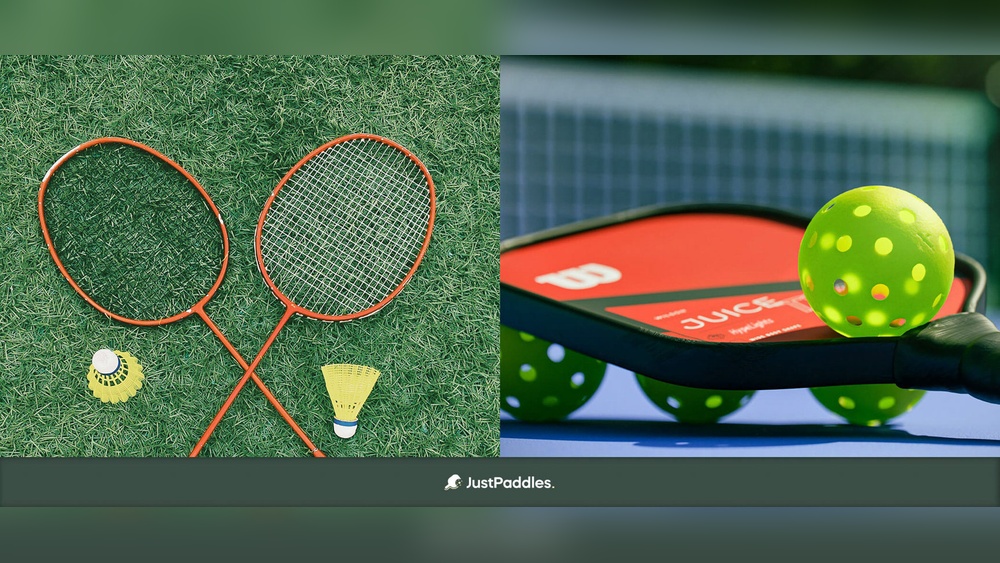
Badminton Vs Pickleball: A Deep Dive Into Two Fast-growing Sports
If you have ever walked past a community gym or a park, you might have seen people swinging rackets and hitting a fast-moving object back and forth. Sometimes it’s a feathered shuttlecock flying above a net; other times, it’s a plastic ball with holes zipping across a smaller court. These scenes show two of today’s most accessible and exciting sports: badminton and pickleball.
While both involve rackets and a net, they are surprisingly different in rules, style, equipment, and the experience they offer. For beginners, it’s easy to confuse one for the other, especially since both can be played indoors or outdoors, and both attract players from all age groups.
But as you dig deeper, you’ll find that each sport has its own world—a unique culture, set of skills, and even a dedicated community.
This article will help you clearly understand the differences and similarities between badminton and pickleball. You’ll learn about their origins, court dimensions, equipment, scoring systems, gameplay strategies, health benefits, and more. If you’re deciding which one to try, or just want to know why they’re both gaining so much popularity, you’ll find answers here.
The Origins: How Each Sport Began
Badminton’s history stretches back hundreds of years. It evolved from a British game called “battledore and shuttlecock,” but the modern version took shape in British India in the mid-19th century. The name comes from Badminton House, the Duke of Beaufort’s estate in England, where the game was popularized.
Badminton became an Olympic sport in 1992 and is now played worldwide, especially in Asia and Europe.
Pickleball, on the other hand, is much newer. It was invented in 1965 on Bainbridge Island, Washington, USA, by three dads—Joel Pritchard, Bill Bell, and Barney McCallum—who wanted to create a game for their children. They combined elements of tennis, badminton, and ping pong.
Pickleball started as a family game but soon spread across America and is now one of the fastest-growing sports in North America.
One non-obvious insight: Badminton grew mainly in Asia and became highly competitive, with countries like China, Indonesia, and South Korea producing world champions. Pickleball’s rise has been more grassroots, fueled by local clubs, community centers, and its appeal to older adults and retirees.
Court Dimensions And Setup
At first glance, both sports look similar—a net splits the playing area, and players stand on either side. But the court size and layout are quite different, affecting the pace and tactics of each game.
Here’s a comparison:
| Feature | Badminton | Pickleball |
|---|---|---|
| Court Size (doubles) | 20 ft x 44 ft (6.1m x 13.4m) | 20 ft x 44 ft (6.1m x 13.4m) |
| Net Height (center) | 5 ft (1.524m) | 34 in (0.86m) |
| Surface | Indoor wooden/synthetic | Indoor/outdoor hard or composite |
| No-Volley Zone | None | 7 ft from net each side (“kitchen”) |
Both courts are the same size for doubles, but badminton’s net is much higher—a detail that changes the entire flow of the game. Badminton courts are almost always indoors to prevent wind from affecting the shuttlecock. Pickleball can be played indoors or outdoors, and the net is much lower.
An insight: The “kitchen” or no-volley zone in pickleball is unique. It stops players from smashing right at the net, forcing more strategic play and longer rallies, especially at higher levels.
Equipment: Rackets, Balls, And Shoes
The gear you use in each sport feels and works very differently.
Rackets And Paddles
- Badminton rackets are lightweight (70-100 grams), with a long shaft and an oval head strung with nylon or natural gut. They are designed for speed and control, allowing players to flick the shuttlecock with wrist action.
- Pickleball paddles are solid and flat, made from composite, graphite, or wood. They’re heavier (around 200-250 grams) and have no strings. The paddle face is larger but the handle is shorter.
Balls And Shuttlecocks
- Badminton uses a shuttlecock—a cone-shaped object with 16 feathers or a synthetic skirt and a cork base. It’s extremely light (4.74-5.50 grams) and slows down quickly after being hit.
- Pickleball uses a perforated plastic ball, about the size of a baseball, with 26-40 holes. It’s heavier (22-26 grams) and behaves differently than a tennis or ping pong ball.
Shoes
- Badminton shoes are designed for quick lateral movement and grip on indoor courts. They have non-marking soles and extra cushioning.
- Pickleball shoes are similar to tennis shoes, focused on stability and support for outdoor or indoor hard surfaces.
One thing beginners often miss: Using regular running shoes on a badminton court can lead to slips and injuries because they lack the needed grip for fast direction changes. For pickleball, especially outdoors, shoes with good ankle support are crucial since the hard surface can be tough on joints.
Rules And Scoring: How The Games Are Played
Understanding the rules of each sport reveals even more differences.
Badminton Rules
- Singles or doubles: Played with one or two players per side.
- Scoring: Matches are best of three games to 21 points. You must win by two points (capped at 30).
- Rally scoring: A point is scored on every rally, regardless of who served.
- Serve: Must be hit underhand below the server’s waist and land in the diagonally opposite service box.
- Let: A rally is replayed if the shuttlecock touches the net on serve but lands in the correct box.
Pickleball Rules
- Singles or doubles: Both are popular.
- Scoring: Games are to 11 points (win by two). Only the serving team can score.
- Serve: Underhand, with the paddle below the waist. The serve must clear the no-volley zone and land in the opposite service area.
- Double bounce rule: Each side must let the ball bounce once before volleys are allowed.
- No-volley zone: Players cannot volley (hit in the air) from within 7 feet of the net.
Here’s a quick rules comparison:
| Aspect | Badminton | Pickleball |
|---|---|---|
| Serve type | Underhand (below waist) | Underhand (below waist) |
| Serve area | Diagonal box | Diagonal service area |
| Who scores | Either side | Only serving side |
| Win points | 21 (by 2, max 30) | 11 (by 2) |
| No-volley zone | None | Yes, 7 ft (“kitchen”) |
Gameplay And Strategies
The experience of playing badminton and pickleball can feel like night and day.
Badminton: Lightning Speed And Reflexes
Badminton is one of the fastest racket sports in the world. The shuttlecock can travel up to 332 km/h (206 mph) in professional smashes—faster than a tennis serve. Even in casual games, the action is fast, with rallies lasting only a few seconds. Quick footwork, sharp reflexes, and wrist action are key.
- Offense: Players use smashes, drops, and clears to force errors.
- Defense: Quick reaction to intercept smashes or lift the shuttlecock high to reset the rally.
- Movement: Constant jumping, lunging, and quick side-to-side steps.
A non-obvious insight: In badminton doubles, teamwork and court coverage are everything. Partners must “rotate” smoothly to cover all angles, which is why communication is as important as raw speed.
Pickleball: Strategy And Placement
Pickleball is often described as a blend of tennis and ping pong but with its own twist. The ball travels slower, but the rallies are longer, especially at advanced levels.
- Offense: Winning shots often come from smart placement, not raw power.
- Dinking: A unique shot where players gently tap the ball into the kitchen, forcing an error or setting up a lob.
- Volleys: Quick exchanges at the net are common, but the no-volley zone prevents easy smashes.
- Positioning: Doubles teams try to control the net and keep opponents back.
What surprises many new players: In pickleball, patience wins games. Experienced players “build” points slowly, using soft shots and waiting for a mistake, rather than going for winners every time.
Physical Demands And Fitness Benefits
Both sports offer a great workout, but the way they challenge your body is different.
Badminton’s Intensity
Badminton burns between 350-500 calories per hour for casual play, and up to 800 for intense games. It’s a full-body workout, with explosive sprints, lunges, jumps, and rapid changes of direction. You build strong legs, improved agility, and cardiovascular endurance.
- Agility: Fast footwork and reaction time.
- Stamina: Sustained rallies raise your heart rate quickly.
- Coordination: Hand-eye coordination is essential for timing shots.
Pickleball’s Accessibility
Pickleball is lower impact, making it popular with older adults and those with joint problems. It burns about 250-400 calories per hour. The court is smaller and the game is less intense physically, but still demands quick reflexes, balance, and aerobic movement.
- Balance: Quick side steps and reaching shots.
- Reflexes: Fast hands at the net.
- Social: Games are often doubles, encouraging teamwork and social interaction.
A practical point: Pickleball is often recommended for people recovering from injury or those just starting to exercise, since it’s easy on the knees and hips compared to badminton.

Credit: pickleballunion.com
Skill Progression: Learning Curves
How quickly can a beginner start playing and enjoying each sport?
Badminton
Badminton is easy to start but hard to master. Beginners can rally after a short lesson, but advanced play takes years of practice. Controlling the shuttlecock, generating power, and covering the court require skill.
- Beginner: Can rally and serve after one session.
- Intermediate: Learns drop shots, net play, and footwork.
- Advanced: Uses deceptive shots, jump smashes, and tactical movement.
Pickleball
Pickleball is famous for its gentle learning curve. Most players can start playing real games after 10-15 minutes of instruction.
- Beginner: Can rally and serve almost immediately.
- Intermediate: Learns dinking, lobs, and placement.
- Advanced: Masters strategies like stacking, third-shot drop, and aggressive net play.
What many miss: Because pickleball is easier to learn, the difference between a casual and a competitive player is often about strategy and mental toughness, not just raw athletic ability.
Age, Accessibility, And Community
Who plays these sports, and how easy are they to access?
Badminton
Badminton is popular with all ages, but in many countries, it’s a youth and young adult sport. Clubs and tournaments often focus on high-school and college-level competition. Facilities are usually indoors, so access can depend on geography and climate.
- Clubs: Found in cities, schools, and sports centers.
- Leagues: Youth, adult, and masters (over 35) divisions.
- Popular regions: Asia (China, Indonesia, India), Europe (Denmark, UK), and Canada.
Pickleball
Pickleball is famous for its multi-generational appeal. In the US, it’s especially popular among seniors (50+), but younger players are joining fast.
- Courts: Easy to set up in parks, driveways, or converted tennis courts.
- Social: Games are short and doubles is common, making it easy to meet new people.
- Growth: Over 36.5 million Americans played in 2022, according to the Sports & Fitness Industry Association.
A unique insight: Pickleball’s accessibility has led to a culture where players of all ages and abilities mix together—something less common in badminton, where skill levels are often separated.
Cost To Play
How Much Does It Cost To Start Each Sport?
Badminton
- Racket: $25–$250
- Shuttlecocks: $10–$40 per tube (feather shuttles wear out quickly)
- Shoes: $50–$100
- Court fees: Varies ($5–$20 per session in clubs)
Pickleball
- Paddle: $30–$150
- Balls: $10–$20 for a pack
- Shoes: $40–$90 (outdoor shoes last longer)
- Court fees: Often free in parks or schools
One practical tip: Badminton can be more expensive in the long run if you play often, as feather shuttlecocks break quickly and need replacing. Pickleball’s main cost is the paddle, which lasts much longer.
Injuries And Safety
Both sports are generally safe, but the most common injuries are different.
Badminton
- Ankle sprains: From sudden changes in direction.
- Shoulder/elbow injuries: Repetitive overhead shots.
- Knee pain: From lunges and jumps.
Pickleball
- Wrist and elbow strains: From paddle swings.
- Foot blisters: On outdoor courts.
- Falls: Less common, but possible with aggressive net play.
A smart move: Warm up and stretch before playing either sport. In badminton, focus on ankles and shoulders; in pickleball, wrists and knees.

Credit: www.badmintonjustin.com
Global Popularity And Media Coverage
Badminton is a major sport in Asia and Europe, with millions watching top tournaments like the All England Open or the Olympics. It has professional leagues and huge fan bases.
Pickleball is newer but growing quickly. It’s featured in lifestyle magazines, TV segments, and social media. Major brands and former tennis stars are investing in pickleball leagues in the US.
For more on pickleball’s growth, you can see the Wikipedia page on Pickleball.
Which One Is Right For You?
- Choose badminton if you crave a fast-paced, athletic challenge and want to test your reflexes.
- Pickleball is perfect if you want a social, accessible sport that’s easy on the joints and fun for all ages.
If you have access to both, try each for a few sessions. You might be surprised which one fits your style!

Credit: heliospickleball.com
Frequently Asked Questions
What Is The Main Difference Between Badminton And Pickleball?
The main difference is the equipment and gameplay. Badminton uses a stringed racket and shuttlecock with a higher net, leading to faster and more explosive rallies. Pickleball uses a solid paddle and plastic ball with a lower net, focusing more on placement and strategy.
Can You Use A Badminton Court For Pickleball?
Yes, the court size for doubles is almost identical (20 ft x 44 ft), but you’ll need to lower the net for pickleball and mark the no-volley zone, which doesn’t exist in badminton.
Which Sport Is Easier For Beginners?
Pickleball is generally easier for beginners to start playing, due to its slower ball speed, simple rules, and forgiving learning curve. Badminton can be challenging for newcomers because of the fast shuttlecock and complex movements.
Is Badminton Or Pickleball Better For Fitness?
Badminton is better for intense cardiovascular fitness and agility, as it involves quick sprints, jumps, and longer rallies. Pickleball offers moderate exercise and is easier on the joints, making it suitable for all ages, especially older adults.
Are There Professional Leagues For Both Sports?
Badminton has professional leagues and is an Olympic sport. Pickleball is growing at the professional level, with national and international tournaments, but is not yet an Olympic sport.
Both badminton and pickleball offer fun, fitness, and social connection. The right choice depends on your goals, fitness level, and local opportunities. Try both to discover which one brings you the most joy on the court.