
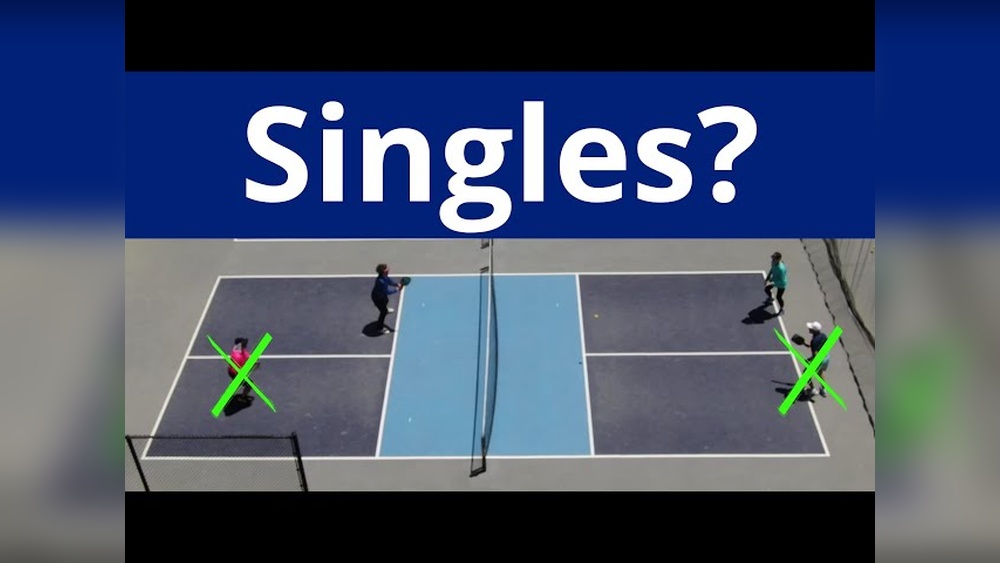
Pickleball is one of the fastest-growing sports in the world, and many people are discovering the excitement of playing singles. Unlike doubles, singles pickleball is a true test of your speed, stamina, and shot-making skills. If you want a full workout and a new challenge, singles pickleball delivers.
But how do you actually play singles, and what makes it different from doubles? Whether you’re a beginner or looking to improve, learning how to play pickleball singles can open new doors to fun and fitness.
Singles pickleball may look simple, but it demands smart strategy, footwork, and the ability to cover the entire court by yourself. Many players start with doubles and find singles more tiring but also more rewarding. In this guide, you’ll discover all the rules, strategies, and tips you need to play singles pickleball at any level.
You’ll also find key differences from doubles, common mistakes, and practical advice you can use right away. Let’s dive in and see what makes singles pickleball so special—and how you can master it.
Understanding Pickleball Singles: The Basics
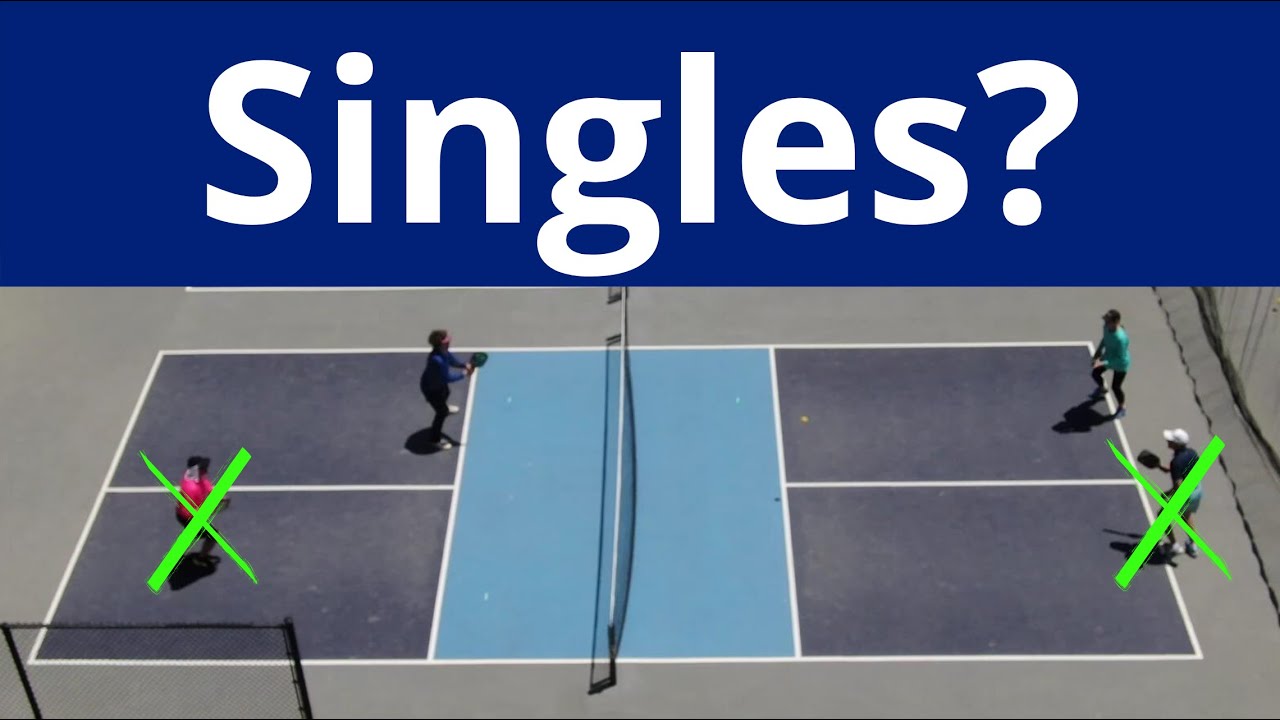
Singles pickleball is a fast-paced game that puts you in charge of every point. Instead of having a partner, you play alone against another player. The court size remains the same as doubles, but every shot, serve, and return is your responsibility.
Court Layout
The pickleball court is 20 feet wide and 44 feet long. The net is 36 inches high at the sidelines and 34 inches in the middle. There are two service boxes on each side, and a 7-foot non-volley zone (also called the “kitchen”) on both sides of the net.
Equipment Needed
To play singles pickleball, you need:
- A pickleball paddle (lighter and smaller than a tennis racquet)
- A pickleball (plastic ball with holes, like a wiffle ball)
- Proper athletic shoes (court shoes with non-marking soles)
- Comfortable athletic clothing
Some players use special paddles designed for singles, which offer more power and reach. But any standard paddle will work as you start.
The Basic Objective
Your goal is to score points by hitting the ball over the net and into your opponent’s court. You win a point when your opponent fails to return the ball, hits the ball out, or commits a fault.
Singles Vs. Doubles: Key Differences
Many pickleball players start with doubles, but singles brings some important changes.
- Scoring System: In singles, you only call two numbers when scoring: your score, then your opponent’s. In doubles, three numbers are used (including the server number).
- Movement: You cover the entire court alone in singles, so stamina and footwork are much more important.
- Serving: In singles, you always serve from the right side when your score is even, and from the left when your score is odd.
- Strategy: Singles points are often won with power, speed, and placement, not just soft shots and teamwork.
- Coverage: You have to protect the whole court by yourself, making anticipation and quick movement critical.
Here’s a quick comparison to make it clear:
| Aspect | Singles | Doubles |
|---|---|---|
| Number of Players | 2 (1 per side) | 4 (2 per side) |
| Serve Rotation | Alternates sides after each point | Alternates between players and sides |
| Scoring Call | Server’s score – Receiver’s score | Server’s score – Receiver’s score – Server number |
| Movement | Full court coverage solo | Shared with partner |
Singles is more physically demanding, but it also gives you more control over the game.
Credit: www.youtube.com
Rules Of Singles Pickleball
To play singles pickleball, you need to know the official rules. While many are the same as doubles, some are unique to singles.
Scoring
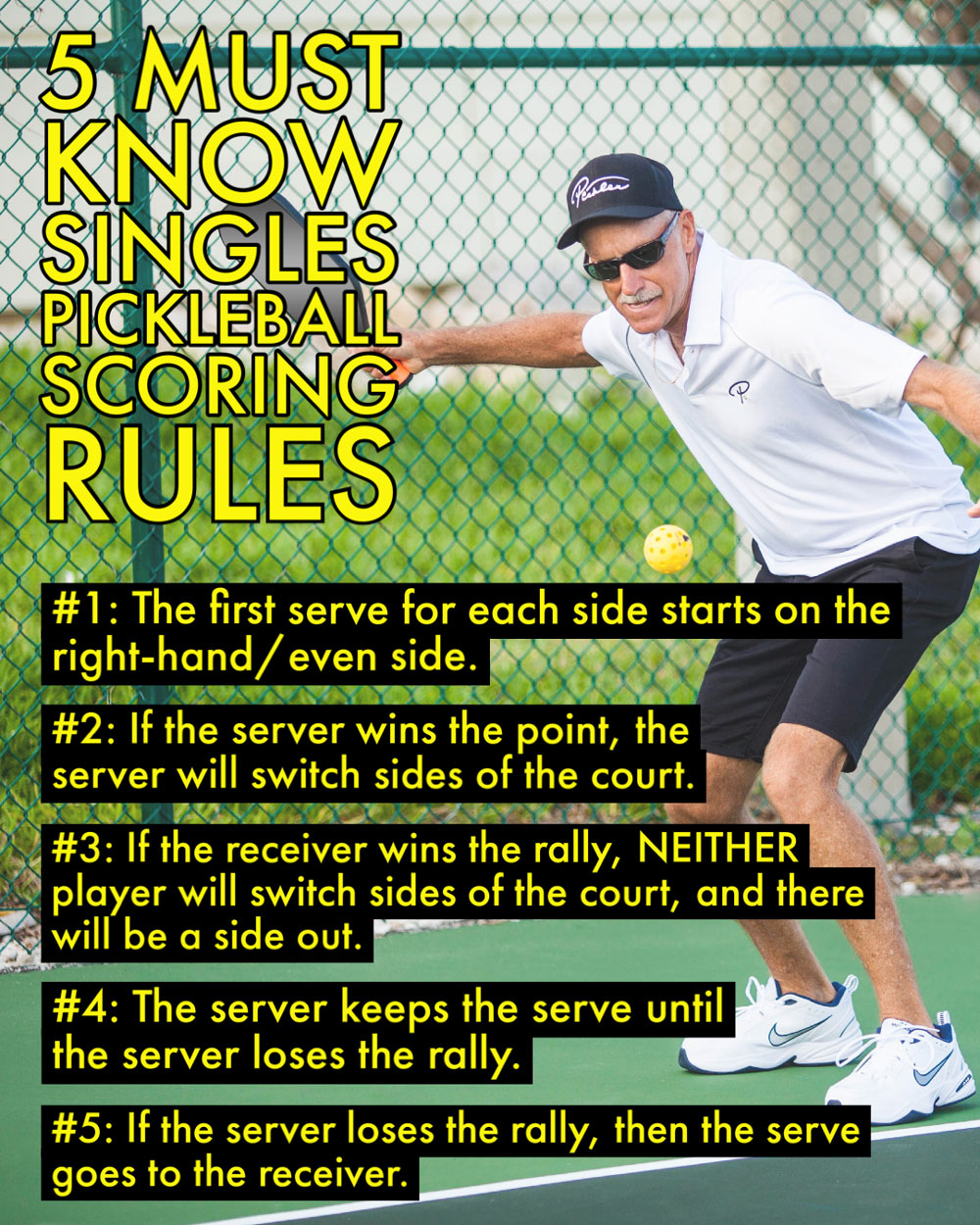
- Games are usually played to 11 points. You must win by 2 points.
- Only the server can score points.
- Call the score as: Your score, then your opponent’s score (example: “6-3”).
Serving Rules
- The server stands behind the baseline and must serve diagonally to the opposite service box.
- You always serve from the right when your score is even, and from the left when your score is odd.
- The serve must land in the receiver’s service box, past the non-volley zone.
- Only one serve attempt is allowed (no second serve).
Double Bounce Rule
- After the serve, the receiver must let the ball bounce before returning it.
- The server must also let the return bounce before playing the next shot.
- After these two bounces, players can volley (hit the ball in the air) unless standing in the non-volley zone.
Non-volley Zone (kitchen)
- You cannot volley the ball while standing inside the 7-foot non-volley zone.
- You can enter the kitchen to play a ball that bounces there, but you must exit before volleying.
Faults
Common faults include:
- Hitting the ball out of bounds
- Not clearing the net
- Volleying from inside the kitchen
- Double bounces on one side
- Serving incorrectly (wrong side or out)
Changing Sides
- Players switch sides of the court when the server’s score reaches 6 points in an 11-point game (or 8 in a 15-point game). This keeps play fair if one side has more wind or sun.
How To Serve In Pickleball Singles
The serve is your chance to start each point on your terms. A strong serve can put your opponent under pressure from the start.
Serving Steps
- Stand behind the baseline, feet together.
- Hold the ball below waist level and your paddle below your wrist.
- Drop the ball and hit it underhand, swinging upward.
- Aim diagonally into your opponent’s service box, clearing the net.
- Announce the score before each serve.
Serve Placement
In singles, most players serve deep to the backhand corner. This makes the return harder and keeps your opponent back. You can also mix in serves down the middle or to the forehand to keep your opponent guessing.
Common Serve Mistakes
- Stepping on or over the baseline before contact (foot fault)
- Hitting the ball above waist level (illegal serve)
- Serving into the net or out of bounds
Pro Tip
Practice serving from both sides of the court. Singles requires you to serve from both the right and left, so being comfortable on each side is key.
Returning Serve: The Right Way
A strong return of serve is just as important as a strong serve. In singles, your return should keep your opponent deep and give you time to get to the center of the court.
Return Strategies
- Hit deep returns, aiming for the baseline to push your opponent back.
- Target the weaker side (often the backhand).
- Use topspin to make the ball bounce high and far.
- Recover quickly to the center “T” after hitting your return.
Examples
If your opponent serves to your backhand, return deep down the line or crosscourt to their backhand side. This makes their next shot more difficult.
Returning Mistakes To Avoid
- Returning short, which lets your opponent move forward and attack
- Hitting high, easy balls that your opponent can smash
- Failing to recover to the center after your return
Singles Court Positioning And Movement
Good court positioning separates strong singles players from beginners. You need to cover more ground, anticipate your opponent’s shots, and move efficiently.
The Center “t” Position
After serving or returning, move to the center of the court, about one step behind the non-volley zone line. This is the “T” position, where you can cover both sides quickly.
Anticipating Shots
Watch your opponent’s body and paddle angle. If their shoulders are open, expect a crosscourt shot. If they are closed, a down-the-line shot is more likely.
Footwork Drills
- Practice side shuffling from the center to each sideline and back.
- Work on quick pivots and sprints to the net or baseline.
Two Non-obvious Insights
- Don’t overcommit to one side after hitting a wide shot. Always return to the center, even if you think you know where the next shot is going.
- Stay on your toes (literally). Singles is about quick reactions, and keeping your weight forward helps you move faster.
Shot Selection In Singles Pickleball
The best singles players use a mix of power, placement, and touch. Knowing when to hit hard and when to play soft is the secret to winning more points.
Essential Shots
- Deep Drive: A hard shot aimed deep to the baseline, often to the opponent’s backhand.
- Crosscourt Shot: Hitting the ball diagonally to move your opponent side to side.
- Down-the-Line Shot: A straight shot along the sideline, useful when your opponent leaves space.
- Drop Shot: A soft shot that lands just over the net, pulling your opponent forward.
- Lob: Hitting high over your opponent’s head, useful if they crowd the net.
When To Use Each Shot
- Use deep drives and crosscourt shots to push your opponent back and open up the court.
- Use drop shots when your opponent is deep and off-balance.
- Lobs can catch aggressive players by surprise, but use them sparingly.
Example
After a deep serve, if your opponent returns short, a well-placed drop shot can win the point outright.
Advanced Singles Strategies
Singles pickleball is not just about hitting hard. Smart strategy can help you beat faster or younger opponents.
Move Your Opponent
Hit shots that force your opponent to run. Wide angles, deep corners, and sudden drop shots keep them guessing.
Pattern Play
Many advanced players use patterns like:
- Deep drive to the backhand, followed by a drop shot to the forehand
- Two crosscourt shots, then a down-the-line winner
Attack The Weaker Side
Most players have a weaker backhand. If you can consistently target it, you’ll earn more errors.
Watch For Fatigue
Singles is exhausting. If your opponent starts moving slower, increase the pace and make them run more.
Two More Insights
- Mix up your shots even if one type is working. If your opponent starts anticipating, they’ll adjust.
- Play the percentages: Don’t aim for the lines unless you’re confident. Keeping the ball in play is often better than risking a fancy winner.
Common Mistakes In Singles Pickleball
Even experienced doubles players make mistakes when switching to singles. Here are errors to watch for:
- Overhitting: Trying to win every point with power leads to more errors. Placement beats power.
- Poor Recovery: Not returning to the center fast enough leaves you exposed.
- Ignoring the Kitchen: Forgetting the non-volley zone rules can cost you easy points.
- Neglecting Footwork: Singles requires constant movement. Standing flat-footed means you’ll get passed.
- Predictable Serves: Always serving to the same spot makes it easier for your opponent.
Training And Fitness For Singles
Singles pickleball is a workout. If you want to improve, add these elements to your training:
Cardio Endurance
Play longer rallies, run intervals, or try jump rope to build stamina.
Agility Drills
- Ladder drills
- Cone shuffles
- Quick sprints
Strength Training
Focus on legs, core, and shoulders. Stronger muscles help you move faster and hit harder.
Practice Matches
Play singles games against different opponents. Each one will challenge you in new ways.

Credit: www.pickleheads.com
Choosing The Right Equipment For Singles
While you don’t need special gear to play singles, some equipment choices can improve your game.
Paddle Selection
Look for a paddle that offers a good balance of power and control. Heavier paddles give more power but can tire your arm faster in singles. Lighter paddles are easier to maneuver.
Shoes
Court shoes with good grip and lateral support are critical. Running shoes are not recommended—they lack side support and increase the risk of injury.
Balls
Use USAPA-approved pickleballs for consistent bounce. Outdoor balls are harder and have smaller holes, while indoor balls are softer with larger holes.
Here’s how singles and doubles paddles often compare:
| Feature | Singles Paddle | Doubles Paddle |
|---|---|---|
| Weight | Heavier (more power) | Lighter (more control) |
| Shape | Longer handle, elongated face | Standard size |
| Sweet Spot | Smaller but more powerful | Larger, easier for soft play |
How To Practice Singles Alone
Don’t have a practice partner? There are still ways to improve your singles pickleball.
Wall Drills
Hit the ball against a wall, aiming for consistent depth and placement. This builds muscle memory and quick reactions.
Shadow Drills
Move around the court without a ball, practicing your footwork, recovery, and split step.
Serve Practice
Serve to targets in the service box. Try to hit a certain spot 10 times in a row.
Ball Machines
If available, use a pickleball machine to practice returning different shots.
Credit: insideden.com
Singles Pickleball Tournaments And Scoring Formats
Competitive singles is growing fast, with more local and national tournaments every year.
Scoring Formats
- Most singles matches play to 11 points, win by 2.
- Tournaments may use 15 or 21-point games for finals.
- “Side out” scoring means only the server can score.
Tournament Tips
- Bring water, snacks, and extra gear.
- Warm up thoroughly before your match.
- Watch other matches to learn about possible opponents.
Notable Events
The USA Pickleball National Championships and APP Tour now feature singles events. Professional singles players can earn prize money and ranking points.
For more details on official rules and tournaments, check the USA Pickleball Association.
How To Progress From Beginner To Advanced
Improving in singles pickleball takes time, but you can speed up your progress with focused practice.
Beginner
- Master the rules and basic shots.
- Work on serves, returns, and court positioning.
- Play with different opponents to learn new styles.
Intermediate
- Add spins and angles to your shots.
- Improve your fitness with regular drills.
- Develop a few favorite patterns (serve + next shot).
Advanced
- Scout opponents for weaknesses.
- Practice deception (hiding your shot direction).
- Use advanced strategies like stacking and lobbing.
Tracking Progress
Keep a notebook of your matches. Write down what worked and what didn’t. This helps you spot trends and areas to improve.
Frequently Asked Questions
What Is The Best Serve In Singles Pickleball?
The most effective serve in singles is usually a deep serve to your opponent’s backhand corner. This pushes them back and makes their return more difficult. Mixing in serves to the middle or forehand can keep your opponent off balance.
Can You Volley In Singles Pickleball?
Yes, you can volley (hit the ball in the air without letting it bounce) in singles pickleball, but not while standing in the non-volley zone (kitchen). If you step into the kitchen to reach a volley, it’s a fault.
How Do I Get Better At Singles Movement?
Focus on footwork drills like shuffling, quick pivots, and sprints. Always return to the center “T” after each shot. Anticipate your opponent’s next shot by watching their paddle and body position.
Is Singles Pickleball More Difficult Than Doubles?
Singles pickleball is often considered more challenging physically because you cover the entire court alone. It demands more stamina, speed, and shot variety. Many players find singles more tiring but also more rewarding.
Are There Special Paddles For Singles Pickleball?
Some advanced players use elongated paddles with more reach and power for singles. However, any USAPA-approved paddle works for both singles and doubles. The best paddle is one that feels comfortable and fits your playing style.
Singles pickleball is a fantastic way to get exercise, improve your skills, and enjoy fast-paced competition. The more you practice, the more fun and rewarding the game becomes. Whether you’re playing for fun or training for tournaments, singles will help you become a better all-around pickleball player.