
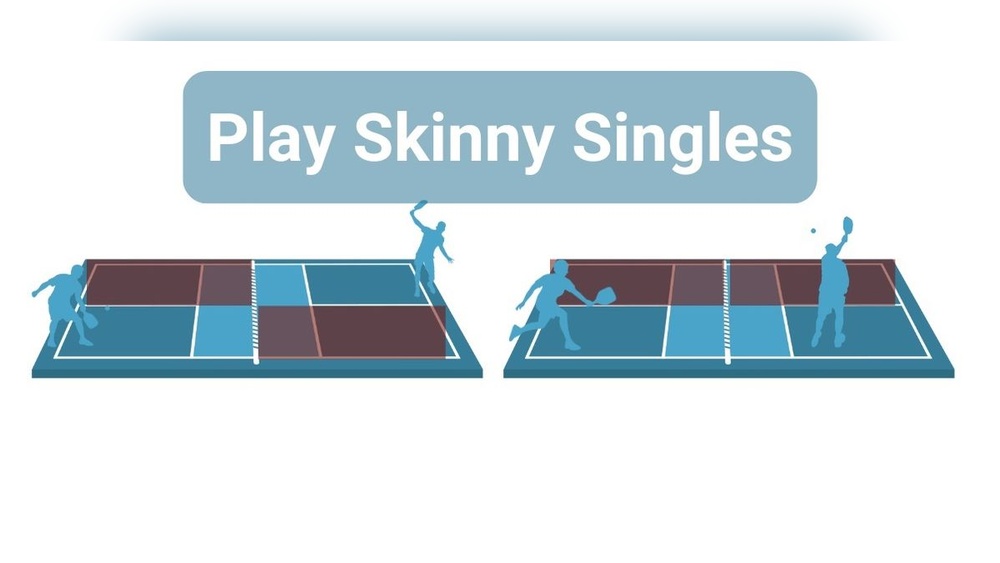
Skinny singles pickleball is a fun twist on the classic game, but it’s more than just playing alone. It’s a smart way to improve your skills, boost your fitness, and enjoy intense rallies. Whether you’re new to pickleball or have played doubles before, skinny singles can help you become a sharper, more strategic player.
Many people try skinny singles for practice, but it’s also gaining popularity as a competitive format. In this guide, you’ll discover how to play skinny singles pickleball, what makes it unique, and how to master its tactics—even if English is not your first language.
What Is Skinny Singles Pickleball?
Skinny singles is a pickleball singles variation where you only use half of the court. Instead of playing across the full width, players compete on one side: either the left or right. This makes the game faster, more focused, and less tiring than full singles. You get more touches, more quick movements, and sharper angles.
It started as a training drill but soon became a favorite among all skill levels. Skinny singles offers strong benefits:
- Less running: You cover only half the court.
- More accuracy: You have to hit to smaller targets.
- Better strategy: Placement and shot selection matter more.
You can play skinny singles with two people or even practice alone by hitting against a wall or a rebounder.
How Skinny Singles Differs From Traditional Singles
Understanding the differences is important before you start playing skinny singles pickleball. Here’s a quick comparison:
| Aspect | Skinny Singles | Traditional Singles |
|---|---|---|
| Court Area | Half (left or right) | Full width |
| Movement | Less lateral movement | More running side-to-side |
| Rally Length | Often longer | Often shorter |
| Focus | Precision and placement | Power and coverage |
| Fatigue | Lower | Higher |
Many players use skinny singles to build skills before moving to full singles. It’s also popular among older adults and those with mobility issues, since the smaller court means less running.
Credit: experiencelife.lifetime.life
Court Setup For Skinny Singles
Setting up the court correctly is key for skinny singles pickleball. Here’s how:
- Choose your side: Decide whether you’ll play on the left or right half. The side is often based on the server’s position, but you can also switch sides to practice different skills.
- Use court lines: The centerline divides the court in two. You’ll play only on one side, from the baseline to the net and from the sideline to the centerline.
- Marking the area: If you’re new, use tape, cones, or chalk to highlight your half. This helps avoid confusion during rallies.
- Net height: The net stays at the standard height—34 inches in the center and 36 inches at the posts.
Many clubs and groups have their own skinny singles rules for court setup. If you’re playing casually, agree on which side to use before you start.
Basic Rules For Skinny Singles Pickleball
The rules for skinny singles are simple but slightly different from doubles or full singles. Here’s what you need to know:
- Serving: Serve diagonally into your opponent’s half—just as in doubles. If you’re on the right side, serve into their right side.
- Rally: The ball must stay within your chosen half. Shots that land outside the half (on the other side of the centerline) are out.
- Scoring: You can play to 11, 15, or 21 points. Most games are played to 11, win by two.
- Switching sides: Some formats allow switching sides after each game or at a certain score (e.g., after 6 points).
- Non-volley zone (“kitchen”): The kitchen rules stay the same. You cannot volley the ball in the non-volley zone.
Here’s a sample rally:
- Player A serves from the baseline right side into Player B’s right service court.
- Both players keep the ball within the right side during the rally.
- If the ball lands on the left, it’s out.
Why Play Skinny Singles Pickleball?
Skinny singles pickleball is not just a training drill—it’s a game on its own. There are several reasons to try it:
- Skill development: You practice precise shots, fast footwork, and reading your opponent’s moves.
- Fitness: The smaller court lets you play longer rallies and improve stamina.
- Social: It’s a great way to play singles without needing a full court. You can play with friends or in tournaments.
- Competitive: Skinny singles tournaments are becoming popular, especially for players who want a new challenge.
- Accessibility: Players with knee, hip, or joint issues can enjoy singles without heavy running.
Some beginners don’t realize that skinny singles can improve your doubles play, too. By practicing on half the court, you learn how to control angles, place shots, and anticipate your partner’s moves.
Essential Skills For Skinny Singles Pickleball
Skinny singles forces you to use specific skills that are less important in doubles or full singles. Here are the most important:
- Precision: Every shot must stay within your half. You need to aim carefully.
- Footwork: Quick steps and lateral movements are key. You must stay balanced and ready.
- Anticipation: Reading your opponent’s body language helps you predict their next shot.
- Shot placement: Instead of power, focus on placing shots deep, near the sideline, or just over the net.
- Consistency: Long rallies demand steady shots. Avoid risky shots unless you’re confident.
Most beginners overlook how important recovery is. After hitting, return to a neutral position quickly. Don’t get stuck near the sideline or baseline.
Step-by-step Guide: How To Play Skinny Singles Pickleball
If you’re ready to try skinny singles, follow these steps to start strong:
- Set up the court: Mark or agree on which half you’ll use. Make sure both players understand.
- Warm up: Do light stretching and practice short rallies to get used to the smaller court.
- Serving: Begin with a diagonal serve into your opponent’s half. Alternate serves as in doubles.
- Play rallies: Keep the ball within your half. Use soft shots, deep shots, and angles to control the rally.
- Score points: Track points as in regular singles. Games often go to 11, win by two.
- Switch sides: If playing multiple games, switch halves to practice both sides.
- Cool down: After finishing, stretch and hydrate.
Here’s a practical example:
- You and a friend agree to play on the left side.
- You serve diagonally from your left baseline into your friend’s left service area.
- Both of you keep shots on the left side. If the ball goes over the centerline, it’s out.
Advanced Strategies For Skinny Singles Pickleball
Once you know the basics, use these tactics to win more games:
Use Deep Serves And Returns
Deep shots force your opponent to play from the baseline. This gives you time to prepare and keeps them away from the net.
Aim For Sidelines
Shots close to the sideline are hard to return, especially in skinny singles. Try to hit low, sharp angles.
Mix Up Pace
Don’t hit every shot with the same speed. Use soft dinks, fast drives, and sudden drops to confuse your opponent.
Attack Weaknesses
Watch your opponent’s footwork and racket position. If they struggle with backhand shots, aim for their backhand.
Move Quickly
After hitting a shot, recover to the center of your half. This makes it easier to reach the next ball.
Use The Kitchen
Many players forget to use the non-volley zone for drop shots and dinks. These shots can win points quickly.
Mental Game
Stay focused and positive. Skinny singles rallies can be long. It’s easy to lose concentration after a mistake.
| Strategy | Skinny Singles Impact |
|---|---|
| Deep Serves | Pushes opponent back, limits angles |
| Sideline Shots | Harder to return, forces errors |
| Mixing Pace | Breaks rhythm, opens space |
| Kitchen Play | Shortens rallies, creates quick points |
| Quick Recovery | Keeps you ready for next shot |

Credit: www.youtube.com
Common Mistakes Beginners Make In Skinny Singles
Many players make similar mistakes when starting skinny singles pickleball. Avoid these to improve faster:
- Standing too close to the sideline: This limits your ability to reach shots in the center.
- Overhitting: Power shots often go out. Focus on placement.
- Ignoring the kitchen: Forgetting to use soft shots and dinks.
- Slow recovery: Not returning to the center after hitting.
- Predictable shots: Always hitting with the same speed or direction.
A non-obvious mistake: beginners often forget to watch their opponent’s racket. By focusing only on the ball, they miss clues about where the next shot will go.
Equipment Tips For Skinny Singles Pickleball
You don’t need special gear for skinny singles, but a few adjustments can help:
- Paddle: Choose a paddle with good control and a comfortable grip. Lightweight paddles are easier for quick movements.
- Ball: Use an official pickleball ball (indoor or outdoor depending on your court).
- Shoes: Wear court shoes with good traction. You’ll need to move quickly and stop sharply.
- Clothing: Pick breathable clothes. Skinny singles can lead to longer rallies and more sweating.
Some players bring extra balls, cones, or tape to help mark the court. If you play alone, consider a rebounder or wall for practice.
Fitness Benefits Of Skinny Singles Pickleball
Skinny singles offers unique fitness advantages:
- Cardio: Long rallies and quick movements boost heart health.
- Leg strength: Frequent stops and starts build muscles in your legs.
- Balance: Playing on half the court forces you to stay balanced and stable.
- Coordination: You use both hands and feet to control shots and recover.
According to the USA Pickleball Association, pickleball burns between 350–450 calories per hour. Skinny singles can burn even more, since rallies last longer and you move nonstop.
How Skinny Singles Improves Doubles Play
Many people don’t realize that skinny singles can directly improve your doubles game. Here’s how:
- Shot placement: You learn to place shots precisely, a skill needed in doubles.
- Footwork: Quick steps and recovery are vital in doubles, especially near the kitchen.
- Anticipation: Reading your opponent’s moves helps in both formats.
- Angles: Skinny singles teaches you how to hit sharp angles and avoid the middle, where doubles opponents wait.
If you struggle with consistency in doubles, skinny singles is a great way to practice without distractions from a partner.
Organizing Skinny Singles Tournaments
Skinny singles pickleball tournaments are becoming more common. Here’s how to set one up:
- Choose format: Decide if you’ll play on left, right, or switch sides each game.
- Set rules: Clarify scoring, serving, and court setup.
- Schedule matches: Use a round-robin or bracket system.
- Track scores: Keep records to determine winners.
- Reward winners: Offer medals, trophies, or small prizes.
Most clubs use games to 11 points, win by two. If you have many players, shorten games to 7 points for faster rounds.
Practicing Skinny Singles Alone
You don’t always need a partner. Practice skinny singles alone to improve:
- Wall drills: Hit against a wall, aiming for your half.
- Target practice: Place cones or targets near the sideline or kitchen. Try to hit them.
- Footwork drills: Move from baseline to kitchen and back, staying within your half.
Many advanced players use solo practice to sharpen accuracy and consistency. It’s also a good way to warm up before games.

Credit: www.youtube.com
Skinny Singles Pickleball For Different Age Groups
Skinny singles is great for all ages, from kids to seniors. Here’s why:
- Kids: The smaller court helps younger players learn basic skills and confidence.
- Adults: Offers a fun challenge and a chance to improve singles tactics.
- Seniors: Less running means more enjoyment and less risk of injury.
The format is also popular in schools and community centers because it’s easy to organize and doesn’t require a full court.
Comparing Skinny Singles And Doubles Pickleball
To understand skinny singles better, compare it to doubles pickleball.
| Feature | Skinny Singles | Doubles |
|---|---|---|
| Court Coverage | Half court per player | Full court split between two |
| Rally Length | Longer, more control | Shorter, more aggressive |
| Strategy | Precision, placement | Teamwork, coordination |
| Skill Focus | Footwork, anticipation | Communication, coverage |
| Physical Demand | Moderate | Lower |
Players often use skinny singles as a bridge between doubles and full singles. It helps build confidence and control before moving to more aggressive formats.
Tips For Winning Skinny Singles Pickleball Matches
Winning in skinny singles pickleball requires more than just skill. Use these tips:
- Stay calm: Don’t rush shots or get frustrated after mistakes.
- Watch your opponent: Look for patterns in their shots.
- Change tactics: If you lose points, try new strategies—soft shots, deep returns, or sideline placements.
- Use the whole half: Don’t stand in one spot. Move around to cover angles.
- Stay hydrated: Longer rallies can tire you quickly.
A less obvious tip: change your serve position slightly. By moving closer to the centerline or sideline, you can create new angles and surprise your opponent.
Skinny Singles Pickleball Around The World
Skinny singles is growing fast, especially in the USA, Canada, and Australia. More clubs and tournaments now include skinny singles divisions. According to the Pickleball Canada Organization, over 10% of events include skinny singles formats.
International players use skinny singles for skill development and fun. The format is also common in schools and youth programs because it’s easy to organize and helps students learn basic pickleball skills.
Where To Learn More About Skinny Singles Pickleball
For official rules, videos, and tips, visit the USA Pickleball Association site. They offer guides, drill ideas, and tournament information. You can also check out this resource for more: USA Pickleball.
Frequently Asked Questions
What Is Skinny Singles Pickleball?
Skinny singles pickleball is a singles version where players use only half the court. Each player competes on the left or right side, focusing on accuracy and quick movement.
How Do You Set Up A Skinny Singles Court?
Mark the centerline, then use only one side from baseline to net and sideline to centerline. The net and kitchen rules stay the same. Use tape, cones, or chalk to highlight the half if needed.
Can You Play Skinny Singles Alone?
Yes. Practice against a wall or rebounder. Aim to keep all shots within your half. Solo drills help improve accuracy and footwork.
Is Skinny Singles Good For Beginners?
Yes. Skinny singles teaches precision, footwork, and shot placement. It’s less tiring than full singles and helps new players build confidence.
How Does Scoring Work In Skinny Singles?
Score points as in regular singles—most games go to 11 points, win by two. Alternate serves as in doubles, and keep the ball within your chosen half.
Skinny singles pickleball is more than just a training drill—it’s a fun, skill-building format that suits all ages and abilities. By mastering skinny singles, you’ll improve your accuracy, fitness, and tactics for every pickleball game. Try it today and discover a new way to play!