
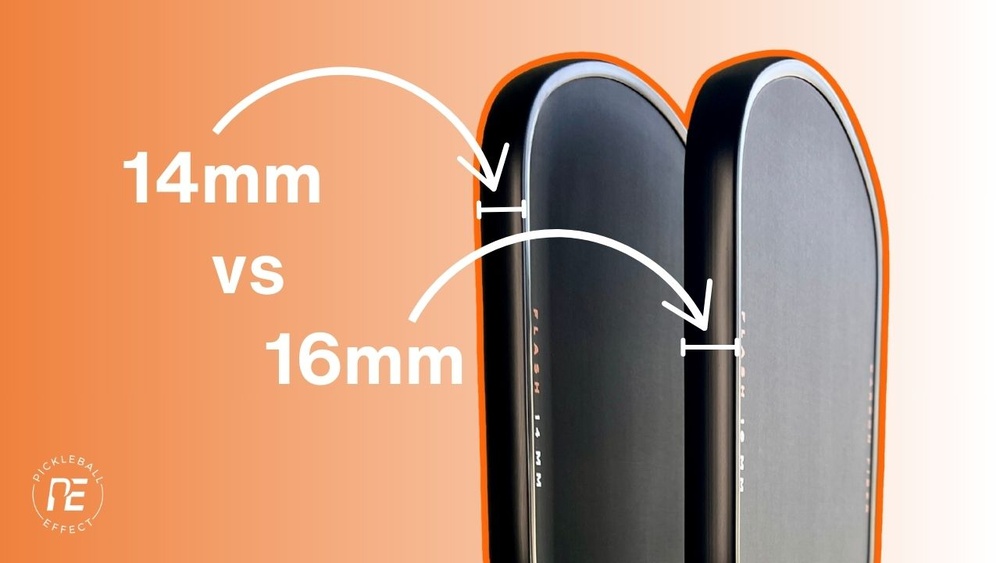
Choosing the right pickleball paddle can be confusing, especially when you face details like core thickness. For many players, the choice comes down to a 14mm vs 16mm pickleball paddle. These two core sizes dominate the market, and each one can affect your game in important ways. If you’re not sure which to pick, you’re not alone—many players struggle with this decision. By the end of this guide, you’ll understand how paddle thickness impacts performance and feel, and you’ll have the tools to choose the best fit for your playing style.
Why Does Paddle Thickness Matter?
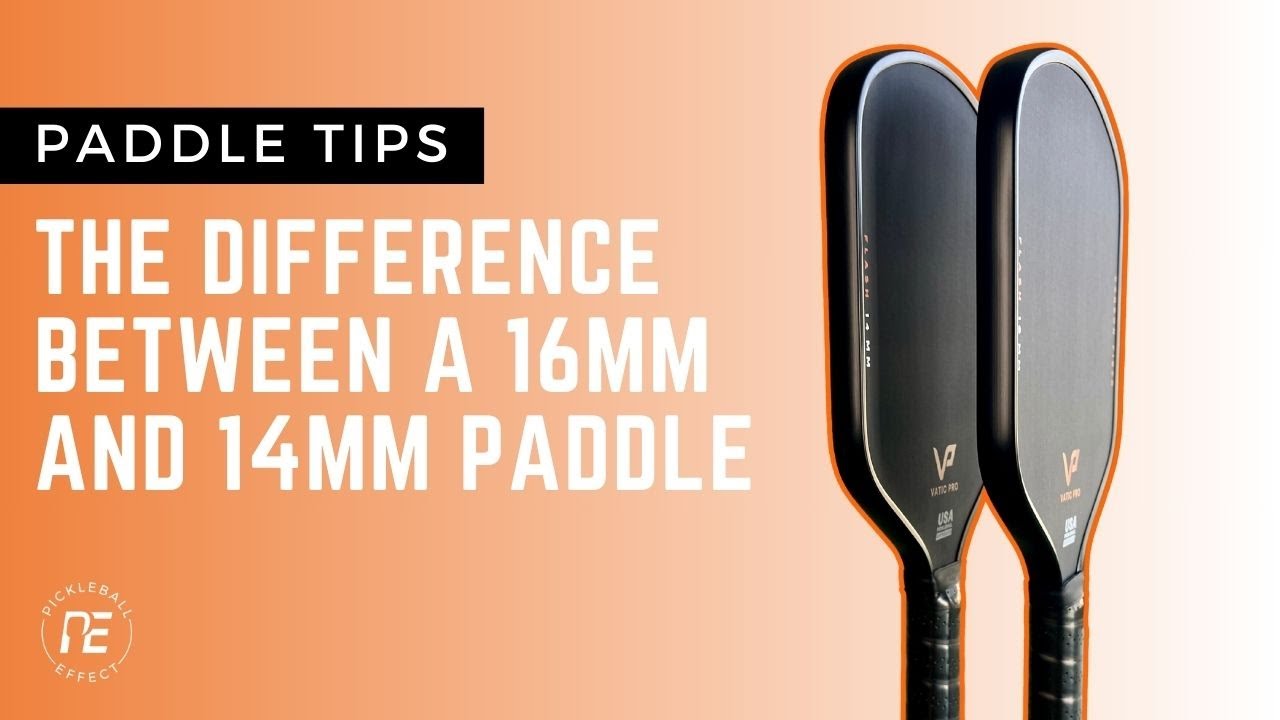
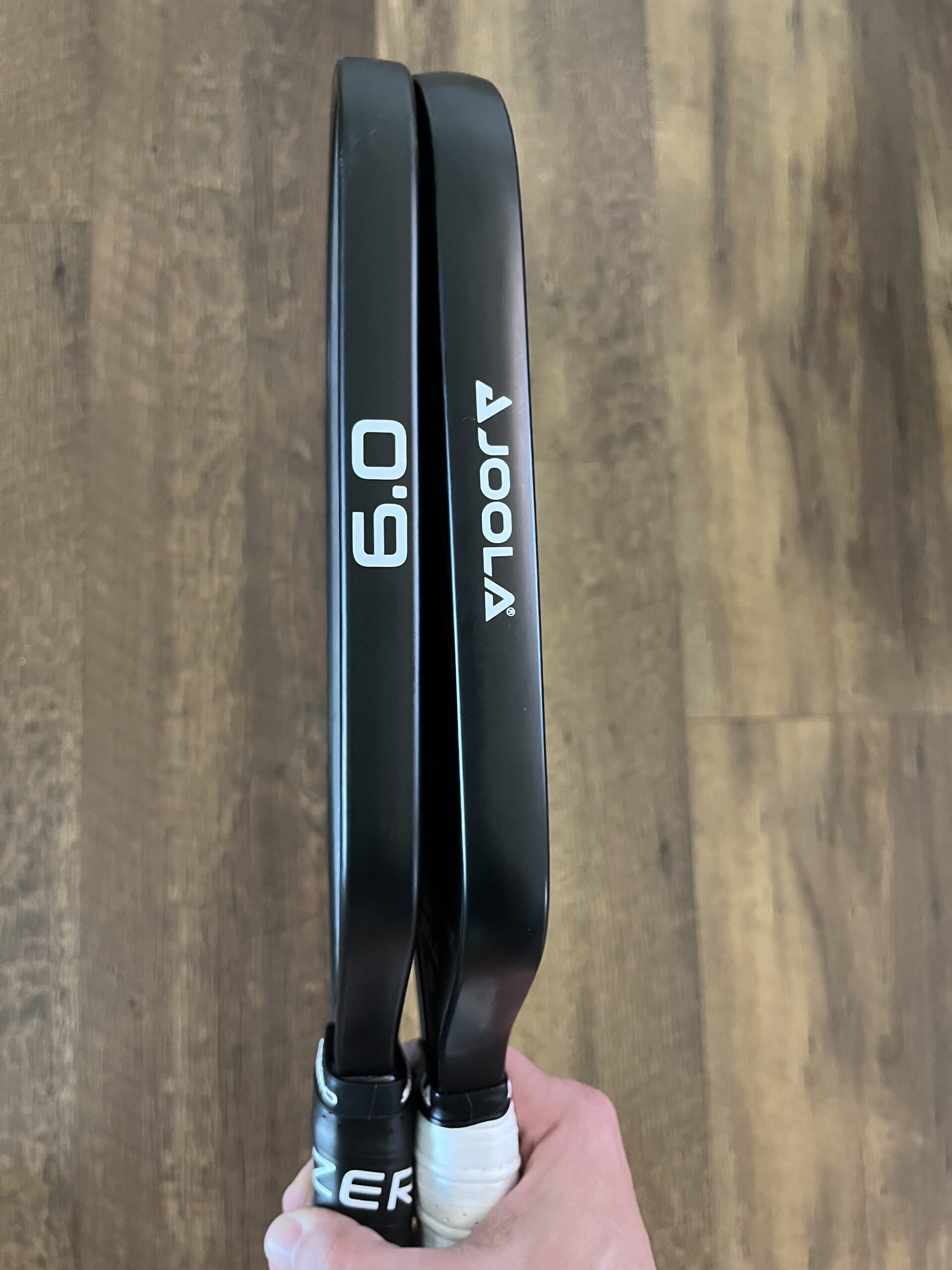
Pickleball paddle thickness affects more than just weight. The core thickness changes how the paddle feels, how it handles the ball, and even how it sounds when you hit a shot. Most modern paddles use a polymer honeycomb core, and the two most common thicknesses are 14mm and 16mm. These numbers refer to the thickness of the paddle’s core, not its overall width or length.
A thicker or thinner core might not look like a big difference, but it can be felt in every swing. Think of it like the difference between a thin notebook and a thick one—they both do the job, but each offers a different experience in your hand.
Understanding 14mm Pickleball Paddles
A 14mm paddle is considered a “thin core” paddle. Here’s what you need to know:
Key Features Of 14mm Paddles
- Quicker response: The thinner core gives a crisp, fast feel.
- Increased power: Ball leaves the paddle faster, which helps with aggressive shots.
- Lower weight: Usually, 14mm paddles are lighter than their thicker counterparts.
How 14mm Impacts Your Game
If you love to play fast and hit hard, a 14mm paddle might suit you. The thinner core offers a more direct connection to the ball, so you’ll feel every shot more sharply. Many advanced and aggressive players prefer this because they can generate power with wrist flicks and punch volleys.
However, there’s a downside. The thin core means less material to absorb energy, so you get less control and a smaller sweet spot. Mishits can vibrate through the paddle, and you might notice less forgiveness on off-center shots.
Who Should Use 14mm?
- Singles players: The extra power helps with baseline drives and passing shots.
- Aggressive players: If your style is fast-paced and offensive, 14mm amplifies your strengths.
- Players with good hand control: If you can consistently hit the sweet spot, the benefits shine.
Credit: www.youtube.com
Understanding 16mm Pickleball Paddles
The 16mm paddle is the “thick core” option, and it’s become very popular in recent years.
Key Features Of 16mm Paddles
- More control: Thicker core dampens vibration and slows the ball, giving you more touch.
- Larger sweet spot: Easier to make good contact, especially for beginners.
- Softer feel: Reduces the “pingy” sensation on hard shots.
How 16mm Impacts Your Game
A 16mm paddle is all about control and consistency. You get more time to set up dinks and drops because the ball stays on the paddle longer. If you’re playing doubles or focusing on a soft game at the net, this extra control is a big advantage.
The tradeoff is less raw power. The thicker core absorbs more energy, so your drives and slams will have a bit less punch. But for many players, the added control is worth it.
Who Should Use 16mm?
- Doubles players: The control helps with strategic, slow-paced rallies near the net.
- Beginners: Easier to learn the game with a forgiving paddle.
- Players who value touch: If you like finesse shots, the 16mm is hard to beat.
Side-by-side Comparison: 14mm Vs 16mm
Understanding the differences is easier when you see them together. Here’s how 14mm and 16mm paddles stack up in key areas:
| Feature | 14mm Paddle | 16mm Paddle |
|---|---|---|
| Power | Higher | Moderate |
| Control | Lower | Higher |
| Sweet Spot Size | Smaller | Larger |
| Weight | Lighter | Heavier |
| Vibration | More | Less |
| For Whom? | Power, singles | Control, doubles, beginners |
How Core Thickness Affects Game Play
Core thickness changes the way a paddle feels and performs. Here’s a breakdown of practical effects:
Power Vs. Control
- 14mm delivers more power because the ball rebounds off the paddle faster.
- 16mm gives more control, as the ball stays on the paddle slightly longer.
It’s a common mistake to think thicker paddles are always heavier and slower. In reality, paddle weight depends on both core and face materials. Some 16mm paddles are made with lightweight carbon fiber, so they don’t feel heavy at all.
Sweet Spot Size
A thicker paddle generally has a larger sweet spot. This means you can mishit the ball slightly and still get a good shot. Thinner paddles require more accuracy—if you don’t hit the center, the ball might die or fly off in an odd direction.
Sound And Vibration
- 14mm paddles are “pingier” and can send more vibration into your hand.
- 16mm paddles are quieter and dampen vibration, which can help if you have joint pain or are sensitive to hand shock.
Real-world Examples: When Thickness Matters Most
Let’s look at how paddle thickness impacts actual play.
Example 1: The Net Battle
You’re at the kitchen line (the non-volley zone), trading dinks with your opponent. With a 16mm paddle, you’ll notice it’s easier to control the speed and placement of your soft shots. The ball doesn’t fly off as easily, and you can keep rallies going longer. If you switch to a 14mm paddle, you might accidentally pop the ball up, making it easier for your opponent to attack.
Example 2: Hard Drives
You’re playing singles and want to drive the ball past your opponent. The 14mm paddle helps generate speed and spin, so your drives are faster and harder to return. The 16mm paddle, while still solid, might feel a bit “dead” on these shots, forcing you to swing harder.
Example 3: Defensive Play
During fast exchanges at the net, a 16mm paddle absorbs the energy of the ball, making it easier to block and reset. You can get your paddle in position and simply “catch” the ball, letting the thicker core do the work.
Weight Considerations: Not Just About Thickness
While 14mm paddles are often lighter, that’s not always the case. Manufacturers use different materials for the paddle face and handle, which can make a thick paddle light or a thin paddle heavy. Always check the actual weight (usually listed in ounces) before buying.
- Light paddles (7.0-7.6 oz): Fast, easy to swing, but less power.
- Midweight (7.6-8.2 oz): Good balance for most players.
- Heavy (8.2+ oz): More power, but can tire your arm.
Don’t assume a 14mm paddle is always the lightest option. If you can, hold the paddle before buying or look for reviews that mention swing weight.
Durability And Lifespan
A thicker core can sometimes offer better durability, as there’s more material to absorb impacts. However, the face material (carbon fiber, fiberglass, graphite) matters just as much. Some players believe 16mm paddles last longer because they handle repeated hits better, especially if you play often.
Still, both 14mm and 16mm paddles can last for years if cared for properly. Avoid slamming your paddle on the ground or using it in extreme temperatures, as these can damage the core.
Price Differences
You might expect thicker paddles to cost more, but price is usually based on brand, materials, and technology—not just thickness. Both 14mm and 16mm paddles can range from $50 for entry-level models to over $200 for pro-level gear. Features like edge guard technology or special face coatings affect the price more than core thickness alone.
Choosing Between 14mm And 16mm: What Really Matters
Here are the main points to consider before making your choice:
- Playing style: If you’re aggressive, like speed, and play singles, try 14mm. If you love control, soft shots, and play doubles, go with 16mm.
- Experience level: Newer players often do better with a thicker, more forgiving paddle.
- Arm health: If you have elbow or wrist issues, the vibration dampening of 16mm can help.
- Try before you buy: If possible, demo both thicknesses. Many shops or clubs will let you try paddles before purchasing.
Paddle Face Materials: A Hidden Factor
While thickness is key, the paddle face also matters a lot. Some 14mm paddles use carbon fiber for extra stiffness, which adds power. Others use fiberglass for more flexibility and spin. The same goes for 16mm paddles.
- Carbon fiber faces: More power and spin, common on both thicknesses.
- Fiberglass faces: Softer feel, more dwell time (good for control).
- Graphite faces: Lightweight and responsive, a middle ground.
Don’t focus only on thickness—consider the face material and overall paddle design.
Common Mistakes When Choosing Paddle Thickness
Even experienced players make some errors when picking a paddle:
- Choosing based on trend: Just because a pro uses a 16mm paddle doesn’t mean it’s right for you.
- Ignoring swing weight: A paddle can be light but feel heavy if the weight is balanced toward the head.
- Overvaluing power: Many beginners pick thin paddles for power, but struggle with control.
- Not testing: Buying online without ever holding a paddle can lead to disappointment.
Credit: bepickleballer.com
How To Test Paddle Thickness
If you’re still unsure, here’s a simple way to test:
- Borrow or rent: Many clubs have demo paddles in both thicknesses.
- Warm up: Hit some soft dinks, volleys, and baseline drives.
- Notice feel: Does one paddle feel more comfortable? Do you miss the sweet spot less with one thickness?
- Play a few points: Real game situations reveal more than practice swings.
Write down your thoughts after each session to see which thickness gave you better results.
Non-obvious Insights Most Players Miss
Many new players don’t realize two important things:
- Transition paddles exist: Some brands offer 15mm paddles, a middle ground between 14mm and 16mm. If you’re stuck choosing, a 15mm paddle can offer the best of both worlds.
- Swing speed matters as much as paddle weight: If you have a fast swing, a thicker paddle won’t slow you down as much as you think—it can actually help you keep shots in play.
These small details can be the difference between a paddle that feels “just okay” and one that feels perfect.
Popular 14mm And 16mm Paddle Models
To give you a sense of what’s out there, here are some top paddles in each category:
Leading 14mm Paddles
- Selkirk Amped S2 14mm: Known for its pop and quick hand speed.
- Paddletek Tempest Wave Pro 14mm: Lightweight with excellent touch.
- CRBN 1X 14mm: Delivers spin and power for attacking players.
Leading 16mm Paddles
- JOOLA Hyperion CFS 16mm: Used by top pros for its control and forgiveness.
- Engage Pursuit MX 6.0 16mm: Large sweet spot and soft feel.
- Onix Evoke Premier 16mm: Great for net play and blocking.
These are just examples; the market changes quickly, with new models released every year.
How The Pros Choose
Professional pickleball players often switch between paddle thicknesses depending on the event or court surface. Some pros prefer a 14mm paddle for singles, where power is key, and a 16mm for doubles, where control wins points. If you want to see what the top players are using, check the official paddle lists on the USA Pickleball Association website.

Credit: www.palmerapickleball.com
Data Table: Player Preferences By Level
See how player preferences shift as skill improves:
| Skill Level | Preferred Thickness | Reason |
|---|---|---|
| Beginner | 16mm | Forgiveness, control, easier learning curve |
| Intermediate | 16mm or 14mm | Experimenting with power and touch, personal preference |
| Advanced | 14mm | More power, quick hand speed, aggressive play |
| Pro | Varies | Switches based on event, sometimes uses both |
How Thickness Interacts With Grip Size
Another detail: grip size also matters, but it’s often overlooked when focusing on core thickness. For example, a player who uses a 16mm paddle with a large grip may find it easier to control the ball, while a 14mm paddle with a small grip can help with wrist flicks and quick changes.
- Small grips: Add maneuverability, good for players with small hands or those who use a lot of spin.
- Large grips: Add stability, reduce twisting, and can help with control.
Try different combinations to see what feels best for your hand size and style.
Advanced Customization: Weighting And Lead Tape
As you become more advanced, you might want to customize your paddle by adding lead tape. This allows you to adjust the weight and balance, making a 14mm paddle feel more stable or a 16mm paddle swing faster. This is a trick used by many tournament players to fine-tune their equipment to their exact needs.
Summary Table: 14mm Vs 16mm Decision Guide
Still not sure? Use this quick reference:
| If you want… | Go with… | Why? |
|---|---|---|
| Maximum power | 14mm | Ball rebounds faster, more pop |
| Best control | 16mm | Larger sweet spot, less vibration |
| Lightest swing | Usually 14mm | Thinner core, less mass (but check weight!) |
| Softest feel | 16mm | Absorbs more impact, easier on joints |
| All-around play | 15mm | Balanced power and control |
Making Your Final Choice
There’s no “perfect” paddle thickness—only what’s perfect for you. Consider your skill level, playing style, physical comfort, and the type of game you play most (singles vs doubles). Try both types if possible, and don’t be afraid to experiment as your game evolves.
Remember, the right paddle can boost your confidence and results, but skill and practice matter most. The best players can adapt to any paddle, but finding the right fit makes the journey smoother and more fun.
Frequently Asked Questions
What Is The Main Difference Between 14mm And 16mm Pickleball Paddles?
The main difference is core thickness. A 14mm paddle offers more power and a quicker response, while a 16mm paddle provides better control, a larger sweet spot, and reduced vibration. Your choice depends on whether you prefer power or control in your game.
Can Beginners Use A 14mm Paddle?
Yes, but beginners usually do better with a 16mm paddle because it’s more forgiving and easier to control. A 14mm paddle can feel too lively and less stable for those still learning proper technique.
Does Paddle Thickness Affect Spin?
Thickness itself doesn’t add spin—the paddle face material and your swing technique matter more. However, a thicker paddle can help you control spin shots better, while a thinner paddle may help you generate spin with faster swings.
Are Thicker Paddles Always Heavier?
Not always. Weight depends on the combination of core, face material, and edge guard. Some 16mm paddles are lightweight, and some 14mm paddles are heavier. Always check the paddle’s actual weight.
Should I Try Both Before Buying?
Absolutely. Trying both 14mm and 16mm paddles is the best way to see which feels right for your hand and style. Many clubs and shops offer demo programs so you can test before you invest.
Picking between a 14mm vs 16mm pickleball paddle is a big decision, but with the information above, you can be confident in your choice. Whichever you choose, focus on enjoying the game and improving with every match.