
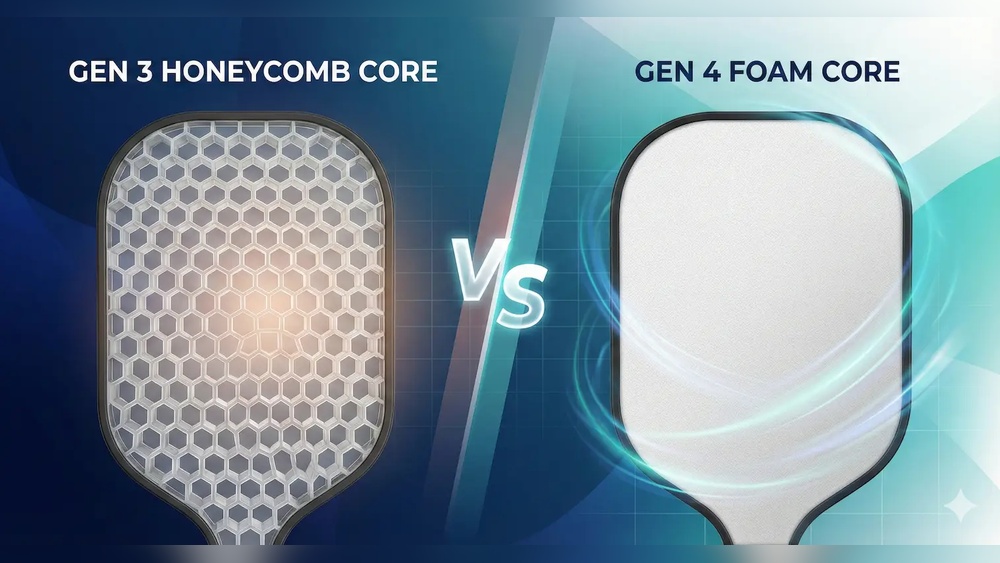
Pickleball is booming, and so is the debate around paddle technology. For both beginners and competitive players, the type of paddle core—foam or honeycomb—can change your game. While two paddles might look similar on the outside, their cores affect everything: power, control, weight, sound, and even how your arm feels after a long match. Many new players get overwhelmed by marketing claims and technical jargon, not realizing how the choice of core shapes their playing style. This article will break down the real differences, the science behind each core, and how to pick the right one for your needs. If you want to play better, stay injury-free, and enjoy the game more, understanding this topic is essential.
What Is A Pickleball Paddle Core?
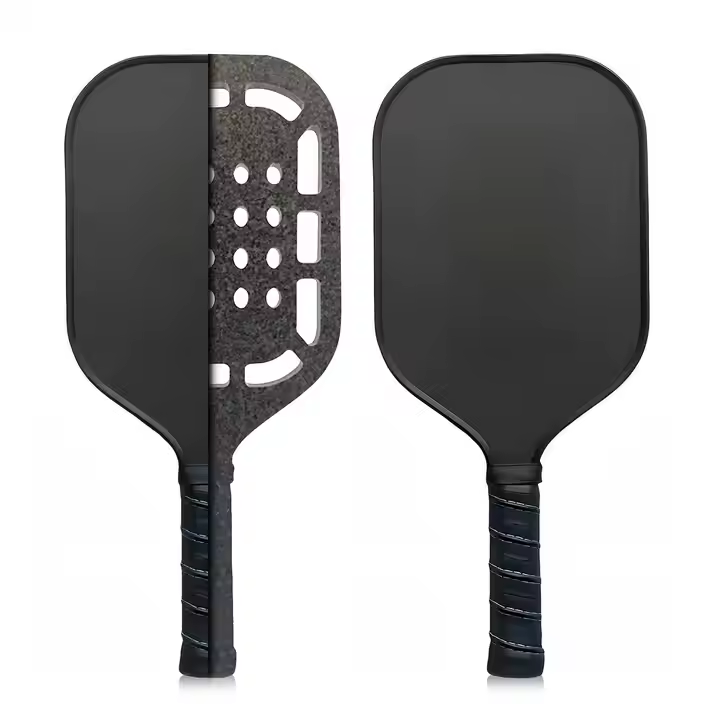
Every pickleball paddle has a core—the material sandwiched between two surface layers. The core gives the paddle its main feel and performance. Think of it as the “heart” of the paddle. There are many core types, but honeycomb and foam are the most popular and widely used today.
- Honeycomb cores are made from sheets of material (like polymer plastic, aluminum, or Nomex) shaped into a hexagonal pattern, like a beehive.
- Foam cores use a solid or semi-solid foam material, sometimes injected or molded to fill the paddle’s interior.
The type of core changes how the paddle reacts when the ball hits, how much vibration you feel, and how long your shots stay accurate.
How Honeycomb Core Paddles Work
Honeycomb cores are everywhere in pickleball. The design uses small, empty hexagonal cells. These cells trap air and create a lightweight structure that’s also strong. Most honeycomb paddles use polymer plastic, but some use Nomex (a hard resin) or aluminum.
Key Honeycomb Core Features
- Lightweight: The open structure means less material, so the paddle feels light.
- Consistent bounce: The honeycomb pattern spreads energy evenly, giving you a predictable response.
- Vibration dampening: The air gaps absorb some shock, reducing vibration in your hand.
- Durability: Honeycomb cores last a long time with normal use, especially polymer types.
Common Honeycomb Core Materials
- Polymer Honeycomb: Most popular; soft, quiet, and comfortable. Great for all-around play.
- Nomex Honeycomb: Harder, noisier, and more powerful. Good for aggressive players.
- Aluminum Honeycomb: Lightweight, precise, but less common due to cost and feel.
Each material changes the paddle’s “personality.” Polymer is most common for a reason: it balances power, control, and comfort.
How Honeycomb Cores Affect Your Game
Honeycomb cores are famous for their predictability. When you hit the ball, you know how the paddle will react. This helps with consistent dinks, volleys, and drives. The small cells also keep the paddle light, so you can react quickly at the net.
However, honeycomb paddles can be “noisier,” especially Nomex and aluminum versions. Some clubs with noise rules even ban louder paddles.

Credit: www.youtube.com
How Foam Core Paddles Work
Foam core paddles use a different approach. Instead of empty cells, they use a solid or semi-solid foam inside. This foam can be polyurethane, EVA, or proprietary blends. The foam fills the whole paddle interior, creating a uniform block.
Key Foam Core Features
- Ultra-soft feel: Foam absorbs more shock, making the paddle feel softer.
- Quieter: Foam dampens noise, so your shots sound muted compared to honeycomb.
- Unique power profile: Foam can “catapult” the ball if compressed and rebounded quickly.
- Even vibration reduction: Foam spreads vibration across the whole paddle, protecting your wrist and elbow.
Foam Types Used
- EVA Foam: Soft, flexible, and often used for shock absorption.
- Polyurethane Foam: Can be tuned for softness or stiffness, depending on the formula.
- Hybrid Foams: Some brands mix foams for a custom feel.
Foam paddles are newer to pickleball. Not every brand offers them, but their popularity is rising.
How Foam Cores Affect Your Game
Players who want maximum comfort and quiet often prefer foam. You feel less sting, even on off-center hits. For those with tennis elbow or sensitive joints, foam can be a relief.
But foam paddles can feel “mushy” or less crisp compared to honeycomb. Control takes practice, especially with drop shots and fast volleys. Some foam cores also wear out faster, losing their spring over time.
Detailed Comparison: Foam Vs Honeycomb Core
To make sense of the differences, let’s compare the two core types across important factors:
| Feature | Honeycomb Core | Foam Core |
|---|---|---|
| Weight | Light to medium (7-8.5 oz typical) | Usually medium (7.5-8.8 oz typical) |
| Power | Controlled, can be powerful (Nomex best for power) | Soft, sometimes with a “catapult” effect |
| Control | Very consistent and predictable | Softer feel, less “pop” for precise shots |
| Vibration | Moderate, more with harder honeycomb materials | Very low, best for joint comfort |
| Sound | Louder (especially Nomex and aluminum) | Very quiet, low-pitch sound |
| Durability | High, especially polymer | Variable, some foams wear faster |
| Cost | $60-$200+ (wide range) | $70-$180 (fewer options) |
Insight: The “feel” Factor
Many beginners focus only on stats like weight and power. But the feel—how the paddle reacts in your hand—matters more in real games. Honeycomb paddles give a quick, crisp rebound. Foam paddles feel softer and more forgiving, which can help your confidence if you struggle with mis-hits.
Insight: The “dead Spot” Problem
All paddles eventually develop a “dead spot,” where they lose bounce. Honeycomb cores usually last longer before this happens. Foam cores, especially cheap ones, may soften after a season of hard play. Look for higher-quality foams if you want longevity.
Real-world Performance: Which Is Better For You?
No core is “best” for everyone. Your choice depends on your style, needs, and even local rules.
For Power Hitters
If you love driving the ball hard, a Nomex honeycomb core gives maximum pop. The paddle feels lively and quick. Polymer honeycomb also works well, with a little more control. Foam paddles can deliver power, but it’s a different feeling—more “trampoline” than “crack.”
For Control And Soft Play
Many players want to control the kitchen (no-volley zone) with precise dinks and drops. Polymer honeycomb cores shine here. They are predictable and responsive. Foam cores can help with comfort, but their softness can make touch shots harder to master at first.
For Joint Or Arm Problems
Do you get elbow pain or wrist soreness? Foam core paddles absorb shock and vibration better. Even if you mishit the ball, your arm feels less impact. This is a major reason older players and those with injuries switch to foam.
For Noise Sensitivity
Some clubs, especially in retirement areas, limit paddle noise. Honeycomb (especially Nomex) can be loud. Foam core paddles are much quieter and often pass local sound tests. If your neighbors complain, foam is a smart choice.
For Beginners
Beginners often benefit from polymer honeycomb cores—they offer a balanced feel and help you learn control and power. Foam is forgiving, but the softer touch can make learning shot precision trickier.
Pros And Cons: Quick Overview
Let’s break down the main advantages and disadvantages of each core.
Honeycomb Core
Pros:
- Lightweight, fast handling
- Consistent performance
- Durable (especially polymer)
- Wide variety of models
Cons:
- Can be noisy
- More vibration (especially Nomex/aluminum)
- May feel harsh to sensitive players
Foam Core
Pros:
- Soft, comfortable feel
- Best for vibration reduction
- Quieter, good for noise-sensitive areas
- Easier on joints
Cons:
- Can feel less crisp/precise
- May wear out faster
- Fewer choices available
Common Myths And Mistakes When Choosing A Core
Many players are confused by paddle marketing or repeat myths they hear on the court. Here’s the truth:
1. “foam Paddles Are Only For Beginners.”
This is false. Some top brands and pro players use foam for comfort and quiet. The right foam core can perform at a high level.
2. “honeycomb Is Always Better For Spin.”
Spin depends more on the paddle’s surface texture than the core. Both foam and honeycomb can generate spin if the surface is designed for it.
3. “heavier Paddles Mean More Power.”
While weight helps with power, the core and face material matter more for feel and control.
4. “foam Paddles Are Illegal In Tournaments.”
As of 2024, most foam paddles are legal if they meet USA Pickleball standards. Always check current approved paddle lists before buying.
5. “all Honeycomb Paddles Feel The Same.”
The material (polymer, Nomex, aluminum) changes the feel dramatically. Try before you buy if possible.
How To Choose The Right Paddle Core
Picking the right core means balancing your needs, style, and budget. Here’s a step-by-step guide:
1. Identify Your Play Style
- Aggressive/power player: Try Nomex or stiffer honeycomb.
- Control or soft game: Polymer honeycomb or high-quality foam.
- Defensive player: Softer foam for comfort and quiet.
2. Consider Arm Health
If you have a history of joint pain, foam is worth trying. Many older players switch to foam after years with honeycomb.
3. Test For Noise
If you play in a noise-sensitive area, bring a paddle to the court and listen. Honeycomb can be loud, foam is much quieter.
4. Try Before You Buy
If you can, borrow paddles from friends or demo at a store. The “feel” in your hand is more important than specs on paper.
5. Don’t Ignore Durability
Ask about the paddle’s lifespan. Good honeycomb cores last for years; cheap foam can wear out in months. Invest in quality.
Top Brands And Paddle Examples
Honeycomb Core Brands
- Selkirk: Known for polymer honeycomb paddles with great control and power.
- Paddletek: Offers both Nomex and polymer options.
- Onix: Famous for the Z5 (Nomex honeycomb) and Evoke series (polymer honeycomb).
Foam Core Brands
- Gearbox: The GX5 and GX6 use foam core technology for a softer feel.
- Hudef: Their foam core paddles are popular with players who want less vibration.
- ProXR: Offers hybrid foam paddles with unique handle tech.
These brands are trusted for quality and innovation.
Foam Vs Honeycomb: Side-by-side Data
Here’s a summary of the most important performance data side-by-side for quick comparison.
| Performance Aspect | Honeycomb Core | Foam Core |
|---|---|---|
| Response Time | Faster, more “pop” | Softer, slightly slower |
| Sweet Spot Size | Medium-large | Large, but can feel “mushy” |
| Arm Comfort | Moderate | High |
| Noise Level | Moderate to loud | Very quiet |
| Longevity | 2-4 years (normal play) | 1-3 years (depends on foam quality) |
Credit: www.joysentsport.com
Non-obvious Insights Beginners Miss
1. Surface Material Is Just As Important As Core
Many players focus only on the core, but the paddle’s surface (like graphite or fiberglass) affects spin, control, and power just as much. For example, a rough surface helps you add spin, while a smooth one gives a cleaner touch.
Don’t judge paddles by the core alone.
2. Weight Distribution Impacts Feel
Paddle balance (head-heavy vs. handle-heavy) changes your swing more than total weight. Some honeycomb paddles feel light but are head-heavy, making them harder to control. Some foam paddles balance better, making them easier to maneuver despite being heavier on paper.
The Role Of Paddle Regulations
The USA Pickleball Association tests paddles for legal play. Both honeycomb and foam core paddles are allowed if they pass standards for size, deflection, and sound. Before buying, check if your paddle is approved—especially if you play tournaments. The official USA Pickleball website lists all certified paddles.
Foam Vs Honeycomb: Environmental And Maintenance Factors
Environmental Impact
- Honeycomb paddles usually use recyclable plastics or metals. Some brands are moving to eco-friendly materials.
- Foam paddles can use polyurethane foams, which are harder to recycle. But some companies are experimenting with biodegradable foams.
Maintenance Tips
- Avoid leaving paddles in hot cars—heat can warp cores, especially foam.
- Clean the surface with a damp cloth; avoid harsh chemicals.
- Store paddles in a padded cover to prevent dings and cracks.
Future Trends In Paddle Core Technology
Manufacturers are blending honeycomb and foam cores, trying to offer the best of both worlds. Some paddles use a thin honeycomb layer with foam edge-guarding for durability and comfort. Expect more hybrid designs in the next few years.
Technology is also improving foam durability, so the gap in lifespan is shrinking.
Which Core Is Right For You? Key Questions To Ask Yourself
- Do you value power or control more?
- Do you have sensitive joints or need maximum comfort?
- Is your club strict about noise?
- Do you play singles, doubles, or both (doubles favors control and comfort)?
- What’s your budget for paddles?
- Are you willing to replace your paddle more often for extra comfort?
Your answers will point toward the right core for your needs.
Frequently Asked Questions
What Lasts Longer: Honeycomb Or Foam Core Paddles?
Honeycomb core paddles, especially those with polymer, usually last longer than foam core paddles. Polymer honeycomb can keep its bounce and structure for years, while foam may soften or lose performance faster, especially with heavy use or extreme temperatures.
Are Foam Core Paddles Legal For Tournament Play?
Yes, most foam core paddles are legal if they meet the standards of the USA Pickleball Association. Always check the approved paddle list before you play in a tournament to avoid surprises.
Which Core Is Better For Players With Tennis Elbow?
Foam core paddles are better for people with tennis elbow or joint pain. They absorb shock and vibration, protecting your arm on every hit. Many players with chronic pain switch to foam for more comfort.
Do Foam Core Paddles Really Make Less Noise?
Yes, foam core paddles are much quieter than honeycomb paddles. The solid foam absorbs sound, making your shots softer and less likely to bother others. This is helpful in clubs or communities with noise rules.
Can I Generate Spin With Both Core Types?
Yes, both foam and honeycomb core paddles can create spin. The surface texture matters more than the core. Look for paddles with rough or gritty faces if spin is important to your game.
Pickleball paddle technology keeps evolving, but the choice between foam and honeycomb core remains central. By understanding what each core offers, you can make the right decision—improving your performance, comfort, and enjoyment on the court. Try different paddles, pay attention to how your arm feels, and choose the core that matches your playing style.
The right paddle can make every game more fun and keep you playing for years.
Credit: nexpickleball.com