
Padel Vs Pickleball Racket: What’s The Real Difference?
Racket sports are booming worldwide, and two names keep popping up: padel and pickleball. Both games are easy to start, fun, and fast-paced. But if you look closer, you’ll see that their rackets are quite different. Choosing the right racket is not just about picking up what’s available—it shapes how you play, how much control you get, and even how much you enjoy the game.
If you’re new to these sports, or you’re trying to decide which racket to buy, you might be confused. Why does a padel racket have holes? Why are pickleball paddles so noisy? What’s the difference in weight, grip, or even the materials? This article breaks down every detail you need to know about padel vs pickleball racket. By the end, you’ll have a clear picture of how each racket works, their pros and cons, and how to pick the right one for your needs.
What Is A Padel Racket?
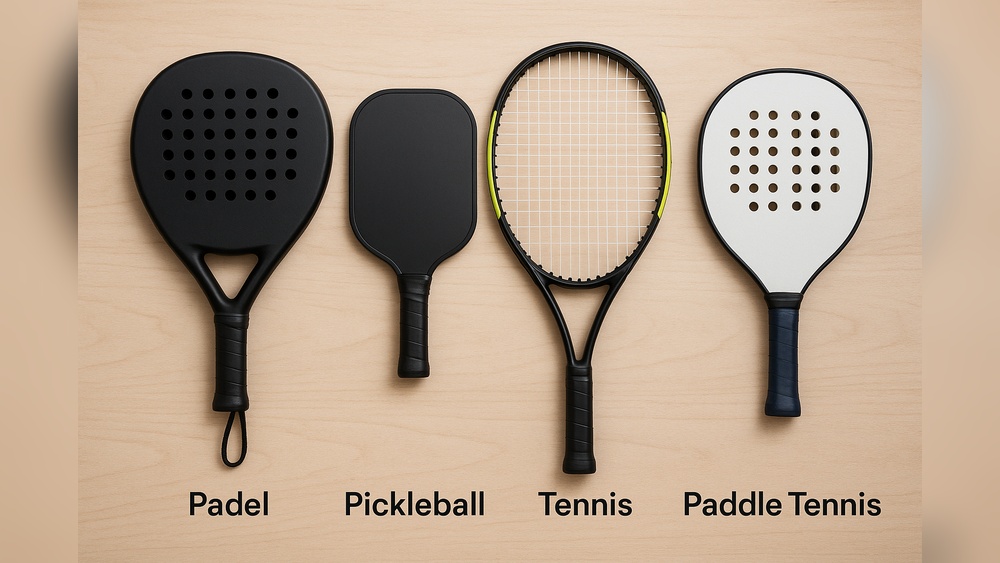
A padel racket is a unique sports tool. It looks similar to a thick table tennis paddle, but it has its own features. Padel rackets are:
- Solid, not strung like tennis rackets
- Perforated with holes across the hitting surface
- Usually teardrop, round, or diamond shaped
- Short-handled for easy wrist action
Padel rackets are made from composite materials, such as carbon fiber, fiberglass, and sometimes EVA foam for the inner core. The face of the racket is flat and smooth, with up to 87 holes to reduce air resistance. Standard padel rackets are about 45.5 cm (18 inches) long, with a hitting surface around 26 cm (10 inches) wide.
Key Padel Racket Features
- No strings: The solid face gives more control but less bounce than a tennis racket.
- Weight: Usually between 340-390 grams (12-14 ounces).
- Grip: Short, allowing quick wrist movement and fast reactions.
- Hole pattern: The holes make the racket easier to move and help with spin.
What Is A Pickleball Paddle?
A pickleball paddle looks a bit like an oversized table tennis paddle but is quite different from a padel racket. Pickleball paddles:
- Are made from composite materials, wood, or polymer
- Do not have holes in the hitting surface
- Are generally rectangular with rounded edges
- Have a larger handle than padel rackets
Modern pickleball paddles are between 39-43 cm (15.5-17 inches) long and 18.5-21.6 cm (7.3-8.5 inches) wide. They are designed to be lightweight, with a weight range of 170-255 grams (6-9 ounces).
Key Pickleball Paddle Features
- No holes: The solid face maximizes contact with the ball.
- Weight: Lighter than most padel rackets, which helps with quick swings.
- Grip: Longer handle, more similar to tennis or badminton.
- Core: Usually made of honeycomb polymer or other shock-absorbing materials.
Direct Comparison: Padel Vs Pickleball Racket
To see the differences clearly, look at this side-by-side comparison.
| Feature | Padel Racket | Pickleball Paddle |
|---|---|---|
| Material | Carbon fiber, fiberglass, EVA foam | Polymer, composite, wood, graphite |
| Surface | Solid, perforated with holes | Solid, no holes |
| Length | Up to 45.5 cm (18 in) | 39-43 cm (15.5-17 in) |
| Width | Up to 26 cm (10 in) | 18.5-21.6 cm (7.3-8.5 in) |
| Weight | 340-390 g (12-14 oz) | 170-255 g (6-9 oz) |
| Handle | Short, one-handed | Longer, allows two-handed shots |
How Racket Shape Affects Your Game
The shape of your racket or paddle changes how you play. Here’s how:
- Padel rackets come in three main shapes: Round, teardrop, and diamond. Round rackets give more control, while diamond shapes give more power but are harder to handle for beginners. Teardrop is a balance of both.
- Pickleball paddles are usually rectangular with rounded corners. Some have an “elongated” design for more reach, but most are wide for control.
If you are new to padel, a round racket is usually easier to manage. In pickleball, a standard shape is best for beginners—elongated paddles are better for experienced players who want extra reach.
Materials: Why They Matter
A lot of beginners ignore the material of their racket or paddle, but it makes a big difference.
Padel Racket Materials
- Carbon fiber: Lightweight, strong, and gives excellent power. Often found in high-end rackets.
- Fiberglass: More flexible and forgiving, but less power than carbon.
- EVA foam: Used in the core for shock absorption and a softer feel.
A carbon fiber padel racket is stiffer and more responsive, while fiberglass makes the racket more comfortable and less likely to cause arm fatigue.
Pickleball Paddle Materials
- Wood: Cheapest, heaviest, and least popular for serious play.
- Composite: Most common. Made from fiberglass, carbon fiber, or a blend.
- Graphite: Very light, stiff, and responsive. Used in top paddles.
- Polymer core: Honeycomb structure for shock absorption and control.
The best pickleball paddles use a composite face with a polymer core. This combination gives a good mix of power, control, and comfort.
Weight And Balance: Control Vs Power
Weight is a huge factor in racket sports.
| Racket Type | Average Weight | Typical Balance | Effect on Play |
|---|---|---|---|
| Padel | 340-390g | Head-heavy or balanced | Heavier = more power, less speed |
| Pickleball | 170-255g | Evenly balanced | Lighter = more control, faster reactions |
Padel rackets are heavier, helping generate strong shots and smashes. But if you have arm or wrist issues, the weight can cause fatigue. A head-heavy racket gives more power, while a balanced racket is easier for defense.
Pickleball paddles are much lighter, letting you react quickly and move the paddle fast for volleys. However, a very light paddle can make it harder to hit with force. Beginners often choose a mid-weight paddle (around 220g) for the best mix of power and control.
Non-obvious insight: The wrong weight can lead to elbow pain, especially in pickleball, where repeated swings add up. Try different weights before buying.
Handle Length And Grip Size
The handle is often ignored, but it’s important for comfort and control.
- Padel racket handles are short, about 11-12 cm (4.3-4.7 inches). This helps with quick wrist action and easy flicks, ideal for the close-quarters padel court.
- Pickleball paddle handles are longer, from 12-15 cm (4.7-6 inches). Some paddles have even longer handles for two-handed backhands.
Grip size is also crucial. A handle that’s too small can lead to wrist strain, while a large grip can reduce finesse. Most adult grips are 10-11 cm (4-4. 5 inches) in circumference, but you should always check what feels right in your hand.
Non-obvious insight: In both sports, a slightly larger grip can help prevent tennis elbow by reducing the need to squeeze tightly.
Surface Texture And Spin
Players often look for rackets or paddles that help them add spin to their shots.
- Padel rackets sometimes have a rough surface or sandpaper-like finish. This helps grip the ball and add spin, especially on serves and volleys.
- Pickleball paddles may have a textured face (approved by USA Pickleball) that increases spin potential, but not as much as in padel.
If you want to play with lots of spin, look for rackets or paddles with an approved textured surface. But remember: too much texture can wear out the ball faster.
Durability: Which Lasts Longer?
A good racket or paddle should last at least a year with regular use. But there are differences:
- Padel rackets with carbon fiber faces and EVA foam cores are very durable. However, hitting the wall or floor can crack the core or chip the edge. Fiberglass rackets are less tough.
- Pickleball paddles with composite or graphite faces and polymer cores last a long time. Wooden paddles wear out faster and can splinter.
Tip: Using an edge guard (a protective strip) extends the life of both padel rackets and pickleball paddles.
Noise Differences: Which Is Quieter?
A surprising difference is the sound these rackets make.
- Padel rackets produce a “pop” sound when hitting the ball, but it’s not very loud.
- Pickleball paddles can be noisy, especially composite or graphite paddles hitting a hard plastic ball. Some communities even ban certain paddles due to noise.
If you play in a noise-sensitive area, padel might be better. Or look for “quiet” pickleball paddles, which are designed to reduce sound.
Price Comparison: Which Is More Expensive?
The price range for both types of rackets is wide.
- Padel rackets: Entry level starts at $40-60, but high-end rackets can cost $200-400.
- Pickleball paddles: Wooden paddles start at $20-40, with composite or graphite models from $60-200.
Why the difference? Padel rackets use more advanced materials and construction, making them pricier. Pickleball is more accessible for beginners due to the lower cost of equipment.
Rules And Regulations For Rackets
If you want to play in tournaments or official matches, make sure your racket or paddle meets the rules.
- Padel: The racket must not be longer than 45.5 cm or wider than 26 cm, with a maximum thickness of 38 mm. Only approved shapes and hole patterns are allowed.
- Pickleball: The paddle must not exceed 43.2 cm (17 in) in length or 24.13 cm (9.5 in) in width. USA Pickleball has a list of approved paddles for competition.
Using non-approved gear can get you disqualified in official play.
How Playing Style Influences Your Choice
The right racket or paddle depends on how you play.
- Power players (big smashes, aggressive attacks): Choose a heavier, head-heavy padel racket or a thicker, mid-weight pickleball paddle.
- Control players (soft shots, accuracy): Go for a round padel racket or a lightweight, standard pickleball paddle.
- Spin specialists: Pick rackets or paddles with textured surfaces.
- Defensive players: Lighter rackets and paddles allow for quick reactions and long rallies.
If you’re unsure, try borrowing different rackets or paddles before buying.
Common Mistakes When Choosing A Racket
Many beginners make these errors:
- Choosing by looks alone: Cool colors or famous brands don’t always mean better performance.
- Ignoring weight: A racket that’s too heavy or too light can hurt your game—and your arm.
- Wrong grip size: This can cause blisters or strain.
- Buying advanced gear too soon: Control rackets and paddles are best for learning.
- Not checking rules: Especially if you plan to play in competitions.

Credit: www.pickleheads.com
Real-world Examples: Racket Choices By Top Players
- Padel: Pro players like Juan Lebrón use diamond-shaped, carbon fiber rackets for maximum power. Beginners and intermediate players often use round or teardrop-shaped rackets for more control.
- Pickleball: Top player Ben Johns uses a custom composite paddle designed for spin and touch. Many recreational players prefer mid-weight paddles for versatility.
Padel Racket And Pickleball Paddle Maintenance Tips
To keep your equipment in top shape:
- Store in a cool, dry place: Heat can damage the core materials.
- Clean regularly: Use a damp cloth, not harsh chemicals.
- Check for cracks: Replace if the core or surface is damaged.
- Change overgrip: Replace the grip tape every few months for comfort.
Health And Safety: Injury Prevention
Using the wrong racket or paddle increases your risk of injury. Here’s what to watch out for:
- Elbow pain (tennis elbow): More common with heavy or unbalanced rackets.
- Wrist strain: Caused by grips that are too small.
- Blisters: From rough or old grip tape.
Always warm up, stretch your arms and wrists, and stop if you feel pain.
Which Should You Try First: Padel Or Pickleball?
If you’re deciding between the two sports, here are some quick differences:
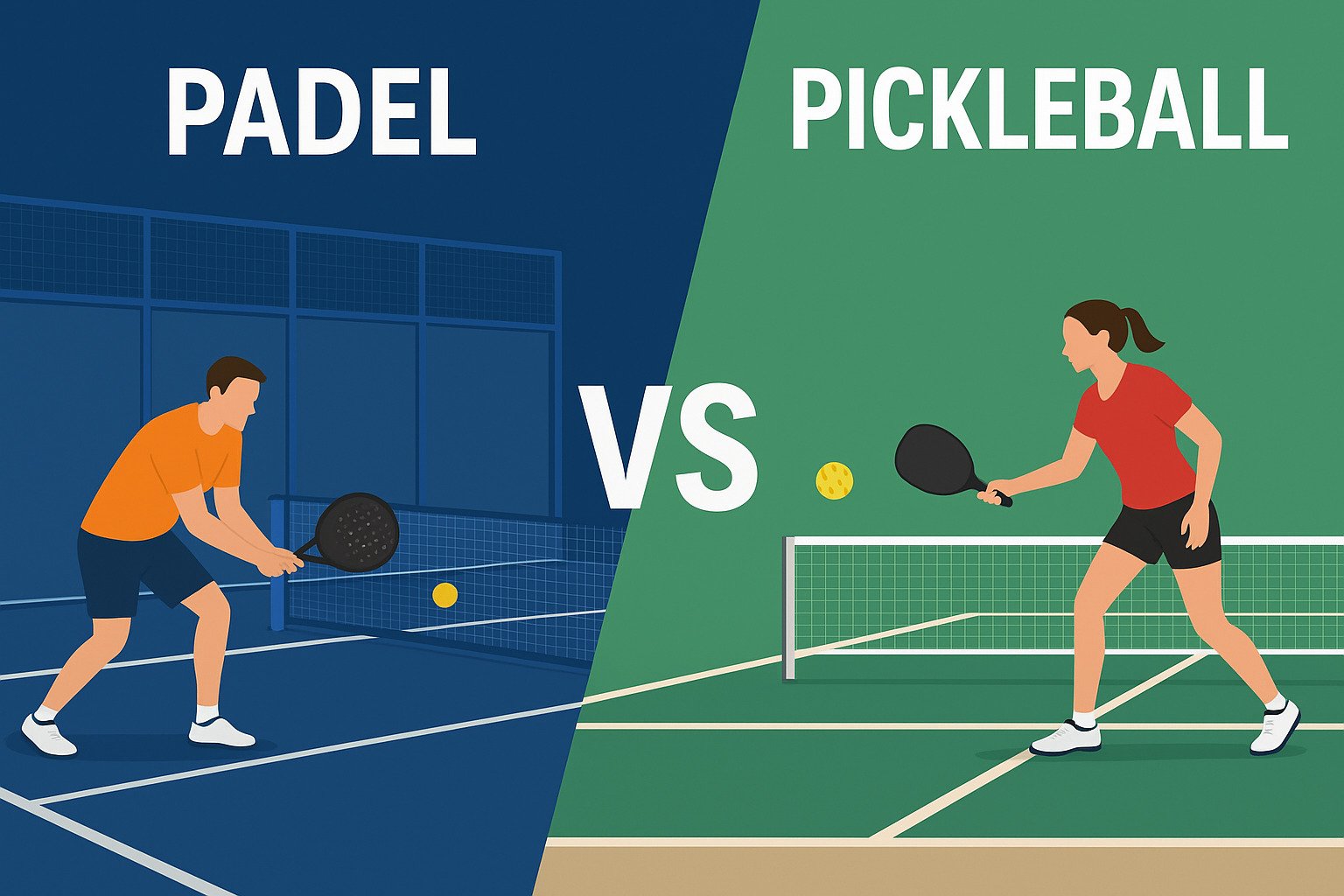
- Padel is played on a closed court with walls, similar to squash. It’s fast, with lots of reflex volleys and team play.
- Pickleball is played on a smaller, open court, and is easy to learn for all ages. It’s popular in the US and growing fast elsewhere.
Both are fun, social, and great for fitness. Your choice might depend on what’s popular in your area, or where courts are available.
 "Padel Vs Pickleball Racket: Which Offers Better Performance?")
Credit: playtomic.com
Environmental Impact
More brands are now making eco-friendly rackets and paddles. Look for recycled materials or companies with sustainability programs. This is a growing trend in both sports.
Future Trends In Racket Design
Technology is changing the game. Expect to see:
- Lighter, stronger materials: Like advanced carbon blends.
- Smart rackets: Some now track your swings and give feedback via apps.
- Customizable balance and grip: Letting you fine-tune for your play style.
Check out organizations like International Padel Federation for updates on equipment regulations.
Frequently Asked Questions
What Happens If I Use A Pickleball Paddle For Padel Or Vice Versa?
Using the wrong racket or paddle is not recommended. A pickleball paddle lacks the holes and weight for padel, making it hard to play correctly. A padel racket is too heavy and short for pickleball, and its holes make it illegal for official play.
Always use the right gear for the sport.
Credit: pacecourt.com
How Often Should I Replace My Padel Racket Or Pickleball Paddle?
Most players replace their rackets or paddles every 1-2 years, depending on how much they play. If you play several times a week, look for cracks, loss of power, or a dead feel—these are signs you need a new one.
Is There A Big Difference In Injury Risk Between The Two Rackets?
Both sports can cause overuse injuries if you use the wrong equipment. Heavier padel rackets can cause elbow or shoulder pain, while light pickleball paddles can lead to wrist strain if your grip is too tight. Choose a racket or paddle that fits your strength and style, and always warm up.
Are Expensive Rackets Always Better?
Not always. Expensive rackets use better materials and last longer, but comfort and fit are more important. Some mid-range rackets offer great performance for less money. Try before you buy if possible.
Can Children Use Adult Rackets Or Paddles?
It’s better for kids to use junior rackets or paddles designed for smaller hands and less strength. Adult equipment can be too heavy and cause bad technique or injury.
Choosing between a padel racket and a pickleball paddle comes down to your sport, playing style, and comfort. Both have unique features that affect your game. By understanding the differences, you’ll make a smarter choice—and enjoy your time on court much more. Whether you love the walls and fast reflexes of padel, or the quick volleys and fun of pickleball, the right equipment is your first step to success.