
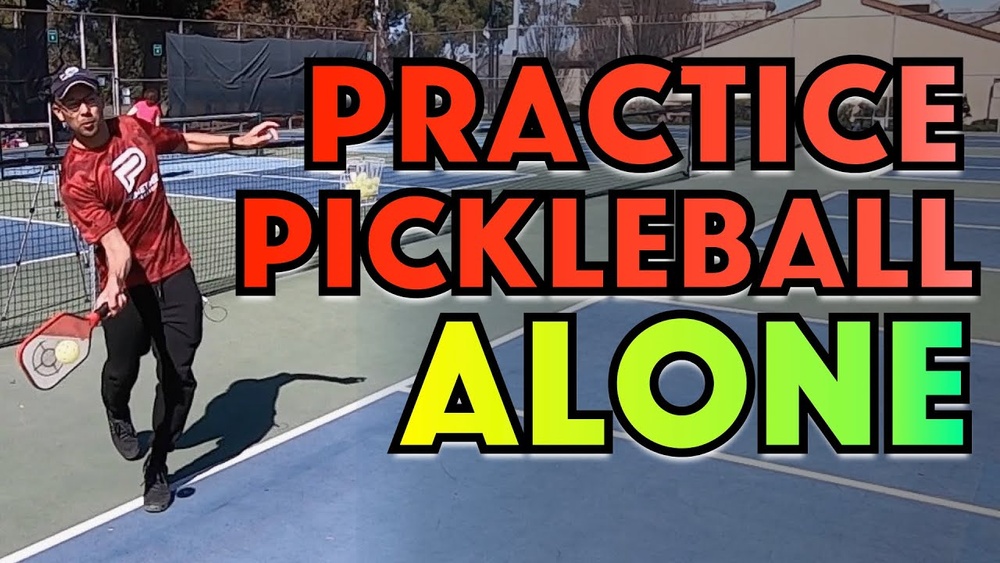
Pickleball is growing fast, and more people want to improve their skills. But what if you don’t always have a partner or group to play with? The good news is, you can practice pickleball by yourself and still become a much better player.
Training solo can help you master fundamentals, build confidence, and keep you active on your own time.
Many new players think pickleball is only about rallies and games with others. But smart practice alone can sharpen your shots, footwork, and reactions. In fact, some of the world’s top pickleball players spend hours training alone. They know that solo drills build muscle memory and consistency—two things you can’t get just from matches.
If you’re ready to improve your pickleball skills but don’t always have a court buddy, this guide will show you exactly how to make progress by yourself. You’ll learn practical drills, tips, and routines you can use anywhere. Whether you want to win more games or just have more fun, solo practice can be your secret weapon.
Why Practice Pickleball Alone?
Solo practice is not just a backup plan. It’s actually a powerful way to get better, faster. Here’s why:
- Focus on technique: When you’re not worried about winning points, you can really work on the basics—like grip, swing, and footwork.
- Repeat skills more: You can hit hundreds of balls without waiting for a partner to return them.
- Flexible schedule: Practice anytime, anywhere, for as long (or short) as you want.
- Build confidence: Repeating skills alone helps you stay calm and focused in real games.
Many players notice that after a few weeks of solo practice, their consistency and control on the court improve dramatically.
Essential Equipment For Solo Pickleball Practice
You don’t need much to practice pickleball by yourself, but a few tools can help:
- Pickleball paddle: Choose one that feels comfortable and matches your playing level.
- Pickleballs: It’s best to have several, as you’ll hit many and need spares.
- Practice wall or rebounder: Any solid wall (like at a gym, school, or your house) works. You can also buy portable rebounders made for pickleball.
- Chalk or tape: Mark lines on a wall or driveway to simulate the net and court lines.
- Cones or markers: These help with movement drills and target practice.
- Ball machine (optional): If you want to invest, a pickleball machine shoots balls to you at different speeds and angles.
Before you start, make sure your space is safe and clear. Practicing in a garage, driveway, or quiet tennis court can work well.
Warm-up: Preparing Your Body And Mind
Warming up is important, even when you’re alone. It helps prevent injuries and gets your mind ready to focus.
- Dynamic stretching: Move your arms, legs, and shoulders in circles. Do gentle lunges, side steps, and torso twists.
- Light jogging or skipping: 2-3 minutes is enough to get your blood flowing.
- Shadow swings: Without the ball, practice your forehand, backhand, and volley motions.
- Footwork drills: Shuffle side-to-side, move forward and backward, and practice split steps.
Warming up only takes 5-10 minutes but makes your practice much more effective.
Solo Drills For Shot Technique
Practicing shots is the heart of solo pickleball training. Here’s how to improve your main strokes:
Forehand And Backhand Drives
- Stand about 10-15 feet from a wall.
- Hit the ball against the wall using your forehand. Focus on a smooth, controlled swing.
- Let the ball bounce once, then hit it again.
- After 10-20 reps, switch to your backhand.
- Try to keep each rally going as long as possible without missing.
If you want a bigger challenge, move farther back, or aim for a target spot on the wall.
Volleys
- Stand closer to the wall (about 5-7 feet).
- Hit the ball before it bounces (volley) using your forehand and backhand.
- Alternate hands, and focus on keeping the ball low and controlled.
Volleys are important for net play and help you react quickly during games.
Dinks
- Dinks are soft shots that land near the net.
- Mark a low line on the wall to simulate the net height.
- Stand just behind this line, and softly tap the ball so it lands close to the wall and stays low.
- Practice both forehand and backhand dinks.
Good dinking makes you tough to beat in the kitchen.
Overheads And Lobs
- Toss the ball high with your non-paddle hand.
- Practice your overhead smash by hitting the ball against the wall.
- For lobs, aim high and soft, trying to hit a target far from the wall.
These skills help you handle high shots and reset the point when you’re in trouble.
Serves
You can practice serves anywhere you have space.
- Mark a court line using chalk or tape.
- Stand behind the baseline and serve over an imaginary or real net.
- Focus on accuracy, spin, and power.
- Try different types: Flat, spin, and lob serves.
Record your serves with your phone to check your form and improve.

Credit: ppatour.com
Movement And Footwork Drills
Great footwork is just as important as good shots. Many solo players ignore movement, but it’s a key part of the game.
Ladder Drills
If you have a flat ladder or can mark one with chalk, try these:
- Side steps: Move quickly in and out of each box.
- Forward/backward runs: Sprint up and back through the ladder.
- In-and-out hops: Hop with both feet in and out of the squares.
These drills build speed, balance, and coordination.
Cone Drills
Set up 4-6 cones in a zigzag pattern.
- Shuffle sideways from cone to cone.
- Sprint forward, then backpedal.
- Combine footwork with shadow swings, pretending to hit a ball at each cone.
Split-step And Recover
- Stand in your ready position.
- Jump lightly (split-step), then move quickly left or right as if chasing a ball.
- Return to center, and repeat.
Practicing this helps you react faster in real games.
Target Practice: Hitting Specific Spots
Hitting the ball is one thing—hitting it where you want is another. Target practice is a great solo drill.
- Place cones, buckets, or small towels as targets on the ground.
- Try to hit each target with different shots: Groundstrokes, volleys, dinks, or serves.
- Track how many times you hit the target out of 10 tries.
This builds accuracy and focus. As you improve, make the targets smaller or move them farther.
Wall Drills Vs. Ball Machine: Which Is Better?
Many players wonder whether they should use a wall or invest in a ball machine. Here’s a quick comparison:
| Feature | Wall | Ball Machine |
|---|---|---|
| Cost | Free or low cost | Expensive ($400+) |
| Availability | Anytime, anywhere with a wall | Needs power and setup |
| Shot variety | Limited to what you hit | Can simulate many spins, speeds, angles |
| Ball return | Immediate, continuous | Machine reloads required |
A wall works for most drills and is free. A ball machine is great if you want more variety and have the budget.
Creating A Solo Practice Routine
A good routine keeps you motivated and helps you track progress. Here’s how to build your own:
- Set a goal: Focus on one skill each session, like dinking or serving.
- Mix drills: Combine wall shots, footwork, target practice, and serves.
- Track your reps: Count how many shots you can make in a row or how many targets you hit.
- Record yourself: Use your phone to film your technique for feedback.
- Cool down: Stretch and relax your muscles after practice.
A sample 45-minute solo practice might look like this:
- 5 minutes: Warm-up
- 10 minutes: Forehand/backhand wall drives
- 10 minutes: Volleys and dinks
- 10 minutes: Footwork and movement drills
- 5 minutes: Target practice
- 5 minutes: Serving

Credit: currex.com
Common Mistakes In Solo Pickleball Practice
Practicing alone is effective—but only if you avoid these mistakes:
- Ignoring footwork: Don’t just stand still and hit balls. Move your feet, as you would in a real game.
- Rushing: Quality matters more than quantity. Focus on good form, not just hitting lots of balls.
- No feedback: Without a coach or partner, you might repeat bad habits. Use video or mirrors to check yourself.
- Lack of variety: Mix up your drills. Don’t practice just one shot every day.
- Skipping warm-up/cool-down: This increases your risk of injury.
Advanced Solo Pickleball Drills
As you improve, add more challenging drills to your routine.
Reaction And Reflex Drills
- Stand close to the wall and hit quick volleys, switching hands after each shot.
- Practice catching a ball with your paddle after a fast rebound.
- Use a smaller ball (like a tennis ball) for wall drills to improve accuracy.
Two-ball Wall Drill
- Toss two balls against the wall.
- Try to keep both in play, alternating shots.
- This trains your eyes and hands to react quickly.
Movement + Shot Combo
- Set up cones at different distances.
- Move to a cone, hit a wall shot, then move to the next.
- This simulates the “move and hit” rhythm of real matches.
Fitness Integration
- Between drills, do quick sprints, jumping jacks, or squats.
- This builds endurance and makes solo practice more intense.
Tracking Progress And Staying Motivated
Improving alone can feel slow, but tracking your progress helps you stay motivated.
- Keep a practice log: Write down what you worked on, how many reps, and what needs improvement.
- Set mini-goals: For example, “Hit 20 consecutive dinks” or “Serve 8/10 into the target zone.”
- Reward yourself: Celebrate small wins with a treat or by playing a game with friends.
- Join online communities: Share your progress or ask for advice. The pickleball community is supportive!
Solo practice can be lonely at times, but remember, every rep is building your skills for the next match.
Using Technology To Improve
Modern technology can make solo practice more productive.
- Use your smartphone: Record your shots and review them to spot mistakes.
- Pickleball apps: Some apps track your drills, offer tips, or connect you with other players.
- Online videos: Watch pro players’ solo drills for inspiration. Try new drills from YouTube or pickleball websites.
For more advanced analysis, try free slow-motion apps to see your swing in detail.
Practicing Without A Court: Creative Ideas
You don’t always need a court to practice.
- Driveway or garage: Use chalk or tape to mark out boundaries and a net line.
- Basement or hallway: Practice dinks and volleys in small spaces.
- Backyard: Set up a portable net or use a fence as a rebound wall.
- Local park: Find a tennis practice wall or an empty basketball court.
Improvise with what you have. Even simple practice is better than none.
Solo Pickleball For Fitness And Fun
Pickleball isn’t just about skill—it’s also a great workout.
- Cardio: Moving and hitting balls keeps your heart rate up.
- Strength: Swinging your paddle and lunging for shots builds muscles.
- Balance and coordination: Footwork drills make you more agile.
- Stress relief: Solo practice is a fun way to relax and clear your mind.
Try to practice at least 2-3 times a week for best results. Even 20-30 minutes helps.
How Solo Practice Translates To Real Games
Some players worry that solo drills won’t help them in real matches. But that’s not true.
- Consistency: Hitting hundreds of balls alone builds muscle memory for real rallies.
- Confidence: Practicing alone means you’ve already seen every shot before.
- Faster reactions: Quick wall drills make you sharper at the net.
- Better accuracy: Hitting targets helps you place shots where your opponent can’t reach.
When you do play with others, you’ll notice you make fewer mistakes and win more points.
Comparing Solo Vs. Group Pickleball Practice
Both solo and group practice are valuable. Here’s how they stack up:
| Aspect | Solo Practice | Group Practice |
|---|---|---|
| Skill repetition | High (many reps, focused) | Lower (waiting for turns) |
| Feedback | Self-feedback/video | Coach/partner feedback |
| Fun/social | Lower | Higher |
| Game strategy | Limited | Real-game situations |
| Flexibility | Anytime, anywhere | Depends on others |
For best results, mix both solo and group practice. But if you’re alone, you can still make huge progress.

Credit: www.youtube.com
Safety Tips For Solo Practice
It’s easy to forget safety when you’re practicing by yourself.
- Check your surroundings: Make sure the area is clear of obstacles.
- Hydrate: Bring water, especially outdoors.
- Take breaks: Don’t overwork your arm or shoulder.
- Wear proper shoes: Good grip prevents slips and ankle injuries.
- Protect your eyes: Wear sunglasses or safety glasses if needed.
If you feel pain, stop and rest. Listen to your body.
Extra Insights: What Most Beginners Miss
Here are two things solo players often overlook:
- Practice under pressure: Give yourself a challenge, like “hit 10 serves in a row, or start over.” This simulates game pressure.
- Visualize opponents: Imagine where a real player might return your shot. Move and react as if you’re playing a point, not just hitting balls.
These small changes make solo practice more game-like and prepare you for match play.
When To Play With Others Again
As you get better, test your skills against real opponents. Join open play, leagues, or group lessons. You’ll see how solo practice has improved your game—and find new areas to work on.
If you want more info about pickleball training and tips, check out the official USA Pickleball learning page.
Frequently Asked Questions
How Long Should I Practice Pickleball Alone Each Session?
For most players, 30-60 minutes per session is enough. Focus on quality, not just time. Even 20 minutes of focused drills can help if you’re busy.
Can I Get Good At Pickleball By Practicing Alone?
Yes, you can improve fundamentals, consistency, and confidence with solo practice. But for match strategy and teamwork, play with others too.
What’s The Best Wall Drill For Beginners?
Start with forehand and backhand drives. Stand 10-15 feet from the wall, hit the ball, let it bounce, and repeat. Aim for control, not power.
Do I Need A Ball Machine To Practice Solo?
No. A simple wall or rebounder works for most drills. A ball machine is helpful but not required, especially for beginners.
How Do I Avoid Bad Habits When Practicing Alone?
Use your phone to record your swings, or practice in front of a mirror. Watch pro videos for correct technique, and focus on form over speed.
Solo pickleball practice can turn you into a more skilled, confident player. With the right drills and attitude, you’ll see real improvement—even without a partner. Pick up your paddle, set your goals, and enjoy the journey!