
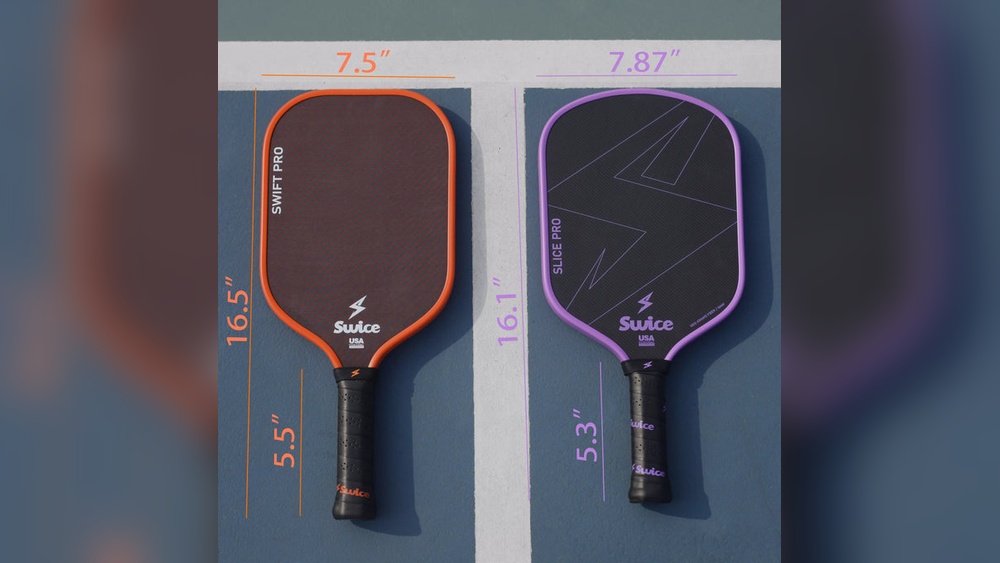
Pickleball is growing fast. Players of all ages are joining courts worldwide, and equipment choices now matter more than ever. One key decision is picking the right paddle handle length. Some people grab a long handle paddle, others prefer a short handle. While this choice may seem simple, it can greatly affect your game style, comfort, and even your results on the court.
This article gives a clear, deep look at long handle vs short handle pickleball paddles. If you are new, you’ll learn why handle length matters. If you play often, you’ll see how a small change can improve your control, power, and technique.
We’ll compare both types in detail, break down the pros and cons, and help you avoid common mistakes. You will also find real examples, player insights, and answers to top questions. By the end, you’ll know how to choose the best handle length for your needs—and your game.
What Is Handle Length In Pickleball Paddles?
Handle length is the measurement from the base of the paddle (where your hand holds it) to where the handle meets the face. Most pickleball paddle handles range from about 4 inches (short) up to 6.25 inches (long). This difference sounds small, but it changes how the paddle feels and moves.
- Short handle paddles: Usually 4–5 inches long.
- Long handle paddles: Usually 5.25–6.25 inches long.
Some brands offer “standard” handles in between. Still, most paddles fall into short or long categories. The handle length does not affect the overall paddle length, because pickleball rules limit total paddle size to 17 inches.
Why Does Handle Length Matter?
Handle length shapes how you grip and swing. It affects:
- How much power you can generate
- The control you feel over shots
- The types of grips you can use (one-handed, two-handed)
- Your comfort during long games
Even a 0. 5 inch change can impact your play. Beginners often overlook this detail, but experienced players know it’s a big deal. For example, if you have larger hands or play with two hands, a short handle can feel cramped.
If you like quick, precise moves near the net, a long handle can get in the way.
The Main Differences Between Long And Short Handles
It’s easy to think “handle is handle”—but the differences run deeper.
| Feature | Long Handle | Short Handle |
|---|---|---|
| Typical Length | 5.25–6.25 inches | 4–5 inches |
| Common Grip Style | Allows two-handed grip | Mainly one-handed grip |
| Sweet Spot Size | Slightly smaller | Wider on paddle face |
| Best For | Power, reach, two-handed backhands | Control, quick hand changes |
| Popular Among | Tennis converts, players with big hands | Players who value touch, small hands |
The “sweet spot” is the part of the paddle face where shots feel best and most controlled. Handle length affects how much of the paddle’s size is used for the handle, and how much is left for the face.
Pros And Cons Of Long Handle Paddles
Advantages
- Two-Handed Shots
- A longer handle lets you use both hands, especially on backhands. This is a big advantage for former tennis players or anyone who struggles with single-handed power.
- More Power
- You can swing with more force. The leverage from a longer handle acts like a longer lever. This helps drive the ball deep and fast.
- Better Reach
- The handle’s length can help you reach wider balls without stretching awkwardly.
- Comfort for Large Hands
- If your hands are bigger, long handles offer a more secure grip. You won’t feel cramped or lose control.
- Spin Potential
- Long handles help with certain spins, especially if you change grip positions during play.
Disadvantages
- Smaller Sweet Spot
- Since more paddle length is used for the handle, the hitting area (sweet spot) is a bit smaller.
- Less Quick Control
- Long handles can feel slower in fast exchanges at the net. The paddle is less “whippy” for quick dinks and blocks.
- Heavier Feel
- Some long handle paddles have a higher swing weight, which can tire your arm in long matches.
- Can Hit the Wrist
- The longer grip may bump your wrist, especially if you have a compact swing style.
- Not Best for Small Hands
- Players with small hands may find it hard to grip, leading to less control and more mistakes.
Pros And Cons Of Short Handle Paddles
Advantages
- Bigger Sweet Spot
- More space is used for the paddle face, so off-center hits still feel good and controlled.
- Fast at the Net
- Short handles are quick to move and easy to “reset” during fast kitchen rallies.
- Excellent for Touch
- Great for dinks, drop shots, and soft play. You get more feedback in your hand.
- Lighter Feel
- Usually, short handle paddles have lower swing weight and feel easier to maneuver.
- Fits Small Hands
- Players with smaller hands can grip firmly without feeling clumsy.
Disadvantages
- One-Handed Only
- Two-handed shots are hard or impossible. This limits your backhand options.
- Less Power
- Short handles don’t give as much leverage, so you lose some power on drives.
- Limited Reach
- You may have to stretch more to reach wide balls.
- Not for Tennis Converts
- If you’re used to tennis, the short handle can feel strange and limit your favorite moves.
- Less Spin Variety
- It’s harder to change grips quickly or add advanced spins.
Who Should Choose A Long Handle Paddle?
Not every player will benefit from a long handle. Here’s who should consider it:
- Tennis converts: If you played tennis, you probably love two-handed backhands. Long handles let you keep that style.
- Power hitters: If you want to drive the ball hard and fast, longer handles give extra leverage.
- Players with large hands: You’ll get a full, confident grip.
- Those who struggle with wrist pain: A longer handle can spread the force across both hands (for two-handed shots), reducing strain.
- People who like to switch grips: If you use different grips for serves, volleys, and groundstrokes, a long handle makes it easier.
Who Should Choose A Short Handle Paddle?
Short handle paddles are not just for beginners. They’re great for:
- Players who value control: If you love dinks, drops, and soft touch shots, a short handle gives better feel.
- People with small hands: It’s easier to grip and control the paddle.
- Fast net players: If you play close to the net and need to react quickly, short handles move faster.
- Singles specialists: In singles, control and precision often matter more than raw power.
- Older or younger players: Kids and seniors often find short handles more comfortable.
How Handle Length Affects Your Game
Let’s break down how the handle length changes key parts of your play.
Grip Options
- Long handle: Lets you use both hands, or change grips during rallies.
- Short handle: Best for one-handed play, but you get more direct paddle control.
Shot Power
- Long handle: More leverage means more power on drives and serves.
- Short handle: Power comes mostly from your arm and wrist, not the paddle.
Ball Control
- Long handle: May sacrifice a little control for power, especially on soft shots.
- Short handle: Excellent for precise, gentle shots—dinks, drops, and blocks.
Reaction Speed
- Long handle: Slightly slower to move, especially in quick kitchen rallies.
- Short handle: Faster and lighter in your hand, great for sudden moves.
Reach
- Long handle: You can reach farther without moving your feet.
- Short handle: You need faster footwork to get to wide balls.
Fatigue
- Long handle: Can be heavier, so your arm may get tired after long matches.
- Short handle: Lighter, so it’s easier to play longer with less strain.
Real-world Examples: Pro Players And Handle Length
Some top pro pickleball players are known for their handle preferences:
- Ben Johns: Often uses a longer handle for his two-handed backhand, helping him generate power and spin.
- Anna Leigh Waters: Known for quick hands and excellent control, she chooses a paddle with a shorter handle for better touch at the net.
- Tyson McGuffin: Prefers a handle that lets him switch quickly between grip styles, balancing between long and short.
These choices reflect personal style, hand size, and the shots they want to use most.
Common Mistakes When Choosing Handle Length
- Ignoring hand size: Many beginners pick a paddle based only on color or price, not realizing a short handle can feel cramped, or a long handle can feel unwieldy.
- Copying others blindly: Just because your friend uses a long handle doesn’t mean it suits you. Test paddles if you can.
- Not thinking about grip style: If you never use two hands, a long handle may add unneeded weight.
- Skipping comfort tests: Always hold and swing the paddle before you buy. What feels good in the store may feel awkward on the court.
- Missing the rules: Remember, pickleball rules limit total paddle length. Extra-long handles may not be tournament-legal.

Credit: swicepickleball.com
Testing Handle Lengths: How To Find Your Fit
If you’re not sure which handle length fits you, try these steps:
- Visit a local store or club with demo paddles.
- Hold both a short and a long handle. See which feels better.
- Try one-handed and two-handed shots with both paddles.
- Play a few games. Notice if your wrist or arm feels tired, or if you miss shots because of grip changes.
- Ask experienced players for feedback. Sometimes, they spot technique issues you might miss.
One non-obvious tip: Your grip size and paddle weight interact with handle length. If you choose a long handle but the grip is too thick, you might lose control. If you choose a short handle with a thin grip, you may over-tighten and tire your hand. Always check both factors together.
Key Factors To Consider Before Buying
Here are the main things to check before you buy a paddle:
- Handle length (short or long)
- Grip size (small, medium, large)
- Weight (lighter paddles are faster; heavier paddles hit harder)
- Shape of paddle face (wide, standard, or elongated)
- Material (polymer, graphite, carbon fiber)
- Your main play style (power, control, speed)
- Budget (higher price often means better build, but not always better fit)
Many brands show all these details on their packaging or website. If not, ask a shop staff for help.
Price And Availability: Do Long And Short Handles Cost More?
Most brands price long handle and short handle paddles about the same. What changes the price more is the material (like carbon fiber or graphite) and the brand reputation. Still, long handles sometimes cost $5–$20 more because they’re seen as “performance” paddles.
Here’s a quick price comparison for popular models:
| Paddle Model | Handle Length | Price Range (USD) |
|---|---|---|
| Selkirk Vanguard Power Air | Long (5.25″) | $200–$250 |
| Paddletek Bantam EX-L | Short (4.5″) | $100–$130 |
| Engage Pursuit MX | Long (5.75″) | $180–$210 |
| Onix Z5 Graphite | Short (4.25″) | $80–$100 |
Prices can change, and older models may go on sale. Always check for local deals.
The Science Behind Handle Length
Research in sports equipment shows that lever length affects swing speed and control. In pickleball, the handle acts as a lever:
- Long lever (handle): More power, less control.
- Short lever: More control, less power.
A study in the *Journal of Sports Sciences* found that racket handle length affects “torque” (turning force) and “moment of inertia” (resistance to turning). This means long handles are harder to twist quickly, but give more force to the ball.
Short handles are easier to move fast but hit with less force.
One insight beginners miss: Your arm and wrist mechanics change with handle length. A long handle forces your wrist into a different angle, which can affect your accuracy if you switch paddles often.
If you want to learn more about the physics of paddle sports, visit the Wikipedia Pickleball page.

Credit: pickleballeffect.com
Maintenance: Does Handle Length Change Paddle Care?
Handle length does not change how you care for your paddle, but it can affect how quickly grips wear out. Longer handles mean more grip tape, which may need to be replaced more often. Always check for:
- Loose grip tape
- Sweat buildup
- Small cracks near the handle base
Replace grip tape every few months if you play often. This keeps your paddle feeling fresh and safe.
Making Your Final Choice: Long Or Short Handle?
Still not sure? Here’s a simple decision guide:
- Choose a long handle if: You want two-handed shots, have big hands, or need more power and reach.
- Choose a short handle if: You want quick control, play mostly at the net, or have small hands.
Remember, there is no “best” handle length for everyone. The right paddle is the one that fits your style, hand size, and goals. If you’re serious, try several paddles at a local club before you buy.
Credit: pickleballsuperstore.com
Frequently Asked Questions
What’s The Main Advantage Of A Long Handle Pickleball Paddle?
A long handle paddle lets you use a two-handed grip, adding power and reach to your shots. It’s especially helpful for players coming from tennis or those who want more force on backhands.
Are Short Handle Paddles Better For Beginners?
Short handle paddles are often easier for beginners because they are lighter and give more control. They make it easier to learn soft shots and quick moves at the net.
Can Handle Length Affect Injury Risk?
Yes. A handle that is too short can cramp your hand and strain your wrist. Too long, and you may overuse your arm muscles. Always choose a handle that feels natural and comfortable.
Is There A Handle Length That Fits All Hand Sizes?
No single handle length fits everyone. Small hands usually prefer short handles; large hands prefer long handles. If your hand size is between, try both and see which feels better.
Do Pro Players Use Long Or Short Handles?
Both! Some pros use long handles for two-handed shots, others use short for fast net play. It depends on their style and what shots they value most.
Pickleball is a personal game, and your paddle is your main tool. Handle length matters more than most people think. Take time to test, ask questions, and find what works for you. The right paddle can boost your confidence, comfort, and success on the court.